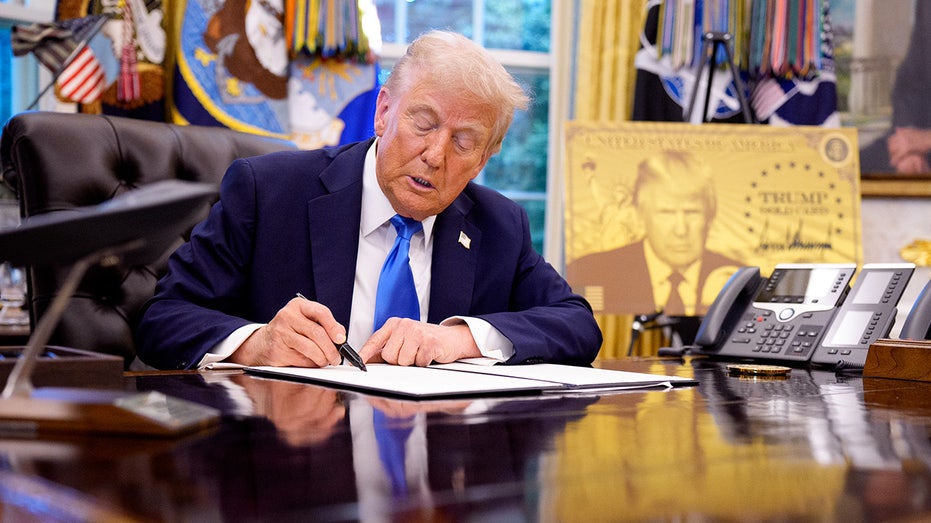

Trump Signs Executive Order Protecting Venezuelan Oil Revenues from U.S. Seizure Amid National Security Concerns
Washington, D.C. – President Donald Trump signed an executive order on Saturday aimed at shielding billions in Venezuelan oil revenues held in U.S. accounts from seizure by courts or creditors, invoking national security and foreign policy priorities to preserve the funds for broader U.S. objectives in the region.
The order, which blocks judicial actions against the frozen assets tied to Venezuelan oil sales, represents a significant intervention in ongoing legal battles between Venezuela's government and international creditors. According to reports from Fox News, the measure cites national security concerns, preventing U.S. courts from accessing the revenues stored in Treasury accounts. The Times of India detailed that the directive declares a national emergency, prohibiting transfers of these sovereign funds and superseding prior regulations to ensure they remain available for U.S. foreign policy goals, including promoting stability in Venezuela. Newsmax corroborated the action, noting it specifically targets efforts by courts and creditors to impound the oil sale proceeds.
This move comes as Venezuela grapples with a protracted economic crisis exacerbated by U.S. sanctions imposed during Trump's first term and continued under subsequent administrations. The funds in question stem from oil exports managed through U.S.-based financial systems, despite sanctions limiting Venezuela's state-owned PDVSA from direct access. Creditors, including major energy firms like ConocoPhillips and Crystallex, have pursued legal claims in U.S. courts to recover billions lost due to expropriations under the regime of Nicolás Maduro.
Details of the Executive Order
The executive order effectively prioritizes geopolitical strategy over private creditor claims. Fox News reported that it directs federal agencies to protect the accounts, arguing that seizure could undermine U.S. leverage in negotiations with Venezuela. The Times of India emphasized the order's intent to safeguard revenues "for investment in the nation’s oil sector," framing it as a tool to foster economic stability and counter influence from adversaries like China and Russia, which have deepened ties with Maduro's government.
Newsmax highlighted the timing, with the order issued on January 10, 2026, amid heightened tensions over Venezuela's oil production and global energy markets. The directive does not unfreeze the funds for Venezuelan use but insulates them from attachment, maintaining U.S. control while blocking enforcement of court judgments.
Legal experts note that such orders draw on authorities under the International Emergency Economic Powers Act (IEEPA), which Trump has previously invoked for Venezuela-related actions. This latest step reverses or halts momentum from recent court rulings favoring creditors, who have won awards totaling over $20 billion in arbitration.
Background on U.S.-Venezuela Oil Disputes
U.S. sanctions on Venezuela, initiated in 2017 during Trump's first presidency, targeted PDVSA to pressure Maduro amid widespread allegations of election fraud, human rights abuses, and corruption. These measures froze assets and restricted oil trade, crippling Venezuela's economy, which relies on petroleum for over 90% of export revenue.
Frozen funds in U.S. accounts have become a flashpoint. In 2023 and 2024, U.S. courts authorized seizures, including a $1.3 billion attachment by ConocoPhillips. However, diplomatic shifts, including partial sanctions relief under the Biden administration to encourage opposition participation in elections, set the stage for Trump's renewed focus. Upon returning to office in January 2025, Trump reinstated stricter measures while signaling openness to deals that could stabilize oil flows.
The order aligns with broader Trump administration priorities, including energy security amid global supply disruptions from conflicts in Ukraine and the Middle East. Venezuela holds the world's largest proven oil reserves, estimated at 300 billion barrels, making its production pivotal for U.S. strategic interests.
Implications for Creditors and Regional Stability
Creditors expressed immediate frustration, with representatives indicating plans to challenge the order legally. The decision halts pending enforcement actions, potentially delaying recoveries for years.
For Venezuela, the protection preserves a financial lifeline under U.S. oversight, possibly facilitating future investments or humanitarian uses as outlined in the order. It underscores the U.S. balancing act: pressuring Maduro while avoiding economic collapse that could spur migration crises or empower rivals.
As of January 10, 2026, the White House has not released the full text of the order or scheduled briefings, but officials signaled it as part of a comprehensive Venezuela strategy. This action marks an early legislative-like maneuver in Trump's second term, leveraging executive authority to shape international finance without congressional input.
The development draws international attention, with implications for sovereign immunity debates and U.S. sanction efficacy. Stakeholders await further details on implementation and any coordinated actions with allies in the Lima Group or European Union.
(Word count: 682)






