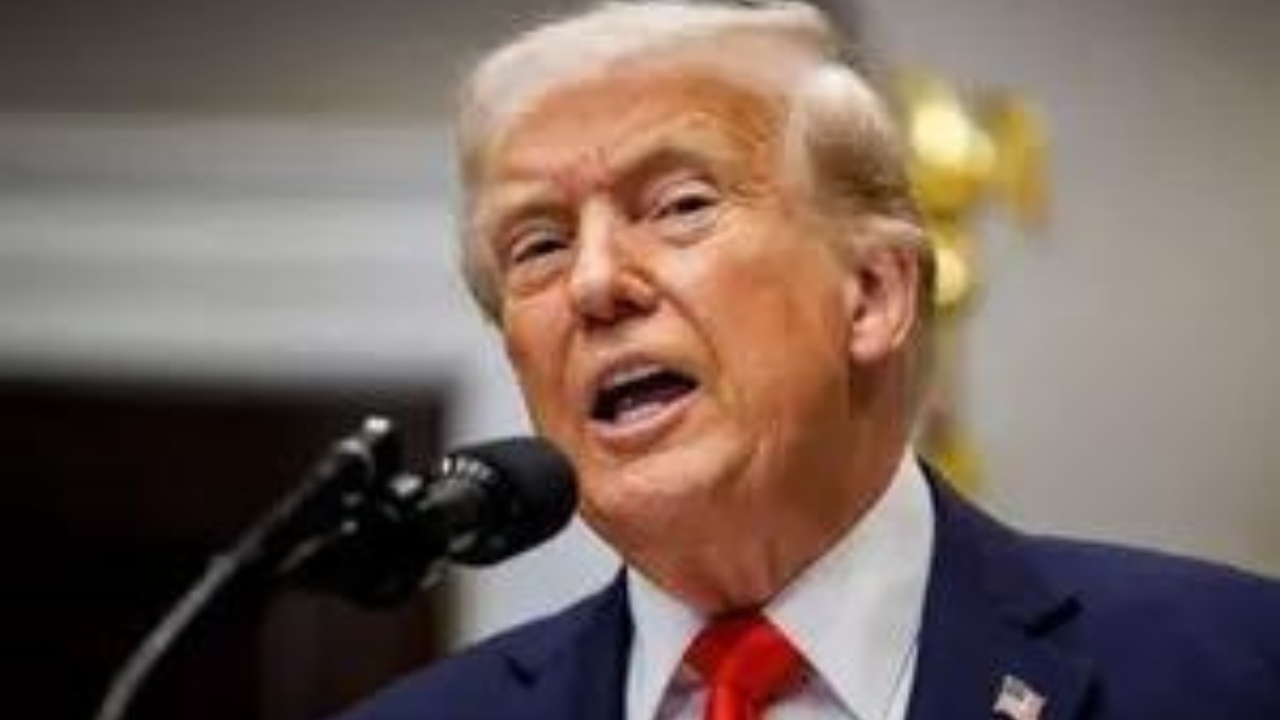

Trump Signals Potential U.S. Military Action Against Mexican Drug Cartels, Escalating Tensions with Mexico
Washington/Mexico City — U.S. President Donald Trump has raised the specter of direct military intervention in Mexico, suggesting American forces could conduct land strikes against powerful drug cartels. The remarks, which surfaced amid ongoing U.S. efforts to combat cross-border fentanyl trafficking, have prompted a firm rebuke from Mexican President Claudia Sheinbaum, who emphasized Mexico's sovereignty and regional autonomy.
The provocative statements emerged on January 5, 2026, when Mexican President Sheinbaum publicly revealed that Trump had discussed the possibility of U.S. military entry into Mexico during bilateral talks. According to reports, Trump expressed a desire to "hit land" within Mexico to target cartel operations, marking a potential escalation from recent U.S. naval actions against suspected drug-trafficking vessels in international waters. This rhetoric frames Mexico as the "next target" in Trump's aggressive anti-cartel campaign, following U.S. operations in Venezuela and past threats regarding Greenland.
Mexican officials have responded with measured defiance. President Sheinbaum, who assumed office in October 2024 as Mexico's first female president, stated that any such incursion would violate Mexico's national sovereignty. "Mexico will not allow foreign military intervention on its soil," she asserted, underscoring the nation's commitment to handling internal security challenges through its own institutions, including the National Guard and ongoing anti-cartel initiatives.
Trump's comments come at a time of heightened U.S.-Mexico friction over drug flows and migration. The U.S. has intensified pressure on Mexico to curb the flow of fentanyl and other synthetic opioids, which the Centers for Disease Control and Prevention (CDC) link to over 70,000 overdose deaths annually in the United States. Cartels such as the Sinaloa and Jalisco New Generation have expanded operations, exploiting maritime routes and exploiting instability in Mexico's security landscape.
Context of U.S.-Mexico Drug War Dynamics
The backdrop to Trump's warnings is a decades-long bilateral struggle against drug trafficking. Mexico has deployed tens of thousands of troops in operations like the 2006 Mérida Initiative, a U.S.-backed plan that has provided over $3.5 billion in aid for law enforcement and judicial reforms. Despite these efforts, cartel violence persists, with over 30,000 homicides reported annually in recent years, according to Mexico's National Public Security System.
Trump has long viewed cartels through a national security lens. During his first term (2017-2021), he designated Mexican cartels as foreign terrorist organizations and floated military options. In late 2024, as president-elect, he reiterated threats of 25% tariffs on Mexican goods unless migration and drug flows were halted. Recent U.S. actions include precision strikes on cartel-linked vessels off Mexico's Pacific coast, authorized under international maritime law, which neutralized several high-seas threats without entering sovereign airspace or territory.
The Venezuela parallel adds geopolitical weight. In December 2025, U.S. special forces conducted a raid in Venezuela targeting dissident factions linked to drug networks, a operation Trump hailed as a model for disrupting hemispheric threats. References to Greenland evoke Trump's 2019 proposal to purchase the Danish territory for strategic reasons, signaling his willingness to challenge international norms.
Mexican leadership, under Sheinbaum's Morena party, prioritizes "hugs, not bullets" reforms—inherited from her predecessor Andrés Manuel López Obrador—focusing on social programs to undermine cartel recruitment rather than pure militarization. Sheinbaum has invested in intelligence-sharing with the U.S. via the Bicentennial Framework, but rejects unilateral actions. "We collaborate as equals," a spokesperson for the Mexican presidency told reporters.
Broader Implications and Diplomatic Fallout
The exchange risks straining the U.S.-Mexico relationship, which underpins $800 billion in annual trade via the USMCA agreement. Economists warn that military rhetoric could trigger market volatility, with the Mexican peso already dipping 1.2% against the dollar following the initial reports.
U.S. officials have downplayed invasion talk, with White House Press Secretary Karine Jean-Pierre clarifying that discussions focus on enhanced joint operations, drone surveillance, and financial sanctions. The State Department emphasized ongoing cooperation, noting Mexico's extradition of 20 high-profile cartel figures in 2025 alone.
Critics in both nations decry the escalation. U.S. Senator Bernie Sanders (I-VT) called it "imperialist saber-rattling," while Mexican opposition leader Xóchitl Gálvez urged Sheinbaum to bolster border security to avert confrontation.
Outlook: A Delicate Balance Ahead
As talks continue, the focus remains on non-military measures: intelligence fusion centers, precursor chemical controls, and demand-reduction programs. Mexico's upcoming naval exercises with the U.S. in the Gulf of Mexico could serve as a proving ground for collaboration. However, Trump's "America First" doctrine suggests readiness to act unilaterally if perceived threats persist.
Analysts from the Council on Foreign Relations note that sustained dialogue is crucial to avoid a repeat of historical interventions, such as the 1910s U.S. occupations. With midterm elections looming in both countries, the issue may amplify domestic political pressures, testing the resilience of North American security ties.
(Word count: 712)