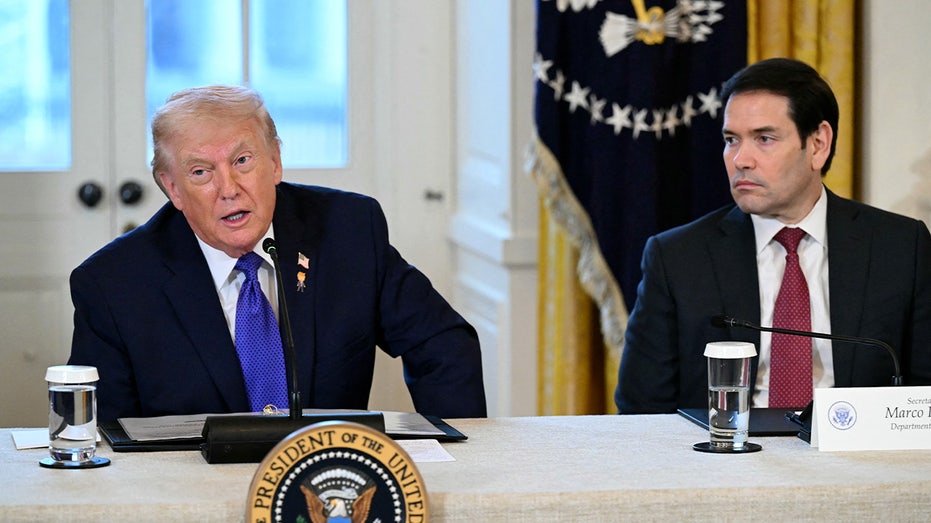
Trump Signals Aggressive Geopolitical Stance: Maduro Captured, Greenland Targeted, Solar Alliance Exit

Latest from X
Trump Signals Aggressive Geopolitical Stance: Maduro Captured, Greenland Targeted, Solar Alliance Exit
Washington, D.C. – President Donald Trump has intensified U.S. foreign policy maneuvers this week, announcing advances in the acquisition of Greenland, asserting control over Venezuelan oil operations following the capture of Nicolás Maduro, and withdrawing from an India-led international solar alliance. These developments, unfolding amid threats of military intervention in multiple nations, mark a bold shift toward unilateral American interests.
The cascade of announcements began on January 5, when U.S. military forces captured Venezuelan President Nicolás Maduro in a high-stakes operation, described by administration officials as a success against a long-standing adversary. Trump has since leveraged the event to warn of potential military action in other countries, citing national security imperatives. According to event reports, these threats target nations perceived as threats, including renewed pressure on Colombia over alleged drug operations. Posts on X from Fox News highlighted Trump's dual messaging, linking the Maduro capture to strategic warnings abroad.
In Venezuela, the fallout has been swift. On Friday, Trump met with representatives from major international oil companies at the White House, declaring that the United States would decide which firms could operate in the oil-rich nation, according to Yle News. This follows reports of Venezuela's interim leadership agreeing to transfer up to 50 million barrels of sanctioned oil to the U.S., a move framed by Trump as compensation for years of economic disruption caused by Maduro's regime. The Yle report, published in Finnish, detailed the meeting's focus on reshaping Venezuela's energy sector under U.S. oversight.
Trump's diplomatic calendar underscores the Venezuela pivot. He confirmed plans to host Venezuelan opposition leader and 2025 Nobel Peace Prize laureate María Corina Machado at the White House next week, expressing anticipation for her insights on the country's future. Newsmax reported Trump's statement: he looks forward to meeting her and hearing her views, signaling support for a post-Maduro transition aligned with U.S. priorities.
Parallel to these Latin American developments, Trump revived his long-standing interest in Greenland. In a Fox News interview published Friday, he stated the U.S. is "making moves to acquire Greenland 'whether they like it or not,'" tying the push to national security needs amplified by the Maduro operation. This echoes Trump's 2019 proposal to purchase the autonomous Danish territory, which he justified then for its mineral resources and Arctic strategic position amid great-power competition with Russia and China. Recent X posts from Fox News noted Greenland's prime minister seeking independence in response to Trump's comments, alongside Trump's assertion that Greenlanders "will benefit tremendously" if it joins the U.S. Trump also cited Greenland's importance in a January 5 message warning Colombia's Gustavo Petro.
Adding to the geopolitical realignments, the U.S. withdrew from the India-led International Solar Alliance (ISA) on January 8, a decision Trump described as prioritizing American energy independence over multilateral climate commitments. The ISA, launched in 2015 by India and France, aims to promote solar energy in developing nations; the U.S. had joined under the Biden administration but now exits under Trump's "America First" doctrine. This move represents a significant rupture in U.S.-India climate cooperation, potentially straining ties as India positions itself as a green energy leader.
Background and Context
Trump's actions fit a pattern of assertive foreign policy. The Maduro capture caps over a decade of U.S. sanctions against his regime, imposed since 2017 for human rights abuses, election fraud, and ties to Iran and Russia. Venezuela's oil reserves—the world's largest—have long tempted U.S. influence, especially amid global energy volatility.
Greenland remains a flashpoint. Denmark administers the territory, rejecting Trump's overtures outright in 2019. Recent Russian and Chinese activities in the Arctic have heightened U.S. concerns over rare earth minerals and military basing. Posts on X reflect polarized sentiment, with some praising Trump's boldness and others decrying imperialism.
The solar alliance exit aligns with Trump's skepticism of international accords, mirroring his Paris Agreement withdrawal in 2017. The ISA has grown to over 120 members, focusing on $1 trillion in solar investments by 2030.
Outlook
These moves risk escalating tensions. Allies like Denmark and India may push back, while adversaries test U.S. resolve. Trump's scheduled Machado meeting could solidify a pro-U.S. Venezuelan government, unlocking oil flows and easing domestic fuel prices. However, military threats carry volatility, particularly in Latin America, where regional leaders monitor closely.
As of January 9, 2026, the administration has not detailed timelines for Greenland negotiations or further interventions, leaving global markets and diplomats bracing for more unilateral steps.
(Word count: 682)
Track this story live
Live World Map
Monitor global events in real time with a live activity map and hotspot summaries.
Markets
Connect live events to Catalyst market signals across crypto, commodities, indices, and forex.
Geopolitical Risk
Live geopolitical risk index tracking conflict zones, sanctions, and global threat levels.
Original Sources
- •
- •
- •
Editorial process: This article was synthesized from the original sources cited above using The World Now's AI editorial system, with byline accountability from our editorial team. We grade every story for source grounding, factual coherence, and on-topic match before publication. Read more about our editorial standards and contributors. Spot something inaccurate? Let us know.
Last updated: January 26, 2026






