Trump Signals Aggressive 'America First' Pivot with Tariff Delay, Climate Withdrawal, Tanker Seizure, and Defense Boost

Latest from X
Trump Signals Aggressive 'America First' Pivot with Tariff Delay, Climate Withdrawal, Tanker Seizure, and Defense Boost
Washington, DC – In a flurry of high-stakes decisions this week, President Donald Trump has unveiled moves that underscore a robust U.S. geopolitical stance, blending trade leniency, climate disengagement, sanctions enforcement, and unprecedented military expansion. These actions, announced amid escalating global tensions, reflect the administration's "America First" doctrine, prioritizing domestic industry, energy security, and deterrence against adversaries.
The week's developments began on January 1, 2026, when Trump delayed for one year the implementation of heightened tariffs on key household goods, including upholstered furniture, kitchen cabinets, and vanities. This high-severity measure, aimed primarily at imports from China and other manufacturing hubs, provides temporary relief to U.S. consumers and homebuilders facing rising costs. The postponement eases immediate inflationary pressures in the housing sector, where furniture and cabinet prices have surged amid prior trade frictions. Industry analysts note that the delay aligns with ongoing U.S.-China trade negotiations, allowing time for domestic production ramps while maintaining leverage.
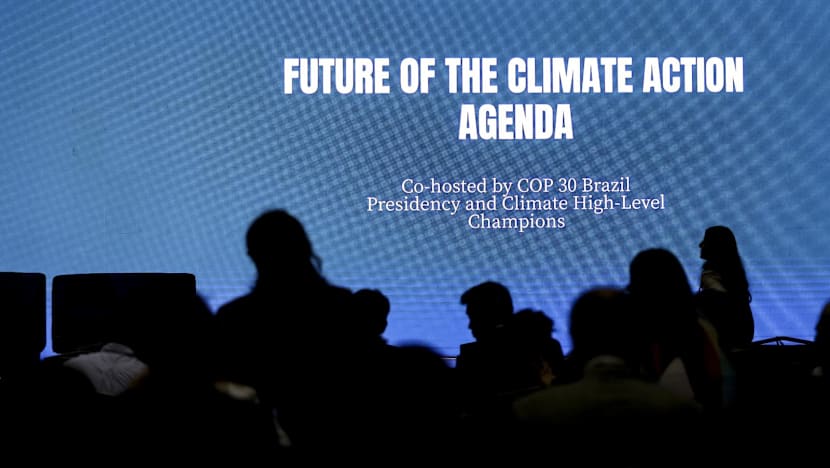
Simultaneously, on January 8, Trump announced the U.S. withdrawal from the United Nations Framework Convention on Climate Change (UNFCCC), a foundational treaty established in 1992 that underpins global climate efforts like the Paris Agreement. This move marks a deepening U.S. pullback from multilateral environmental commitments, echoing Trump's first-term exit from the Paris Accord in 2017, which was later rejoined under President Biden. Channel News Asia reports that the decision could hinder international climate cooperation, as the U.S.—the world's second-largest emitter—steps away from binding reporting and emissions reduction frameworks. Environmental groups have decried it as a setback for planetary goals, while administration officials argue it frees the U.S. from what they call "unfair burdens" that disadvantage American energy producers.
In parallel, U.S. military forces, with assistance from the United Kingdom, intercepted two oil tankers linked to Venezuela in the Atlantic Ocean. The vessels, named Marinera and M Sophia, were part of a "shadow fleet" allegedly transporting sanctioned crude oil from Venezuela and Iran toward Russia, according to Washington. One tanker flew a Russian flag, prompting Moscow to label the seizure "outright piracy." France 24 coverage highlights this as part of Trump's hardline campaign to curb illicit oil flows across the Americas, enforcing sanctions amid Russia's war in Ukraine and Iran's nuclear activities. The operation underscores transatlantic security ties, with the UK providing logistical support, and aims to disrupt revenue streams funding adversarial regimes.
Compounding these maneuvers, Trump on January 8 called for a dramatic 50% increase in U.S. military spending, targeting $1.5 trillion for fiscal year 2027—more than double current levels, which hover around $886 billion as authorized in the 2025 National Defense Authorization Act. Speaking in a France 24-interviewed address, Trump described the hike as essential for forging a "dream military" in "troubled and dangerous times." He pledged to redirect funds by curbing excessive payouts to defense contractors' shareholders and executives, urging reinvestment in new U.S. manufacturing plants. This proposal arrives against a backdrop of heightened threats: China's military modernization, Russia's Ukraine invasion now in its fourth year, and Iran's proxy conflicts in the Middle East.
Background and Context
These events unfold in a volatile geopolitical landscape. Trump's tariff strategy builds on his first-term trade wars, which imposed duties on over $380 billion in Chinese goods, yielding mixed results: some reshoring of manufacturing but elevated consumer prices. The furniture and cabinet sector, reliant on Asian imports, saw tariffs briefly paused in 2019 before escalation; today's delay continues that pattern of tactical flexibility.
The UNFCCC withdrawal revives debates over U.S. climate leadership. The treaty, ratified by the U.S. under President George H.W. Bush, commits nations to stabilize greenhouse gases but lacks hard enforcement. Trump's action follows COP30 preparations in Brazil, where U.S. pledges were anticipated.
On sanctions, the tanker seizures extend U.S. efforts post-2022 Ukraine invasion, when G7 nations capped Russian oil prices at $60 per barrel. Venezuela's oil, intertwined with Iranian tech and Russian shipping, has evaded controls via "dark fleet" tactics—hundreds of aging tankers obscuring ownership.
Military spending aligns with historical surges: post-9/11 budgets peaked at $700 billion adjusted; Trump's proposal dwarfs them, potentially straining the federal deficit, projected at $1.9 trillion for 2026 by the Congressional Budget Office.
Global Reactions and Outlook
Russia's piracy accusation highlights fraying U.S.-Moscow ties, while allies like the UK affirm NATO cohesion. China has yet to comment on tariffs, but Beijing's exports face renewed scrutiny. Climate diplomats warn of cascading exits from other nations.
As Congress debates the defense bill and trade extensions, these policies signal Trump's intent to project strength. Implementation hinges on legislative buy-in and economic data, with oil markets stable and inflation cooling per recent Federal Reserve reports. The coming months will test whether this multifaceted approach bolsters U.S. leverage or invites retaliation.
(Word count: 712)
Track this story live
Live World Map
Monitor global events in real time with a live activity map and hotspot summaries.
Markets
Connect live events to Catalyst market signals across crypto, commodities, indices, and forex.
Geopolitical Risk
Live geopolitical risk index tracking conflict zones, sanctions, and global threat levels.
Original Sources
- •Trump withdraws US from key climate treaty, deepening global pullback— Channel News Asia
- •
- •
Editorial process: This article was synthesized from the original sources cited above using The World Now's AI editorial system, with byline accountability from our editorial team. We grade every story for source grounding, factual coherence, and on-topic match before publication. Read more about our editorial standards and contributors. Spot something inaccurate? Let us know.
Last updated: January 16, 2026






