Tragedy on the Rails: Unpacking the Collision of High-Speed Trains in Southern Spain

Latest from X
Tragedy on the Rails: Unpacking the Collision of High-Speed Trains in Southern Spain
By The World Now Trend Analyst
January 19, 2026
Overview of the Incident
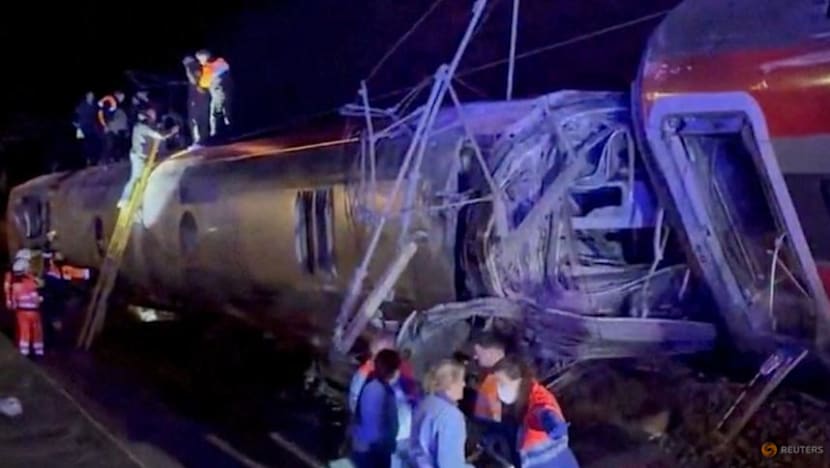
In a devastating incident that has gripped Spain and the world, two high-speed trains collided near the town of Adamuz in Córdoba province, southern Spain, on January 18, 2026. Initial reports indicate that an Iryo high-speed train derailed around 7:30 p.m. local time, tumbling onto an adjacent track where it was struck by an oncoming Alvia train. The collision resulted in a chaotic scene of twisted metal and emergency responders scrambling amid the wreckage.
Casualty figures have fluctuated as rescue operations progressed. Early accounts from police and emergency services reported at least five dead and more than 20 injured, but updates quickly escalated: Spanish Civil Guard sources cited 10 fatalities, while later posts on X (formerly Twitter) from eyewitness accounts and media monitors pushed the toll to 21 dead and over 100 injured, with 25 in serious condition. Several passengers were initially reported trapped, underscoring the human toll of this tragedy. Families of victims have been left in anguish, with hospitals in Córdoba overwhelmed by the influx of casualties. All high-speed trains in the area were canceled until at least Tuesday, disrupting travel across Andalusia.
This event marks a stark reminder of the vulnerabilities in high-speed rail systems, where speeds exceeding 200 km/h amplify the consequences of any failure.
Historical Context of Rail Safety in Spain
Spain boasts one of Europe's most extensive high-speed rail networks, the AVE system, spanning over 3,500 kilometers. However, its history is marred by high-profile disasters that have profoundly shaped safety protocols and public perception. The most notorious remains the 2013 Santiago de Compostela derailment—known as the Angrois accident—where an Alvia train traveling from Madrid to Ferrol derailed on a sharp curve, killing 80 people and injuring over 140. Investigations pinned the cause on human error: the driver was distracted by a phone call and exceeded speed limits, exacerbated by the absence of automatic signaling on that stretch.
More recently, Spain's transportation sector has faced scrutiny. Just two days prior, on January 16, 2026, a Turkish Airlines flight made an emergency landing in Barcelona due to technical issues, though unrelated to rail, it heightened national anxiety over infrastructure reliability. On the same day as the Adamuz collision, January 18, preliminary reports referenced a separate derailment in southern Spain, fueling speculation of broader systemic strain.
These precedents have directly influenced regulations. Post-Angrois, Spain mandated enhanced automatic train protection systems (like LZB and ERTMS) across high-speed lines, stricter driver training, and curve-speed monitoring. Yet public trust remains fragile; posts on X reference the 2013 crash with skepticism, questioning if lessons were truly learned. One user noted the eerie parallels: "A high-speed train derailed on a curve... traveling from Madrid," evoking fears of recurring oversights.
Systemic Issues in High-Speed Rail Safety
The unique angle here lies in probing potential systemic failures within Spain's high-speed rail safety protocols, viewed through the lens of historical precedents dictating—or failing to dictate—current infrastructure decisions. Spain's AVE network, operated by a mix of state-owned Renfe (including Alvia services) and private operators like Iryo, relies on European Train Control System (ETCS) Level 2 for most lines, which enforces speed limits and automatic braking. However, older segments and maintenance lapses have been flagged.
Preliminary X posts and media reports suggest signaling failures or human error as culprits, echoing Infobae's 2024 coverage of a similar incident blamed on "100% human failure" amid non-functional automatic signaling. In Adamuz, the derailment's cause remains under investigation—possibly track conditions, speed, or a "llamada inoportuna" (inopportune call), as one post alleged for past crashes. Private operators like Iryo, launched in 2021 to compete with Renfe, have raised concerns over fragmented oversight. Government audits post-2013 promised upgrades, but critics argue underfunding and corruption in construction—highlighted in recent X reactions questioning "deficiencies in construction and operation"—persist.
The public-private model amplifies risks: Renfe handles much of the infrastructure, while competitors lease tracks, potentially diluting accountability. Historical data shows Spain's rail fatality rate has dropped post-Angrois, but incidents persist, prompting questions about whether protocols prioritize speed and expansion over redundancy.
Immediate Response and Aftermath
Emergency services mounted a swift response, deploying Guardia Civil, regional rescue teams, and medical units from Córdoba and beyond. Firefighters used hydraulic tools to free trapped passengers, while helicopters airlifted the critically injured. Prime Minister Pedro Sánchez expressed condolences, pledging a full investigation by the Comisión de Investigación de Accidentes Ferroviarios (CIAF).
Public reaction has been visceral. On X, sentiment ranges from horror—"Tragic high-speed train derailment... unknown number still trapped"—to outrage: "Will anyone dare travel on that train in the future? Especially with corruption and deficiencies emerging." Victims' families gathered at hospitals, demanding transparency, while unions called for immediate safety audits. Broadcaster Salvados teased a program on the crash, citing "señalización inexistente" (non-existent signaling). Internationally, outlets like CNN and AP amplified the story, with varying death tolls reflecting the fog of breaking news.
Looking Ahead: The Future of Rail Safety in Spain
This collision could catalyze a seismic shift in Spain's rail landscape, mirroring post-Angrois reforms. Predictively, expect an independent probe revealing signaling gaps or maintenance shortfalls, leading to stricter ETCS mandates, AI-driven monitoring, and mandatory black-box data for private operators. Fines for infractions could rise, with EU oversight intensifying under the Single European Sky and Rail frameworks.
Public trust, already eroded by 2013's legacy, may wane further. X users' queries—"¿Alguien se atreverá a viajar?" (Will anyone dare travel?)—signal potential shifts: fewer high-speed bookings, boosting low-cost airlines or buses. The industry, a €5 billion economic driver employing 10,000, faces ridership dips, pressuring subsidies. Positively, it could accelerate green rail investments, aligning with Spain's 2050 net-zero goals.
Ultimately, Adamuz tests whether historical precedents will finally forge unbreakable protocols—or if systemic inertia prevails.
(Word count: 1,028)
Trending report
Why this topic is accelerating
This report format is intended to explain why attention is building around a story and which related dashboards or live feeds should be watched next.
Momentum driver
Spain
Best next step
Use the related dashboards below to keep tracking the story as it develops.
Track this story live
Original Sources
- •
- •
- •
- •
- •
- •
- •
- •
- •
- •
Editorial process: This article was synthesized from the original sources cited above using The World Now's AI editorial system, with byline accountability from our editorial team. We grade every story for source grounding, factual coherence, and on-topic match before publication. Read more about our editorial standards and contributors. Spot something inaccurate? Let us know.
Last updated: February 14, 2026