
Strike Ukraine: Russian Attacks Kill 10 in Dnipro Region
Russian forces pounded Ukraine's Dnipro and other areas in a major strike Ukraine operation, killing 10 people in waves of drone and missile attacks.[4]
Overview of Recent Strikes
The ongoing military exchanges between Russia and Ukraine have intensified, marked by a series of coordinated strikes on both sides of the conflict. Russian forces launched extensive drone and missile barrages targeting multiple regions in Ukraine, resulting in significant casualties and infrastructure damage.[4] In response, Ukrainian defence forces conducted counter-strikes deep into Russian territory, hitting key infrastructure and military assets.[2] A notable aspect of these exchanges includes Russia's deployment of 144 drones overnight, many of which were intercepted by Ukrainian air defences.[3] These actions, reported across various official channels, underscore the persistent tit-for-tat nature of the conflict, with strikes affecting civilian areas and strategic targets alike.[2][3][4] The timeline centers around events from the night of 25-26 April, when Russian drone swarms targeted cities including Chernihiv, while Ukrainian operations reached as far as Russia's Yaroslavl region.[3] This overview captures the breadth of the engagements, from port damages in Ukraine to injuries reported in Russia's Vologda region and annexed Crimea due to Ukrainian responses.[2] The scale of the Russian drone assault alone highlights the technological dimension of modern warfare in this theater, with Ukrainian defences demonstrating resilience by neutralizing a substantial portion of the incoming threats.[3] Regional governors and military statements provide the primary accounts, emphasizing the repeated targeting of urban centers like Dnipro, which faced multiple waves of attacks.[4] These incidents reflect a pattern of escalation, where aerial assaults dominate the tactical exchanges, forcing both sides to bolster defensive postures amid ongoing hostilities.[2][3][4]
Russian Military Actions in Ukraine
{IMAGE_2}
Russia's military campaign against Ukraine involved a massive deployment of 144 drones launched on the night of 25-26 April, targeting various cities including Chernihiv and others across the country.[3] Ukrainian air defence systems responded effectively, shooting down or jamming 124 of these drones, which limited the potential damage from the assault.[3] However, the strikes that penetrated defences caused severe consequences, particularly in the southeastern city of Dnipro, where Russian forces conducted at least three separate attacks overnight and during the day using drones and missiles.[4] These waves pounded the region, hitting residential and port areas, and resulted in 10 people killed overall, with dozens injured.[4] In Dnipro specifically, an initial overnight strike severely damaged a large chunk of an apartment building, leading to eight deaths and 49 injuries in the city alone, as reported by Regional Governor Oleksandr Hanzha.[4] Dnipro has been a repeated target throughout more than four years of war with Russia, making it a focal point for such sustained pressure.[4] Additional Russian attacks across Ukraine claimed at least five lives and damaged a ship in a port, illustrating the widespread impact of these operations.[2] The combination of drones and missiles in these strikes represents a multi-layered offensive strategy, aimed at overwhelming Ukrainian defences and infrastructure.[3][4] Official reports detail how these actions disrupted civilian life, with emergency responses mobilized to address the aftermath in affected urban centers.[4] The persistence of such attacks, even after significant interceptions, points to Russia's commitment to maintaining aerial dominance through sheer volume of launches.[3]
Ukrainian Counter-Strikes on Russian Targets
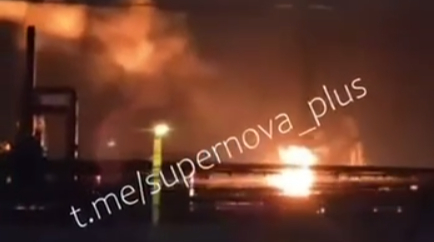
Ukrainian defence forces executed precise strikes on Russian territory, targeting critical infrastructure and military assets as reported by Ukraine's General Staff.[1] A prominent operation involved hitting the Yaroslavl oil refinery in the Russian city of Yaroslavl on 26 April, which caused a fire at the facility.[1] These counter-strikes also extended to military trains, further disrupting Russian logistics.[1] In parallel, Ukrainian attacks inflicted injuries on at least six people in Russia's Vologda region and the annexed Crimea, demonstrating the reach of Ukraine's offensive capabilities.[2] These responses come in direct retaliation to Russian barrages, with Ukraine's General Staff confirming the success of operations against high-value targets like the oil refinery, where the resulting fire indicates substantial material damage.[1] The strikes on military trains suggest an effort to hamper Russian supply lines, a key element in sustaining frontline operations.[1] Reports from the Vologda region and Crimea highlight the human cost on the Russian side, with injuries reported amid these incursions.[2] Ukraine's ability to project force into Russian heartland areas, such as Yaroslavl, underscores advancements in long-range strike capabilities, potentially involving drones or missiles tailored for such deep penetrations.[1][2] These actions align with a broader strategy of asymmetric response, where Ukrainian forces aim to impose economic and operational costs on Russia while defending their own territory.[1] The General Staff's public reporting serves to boost morale and signal resolve, detailing the fire at the refinery as a tangible outcome of their precision targeting.[1]
Casualties and Damage Reported
The human and material toll from the recent exchanges has been stark, with Russian attacks across Ukraine killing at least five people and damaging a ship in a port.[2] In Dnipro, the casualties were even higher, with 10 people killed in total from waves of drone and missile strikes, including eight deaths and 49 injuries directly in the city from an apartment building strike.[4] Regional Governor Oleksandr Hanzha's statements provide detailed accounts of the overnight and daytime assaults that left dozens injured beyond the fatalities.[4] On the Ukrainian side of counter-strikes, at least six people were injured in Russia's Vologda region and annexed Crimea.[2] Infrastructure damage extended to critical civilian structures, such as the apartment building in Dnipro, where a large chunk was destroyed, and a ship in a Ukrainian port, disrupting maritime operations.[2][4] These figures, drawn from official reports, paint a picture of widespread disruption, with emergency services likely stretched thin in responding to multiple impact sites.[4] The port damage highlights vulnerabilities in Ukraine's logistics network, while the refinery fire in Yaroslavl represents reciprocal economic sabotage.[1][2] Over four years of conflict, repeated targeting of cities like Dnipro has compounded the cumulative toll, affecting thousands in similar patterns.[4] Casualty numbers, though preliminary, emphasize the civilian exposure in these urban strikes, where defensive measures could not fully mitigate the impacts.[2][4]
Specific Incidents Involving Drones
Drone warfare played a central role in the recent assaults, with Russia launching 144 drones against Ukraine on the night of 25-26 April.[3] Ukrainian air defences achieved a high success rate, shooting down or jamming 124 of them, which prevented potentially catastrophic damage across targeted cities like Chernihiv.[3] Visual documentation captured the moment a drone was shot down amid the major Russian attack, illustrating the intensity of the aerial interceptions.[5] These shoot-downs involved a combination of electronic jamming and direct kinetic intercepts, showcasing Ukraine's integrated air defence network.[3] Strikes were recorded in Chernihiv and other cities, where the surviving drones caused impacts despite the high interception rate.[3] The scale of the drone swarm—144 in a single wave—represents one of the largest such operations reported, testing the limits of defensive capacities.[3] The jammed drones, unable to reach their targets, likely fell harmlessly or were neutralized mid-flight, as evidenced by footage of a specific shoot-down event.[5] This incident underscores the real-time drama of modern conflicts, where technology determines outcomes in seconds.[3][5] Ukrainian forces' effectiveness in neutralizing over 85% of the drones highlights ongoing improvements in counter-drone measures, including radar detection and rapid response protocols.[3] Cities like Chernihiv faced direct threats, but the defensive actions minimized the assault's footprint.[3]
What to watch next includes monitoring Ukrainian air defence performance against future large-scale Russian drone launches like the 144 reported, potential escalations in counter-strikes on Russian refineries such as Yaroslavl, and updates on casualties in Dnipro following the apartment building damage.[1][3][4]