
Tinubu Says Nigeria Refused Ransom and Prisoner Swap in Oyo School Kidnapping
Tinubu Rejects Ransom in Oyo School Abduction
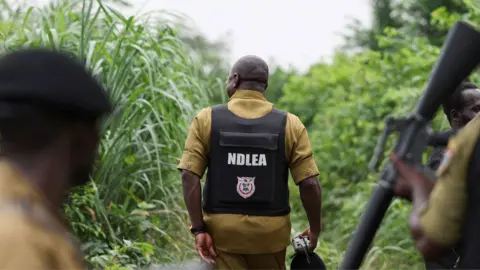
President Bola Tinubu disclosed that his government rejected ransom demands and the release of jailed gang members during the May 2026 abduction of 39 pupils and seven teachers in Oyo State, Nigeria, crediting an intelligence-driven military rescue that freed the hostages after 56 days without payment. [1] The Oriire attack on May 15, 2026, resulted in roughly 39 pupils and seven teachers being taken hostage, with one teacher, Michael Oyedokun, killed; the rescue concluded on July 10 with eight arrests and several neutralisations. [1] Tinubu told a delegation of Oyo State traditional rulers in Abuja that his government refused to negotiate with or pay ransom to the militants who kidnapped schoolchildren and teachers in Oriire last May. [1] He said the abductors demanded both money and the release of jailed members of their gang, demands that were flatly rejected, and described the military-led rescue that freed the victims after 56 days as intelligence-driven and successful without ransom. [1] The President said, “We refuse to negotiate for ransom. These criminals wanted us to release from detention members of their criminal gangs that were already arrested. That was one of their conditions, outside of the money they were looking for. And we said no deal. We are not going to negotiate with criminals. They committed murder, and we were ready to finish with their families, members of their own communities. They grew up somewhere.” [1] He added that the rescue operation was only possible because the military had a geographical layout of the forest. [1]
Army Expansion and Security Reforms Announced
Tinubu ordered the expansion of the Nigerian Army from eight to 12 divisions to shorten response times and improve geographic reach against terrorism and banditry, describing it as a direct response to the Oriire abductions. [1] He revealed his directive last week to expand the Army from eight to 12 divisions was a direct operational response to the Oriire school abductions in Oyo State, saying the increase was designed to shorten response times and give security forces the numerical and geographic reach needed to defeat terrorism and banditry. [1] The President announced plans to retrain and re-equip forest guards as frontline security assets, advocated for state police with safeguards against abuse, and blamed intensified kidnappings partly on security collapses in Mali, Burkina Faso and Niger. [1] He said forest guards would no longer be limited to wildlife enforcement but would be retrained and re-equipped as a frontline security asset. [1] Tinubu argued, “Some of them (terrorists) are non-Nigerians. You see the problem of insecurity in Mali, Burkina Faso, Niger Republic is adding more fuel to our challenges. In fact, that is why we must enhance the capacity of the forest guards as well as create the state police.” [1] He continued, “It is very necessary, and we are doing so. We have equally embarked upon what was missing; several decades of fears and uncertainty about what to do about security at the local level will be corrected. There will be state police, and that state police will have guardrails from abuses. We will protect it from abuses, and you traditional rulers too will have a role to play more.” [1]
Calls for Community Intelligence and Infrastructure Investment
Tinubu urged communities to provide local intelligence, called on state governments to invest federal allocations in road infrastructure for better security access, and pledged broader consultations with traditional rulers nationwide. [1] The President appealed to the traditional rulers to communicate with their communities, asking citizens to become active participants in the intelligence architecture. [1] He said, “The mention of intelligence is very important, and I want you to take it to our people, to be extra vigilant, to look at things critically, know their neighbourhoods, know their areas, report strange people.” [1] Referring to Ladoja’s days as governor, the President urged state executives to redirect their significantly enhanced federal allocation toward road infrastructure that would both improve living standards and give security agencies better access to remote areas. [1] He said, “The economy of operation is high. But the money that I’m pushing to the states, if you had it during your own time, or during my time, it would have been different. They are taking four to five times their money. Nobody is borrowing money to pay salaries now. Pensioners are receiving their pay. They should do more; instead of flying over where there is no numerical traffic, build roads and artery networks to really enhance the quality of life and the accessibility of the security agencies to penetrate those areas.” [1] The President pledged to convene broader consultations with traditional leaders across the country and asked the Oyo delegation to appreciate the armed forces in their communities. [1]
Mexico Arrests Suspected Gang Leader
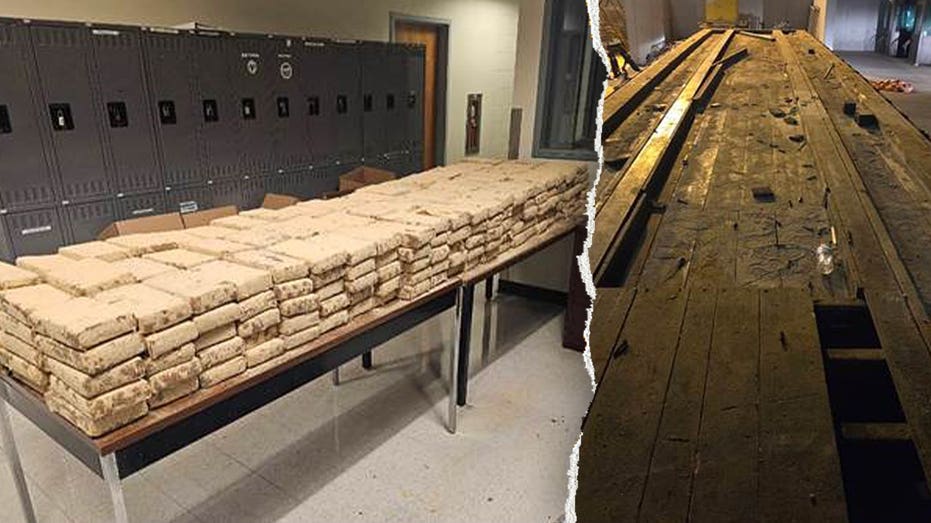
Mexico arrested a suspected gang leader accused of ordering a mayor's killing. [2]
Hundreds of Migrants Reach Spanish Enclave of Ceuta
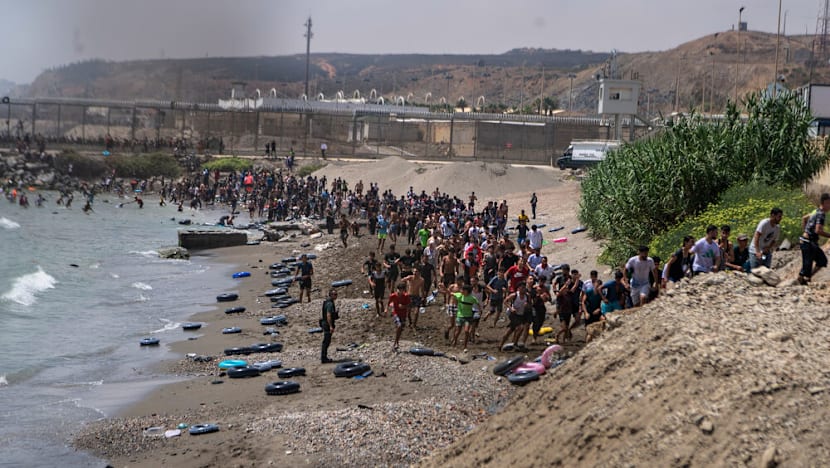
Hundreds of migrants reached the Spanish enclave of Ceuta after swimming from Morocco, with nine confirmed dead. [4] Madrid said it would despatch soldiers to Ceuta to ensure security after hundreds of migrants entered the Spanish north African exclave from Morocco and hundreds more headed there from the North African kingdom. [4] The Armed Forces will reinforce the Civil Guard in the exercise of its powers and any others that may be necessary to maintain security in the city of Ceuta. [4] The Spanish government's delegation in the enclave told AFP that the bodies of nine migrants who died while trying to reach Ceuta by swimming had been recovered. [4] Italy on Thursday called for Spain's suspension from the Schengen zone. [4] Foreign Minister Antonio Tajani wrote on X, “I am in favour of closing the Schengen area with Spain. Irregular and uncontrolled immigration poses a danger to national security. The images coming from Ceuta show how the Madrid Government's decision to grant Spanish, and therefore European, citizenship to over 500,000 irregular immigrants is profoundly wrong and encourages human trafficking.” [4] The president of Ceuta, Juan Vivas, said Wednesday that 1,500 migrants had come to Ceuta by sea in the past few days. [4] Spain's Prime Minister Pedro Sanchez said on X that his government was “focussed on providing an immediate response to the crisis in Ceuta. We are mobilising all necessary resources, working with Moroccan and international authorities, and preparing the necessary measures to restore normality as soon as possible.” [4] Interior Minister Fernando Grande-Marlaska will travel to Ceuta on Friday to monitor the situation. [4]
Ghana Coalition Targets Trafficking for Cyber Scams
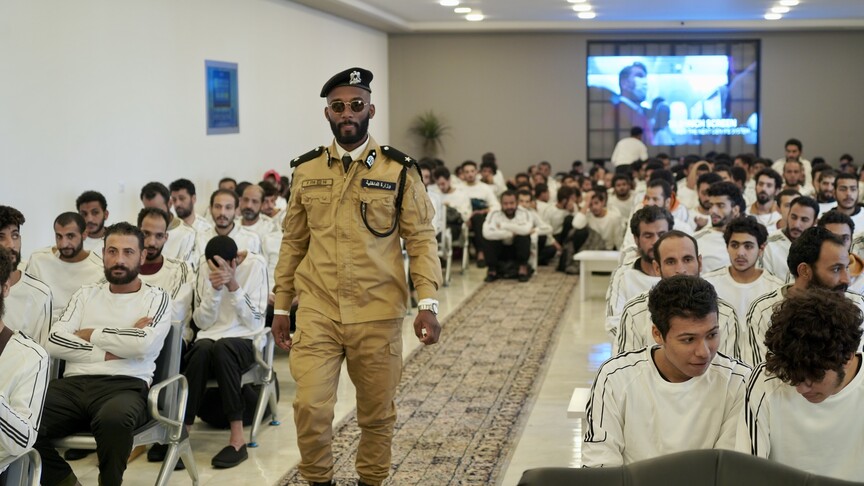
A coalition of civil society organisations is set to be launched in Ghana to strengthen the fight against transnational organised crime and the growing trafficking of young people into cyber-enabled scam operations across West Africa. [5] The proposed Ghana Civil Society Coalition Against Transnational Crime will be formally launched in Accra on International Youth Day, August 12, 2026. [5] The forum focused on what organisers described as one of the fastest-growing and least understood forms of human trafficking—victims who are recruited under false pretences and forced to engage in online fraud. [5] Speakers at the forum argued that Ghana has become a source, transit point and destination for trafficking linked to cyber fraud. [5] They cited several recent rescue operations involving Ghanaian nationals, including the rescue of more than 100 young Ghanaians in Ho in January 2026 after they had allegedly been recruited through social media, the repatriation of 28 Ghanaians from Côte d'Ivoire in May, and the rescue of 44 people from camps in Akwa Ibom State, Nigeria, in March. [5] Participants also referenced the July 21 rescue of nine people in Afienya, near Accra, and the arrest of 10 suspects in connection with suspected trafficking activities. [5] The communiqué calls for the strict application of the principle of non-punishment, urging authorities to screen every person rescued from scam compounds or returned from suspected trafficking situations before initiating criminal proceedings or deportation. [5] Lamberta Bina Abusah, co-convener of the forum for GYAN Ghana, said, “For fifteen years, since young Ghanaians first began to be drawn into online fraud, GYAN Ghana has warned that this was never simply a story of criminal young people—it was a story of young people preyed upon. Today the world calls it 'Trapped Behind the Scam,' and the young person is no longer only running the scam—increasingly they are trafficked and forced to run it.” [5]
What to watch next: Interior Minister Fernando Grande-Marlaska will travel to Ceuta on Friday to monitor the situation, while the Ghana Civil Society Coalition Against Transnational Crime will be formally launched in Accra on International Youth Day, August 12, 2026.