
Three Killed in Israeli Strike on Beirut as UN Chief Condemns Attack
Israeli airstrikes on a Beirut suburb killed at least three people and prompted strong condemnation from the UN chief along with Iranian vows of an imminent response, complicating US-Iran negotiations for a potential peace agreement. The Lebanon strikes occurred on Dahieh in southern Beirut after Hezbollah fired aerial targets toward northern Israel.
Israeli Strike on Beirut Suburb
The Israeli military conducted an airstrike on Dahieh in southern Beirut, a Hezbollah stronghold, in response to the group firing aerial targets toward northern Israel. [5] Lebanese authorities reported at least three killed and 15 injured in the strike, according to state media and civil defense. [2] The Israeli military said the attack on Dahieh targeted what it described as a command centre used by Hezbollah after the group launched aerial targets toward Israel. [5] Lebanon's state media said at least three people were killed and 15 others injured. [5] The strike opens the possibility of further hostilities, as Iran vowed to respond to attacks on Beirut by attacking Israel. [5] Israel's action followed Hezbollah's launch of rockets into Israel since the start of this round of conflict in March. [5]
UN Chief's Condemnation
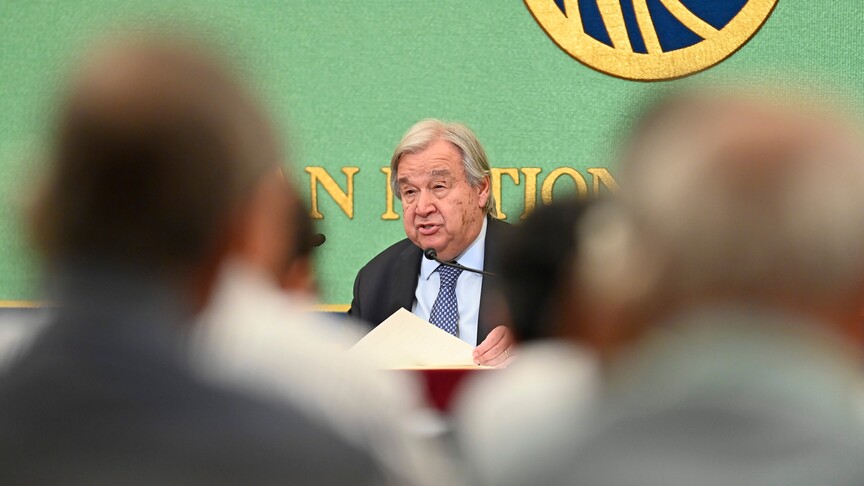
UN Secretary-General Antonio Guterres strongly condemned the strikes on Beirut at this crucial moment, urging maximum restraint as Washington and Tehran neared a potential peace deal. [1] The UN chief 'strongly' condemns Israeli strikes on Beirut 'at this crucial moment'. [1] Antonio Guterres urges 'maximum restraint' as Washington, Tehran near potential peace agreement. [1] The attacks took place despite the ceasefire and in a moment when the United States and the Islamic Republic of Iran are expected to reach an agreement that paves the way for a peaceful solution to this conflict. [2] Guterres called on all parties to exercise maximum restraint at this crucial moment. [2]

Israeli airstrike hits Dahieh suburb of Beirut, killing at least three people. — Source: clarin
Iran's Warnings of Imminent Response
Iran's Supreme National Security Council and senior officials including Mohammad Bagher Ghalibaf and Brig Gen Mohammad Jafar Assadi warned of an imminent response, stating the attack on Lebanon would not go unanswered and criticizing the US for failing to uphold commitments. [2] One of Iran's chief negotiators warned that the latest Israeli attack on Beirut's suburb could harm diplomatic efforts to reach a deal with the United States to end the war. [3] Iran's Parliament Speaker Mohammad-Bagher Ghalibaf sharply criticized Israel and the US after the attack, stating that Washington either lacks the will or the ability to fulfill its commitments. [3] In a post on the X platform, Ghalibaf said the attack on the Dahiyeh area in Beirut proves that the US is failing to guarantee its engagements, while accusing Washington and Tel Aviv of using the well-known tactic of “good cop and bad cop.” [3] Iran's senior military official Brig Gen Mohammad Jafar Assadi also warned that the attack would not go unanswered. [5] Iran has insisted that any truce should also include the end of the war in Lebanon. [5]
Trump's Reaction and Frustration
US President Donald Trump expressed frustration with Israeli Prime Minister Benjamin Netanyahu, stating the strike should not have occurred especially on the day a peace deal with Iran was expected to be signed, while affirming Israel's right to defend itself but calling for no further attacks by any party. [2] Donald Trump said that an Israeli attack against Beirut "should not have happened," after provoking a strong protest from Iran that cast doubt on the US president's promise that a peace agreement would be signed on Sunday. [2] The US president did not hide his frustration with Israeli Prime Minister Benjamin Netanyahu: "It's so serious... I couldn't believe it. An hour before we were supposed to sign the agreement." [2] In his social media post, President Trump said: "Israel has the right to defend itself against threats, but the attack it was responding to was very small and meaningless, nobody was hurt, injured, or killed, and should not disrupt this important process." [5] He also said "there should be no more attacks by Israel anywhere in Lebanon, but there should also be no more attacks by any other party, including Hezbollah, against Israel." [5]
Hezbollah Commander Killed in Southern Lebanon
Israel separately claimed to have killed senior Hezbollah commander Ali Musa Daqduq in an airstrike south of the Litani River in southern Lebanon. [4] The army says Ali Musa Daqduq was killed in an airstrike south of the Litani River. [4] There has been no comment yet from Hezbollah. [4]
Impact on US-Iran Peace Negotiations
The attack on Dahieh, where the Iran-backed armed group Hezbollah is based, came after the US said an agreement with Iran would be signed on Sunday. [5] The strike puts further pressure on attempts for a US-Iran deal to end fighting, although Donald Trump says a truce remains close. [5] Mohammad Bagher Ghalibaf, Iran's chief negotiator in the ongoing talks with the US, said Israel's attacks showed the US was not fulfilling its commitments. [5] Iran insists that any truce should also include the end of the war in Lebanon, where Israel has been fighting the militia and political party Hezbollah. [5] Israeli officials, however, reject this, saying the military operations must continue. [5] In Israel, where there is public support for the war to continue, a consensus seems to have emerged that the potential US-Iran deal could represent a setback for the country, as its military successes against Iran and Hezbollah do not appear to have been translated into what could be seen as a strategic victory. [5] Based on leaks of the deal, an Israeli military official described it as "very bad" and "catastrophic" to the country's Ma'ariv newspaper. [5] An Israeli defence official told N12 TV channel that "none of the goals set by Israel have received an immediate response in the agreement." [5] The Lebanese government has also tried to disassociate the situation in the country from Iran, to reduce Tehran's influence domestically and weaken Hezbollah, as part of efforts to disarm the group. [5]
What to watch next: Iran has vowed an imminent response to the Beirut attack while Trump has called for no further attacks by Israel or Hezbollah as efforts continue toward a US-Iran agreement that could end regional fighting.







