
Thousands of Irish Farmers Take to the Streets in Protest Against EU-Mercosur Trade Deal
Dublin, Ireland – On January 10, 2026, thousands of Irish farmers converged in a major demonstration against the European Union's proposed trade deal with Mercosur, voicing deep concerns over its potential to devastate local agriculture. The protest, which began around 2:39 p.m. GMT, underscores growing tensions within the EU over trade policies that farmers argue prioritize global markets at the expense of domestic producers and environmental standards.
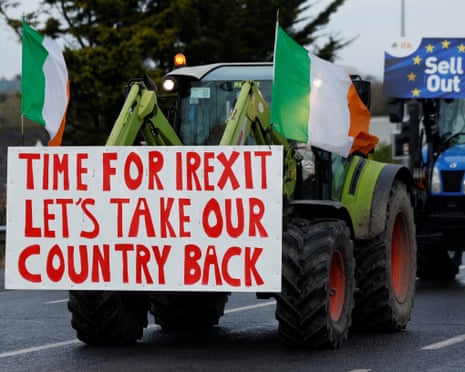
The rally highlights the agricultural sector's pivotal role in Ireland's economy, where farming contributes significantly to GDP and employment. Participants, organized by major farming groups, marched through key areas, brandishing signs and tractors to draw attention to what they describe as an existential threat from increased imports of South American beef, poultry, and sugar. The event remained peaceful, classified as medium-severity civil unrest, with no reports of arrests or significant disruptions as of the latest updates.
Farmers' Core Grievances
Irish farmers' opposition centers on the deal's provisions, which would grant tariff-free access to EU markets for products from Mercosur nations—Brazil, Argentina, Paraguay, and Uruguay—potentially flooding Europe with lower-cost goods. Critics, including livestock producers, warn that this could undercut Irish beef prices, already under pressure from global competition and domestic challenges like weather variability and input costs.
"The Mercosur deal would open the floodgates to hormone-treated beef and products from deforested lands, undercutting our high standards," echoed sentiments commonly expressed by farming representatives in prior statements. Ireland's grass-fed, high-welfare beef industry, a cornerstone of its €13 billion annual agri-food exports, faces particular vulnerability. In 2024, Ireland exported over 500,000 tonnes of beef, much of it to the UK and EU markets, making it one of Europe's top producers.
The protest builds on a wave of similar actions across Europe. French farmers staged blockades in late 2024, while Polish and Italian groups have rallied against the deal, contributing to delays in ratification. In Ireland, the Irish Farmers' Association (IFA) has led the charge, urging Taoiseach Leo Varadkar's government to veto the agreement, leveraging Ireland's influence as an EU member state.
Background on the EU-Mercosur Negotiations
Negotiations for the EU-Mercosur trade agreement date back to 1999, with a political outline agreed in 2019 after two decades of talks. The deal aims to create a market of nearly 800 million consumers, boosting EU exports in sectors like machinery, chemicals, and services while reducing tariffs on industrial goods. For Mercosur, it promises access to Europe's affluent consumers.
However, environmental and agricultural safeguards have stalled progress. The agreement includes commitments to enforce the Paris Climate Agreement and sustainable farming practices, but skeptics argue these are unenforceable. A 2024 European Commission impact assessment projected a potential 1-2% drop in EU beef production due to imports, though proponents claim overall economic gains of €4 billion annually for the EU.
Ireland has been a vocal opponent since the deal's revival. In 2023, the government formally expressed reservations, citing risks to biodiversity and animal welfare. Recent EU Commission pushes under Ursula von der Leyen to finalize the pact by 2026 have reignited fury, coinciding with broader farmer discontent over the EU's Green Deal regulations, which impose stricter emissions targets.
Broader EU and Irish Context
Agriculture employs about 8% of Ireland's workforce and underpins rural communities, with dairy and beef comprising over 70% of output. The sector has faced headwinds, including Brexit-related trade shifts and the 2022 energy crisis, amplifying sensitivities to new deals. EU-wide, farmer protests peaked in 2024 amid nitrogen regulations and Ukraine grain imports, leading to policy concessions like relaxed pesticide rules.
Political fallout is mounting. Ireland's Fine Gael-led coalition faces pressure ahead of local elections, with opposition parties like Sinn Féin amplifying anti-deal rhetoric. EU Agriculture Commissioner Janusz Wojciechowski has acknowledged concerns, stating in December 2025 that "safeguards will protect sensitive sectors," but farmers demand outright rejection.
Outlook: A Test for EU Unity
The January 10 protest signals potential escalation, with IFA leaders vowing sustained action if the deal advances. EU foreign ministers are slated to discuss ratification timelines in February 2026, where Ireland could join France and Austria in blocking progress—a move requiring unanimous approval for certain provisions.
As global trade tensions rise amid U.S. protectionism and China's market dominance, the Mercosur saga tests the EU's balancing act between economic liberalization and protecting its 10 million farmers. For Irish producers, the stakes are clear: adaptation or survival in an increasingly competitive landscape.
(Word count: 612)