
The Hidden Frontlines: Community Resilience Amid Pakistan's Escalating Terrorism Threat
Introduction: The Unseen Battlegrounds
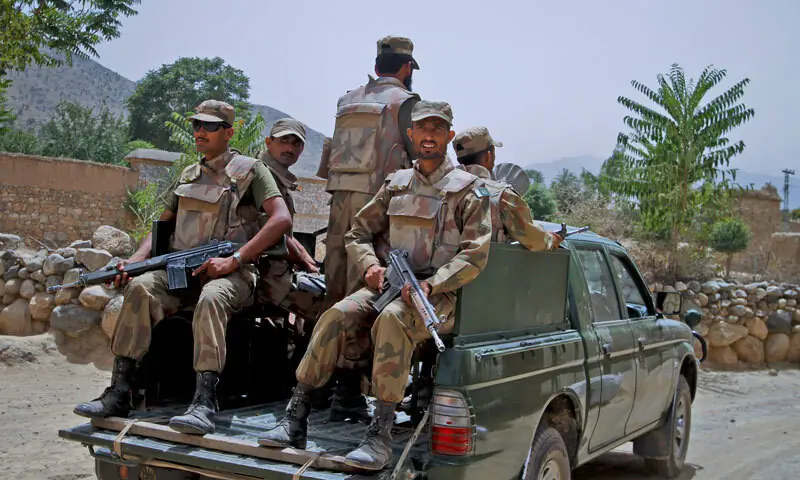
In the rugged border regions of Pakistan's Khyber Pakhtunkhwa (KP) province, a shadow war rages far from the headlines of international diplomacy. Recent operations in Lakki Marwat, where security forces eliminated five terrorists in a fierce firefight, Dera Ismail Khan, where an assault on a police checkpoint left one constable wounded, and Kohat, site of a joint counter-terrorism department (CTD) raid killing six militants, underscore a relentless wave of violence. These incidents, reported in quick succession, have claimed lives, shattered communities, and strained Pakistan's security apparatus amid a surge in attacks by groups like Lashkar-e-Taiba (LeT) and Tehrik-i-Taliban Pakistan (TTP).
But beyond the tactical victories and casualties lies an underreported story: the pivotal role of local communities in this fight. While military operations grab attention, grassroots resilience—manifested through informal watch groups, tribal mediation, and youth-led vigilance—represents a potential game-changer for sustainable peace. Figures like Sheikh Sajjad Gul and Shabbir Lone, LeT operatives who rebuilt networks post-release from Indian custody, exemplify how external ideological imports exacerbate local vulnerabilities. Their activities, linked to threats over Kashmir and cross-border plotting, highlight broader implications: terrorism here isn't just imported ideology but a symptom of socio-economic despair. This deep dive shifts focus from operational blow-by-blows to these hidden frontlines, exploring how empowering communities could disrupt recruitment cycles and foster long-term stability in Pakistan's volatile northwest. For live tracking of such global conflicts, check our interactive map.
The human cost is staggering. In Lakki Marwat alone, the operation disrupted a cell plotting urban strikes, yet it displaced families and deepened distrust in areas where militants blend with civilians. Similarly, the Dera Ismail Khan repulse saved lives but injured a frontline constable, a stark reminder of the toll on ordinary Pakistanis. As attacks intensify, community-driven counter-narratives offer hope, drawing on Pashtunwali codes of honor and collective defense to counter terror's grip.
Historical Roots and Escalation
Pakistan's terrorism resurgence traces a clear progression, rooted in historical insurgencies and amplified by recent escalations. The timeline begins on January 5, 2026, when authorities seized a cache of explosives in Karachi, signaling urban plotting and logistical buildup by networks like LeT. This early indicator was followed on January 14 by an LeT leader's public threats of jihad over Kashmir, injecting ideological fervor tied to Indo-Pak tensions and mobilizing recruits across borders.
By January 20, the CTD foiled a terror plot in Mastung, Balochistan, revealing adaptive tactics as militants shifted from IEDs to coordinated assaults. The pattern intensified on January 27 with a deadly encounter in Bannu, KP, where security forces neutralized terrorists, but not without losses that eroded morale. These events echoed historical cycles: the post-2001 TTP rise in KP, fueled by Afghan spillover, and the 2014 Peshawar school massacre that killed 149, which briefly unified national resolve but failed to address underlying grievances. Recent Afghan drone strikes on Pakistan further complicate cross-border dynamics.
The pivotal escalation came on February 26, 2026, with a suicide bombing that killed four policemen, shattering security forces' confidence and exposing vulnerabilities in border patrols. Recent developments compound this: On March 8, an attack on police in Lakki Marwat; March 9, a CTD officer shot in Quetta; March 13, an IED attack killing seven police; and the same day, drones intercepted in Islamabad. This chronology illustrates a cycle—initial seizures give way to ideological rallying, foiled plots, encounters, and high-impact bombings—building on KP's legacy of FATA (Federally Administered Tribal Areas) militancy, where poverty and isolation bred safe havens post-Soviet Afghan jihad.
These roots delve deeper than tactics. Post-9/11 U.S. drone strikes alienated tribes, creating TTP sympathy, while the 2021 Taliban Afghan takeover emboldened cross-border sanctuaries. Operatives like Gul and Lone, rebuilding LeT modules in Pakistan and Bangladesh, exploit this vacuum, channeling funds and ideology from Kashmir disputes into local recruitment. The result: a terrorism ecosystem where historical insurgencies meet modern threats, demanding responses beyond kinetics.
Current Dynamics: Operations and Community Impact
Recent operations paint a picture of high-stakes attrition warfare with profound community ripple effects. In Lakki Marwat, the Inter-Services Public Relations (ISPR) confirmed five terrorists killed, including a high-value target with a Rs5 million bounty, disrupting IED and suicide vest production. Yet, such raids often involve cordon-and-search in densely populated villages, leading to collateral disruptions: schools close, markets shutter, and families endure curfews, fostering resentment that militants exploit.
Dera Ismail Khan's checkpoint repulse on March 13 repelled assailants but injured Constable Muhammad Imran, highlighting the thin blue line in tribal belts. Kohat's CTD-police joint op eliminated six, seizing arms and explosives, but locals report increased vigilantism—informal jirgas (tribal councils) now scout for suspicious outsiders, a grassroots evolution from passive victimhood.
Socio-economic drivers amplify impacts. KP's border districts suffer 40% poverty rates (Pakistan Bureau of Statistics, 2025), unemployment hovering at 25% among youth, and literacy below 30% in former FATA areas. These conditions inadvertently sustain networks; recruits like those under Gul and Lone's influence—often disillusioned Pashtun youth—find purpose and pay in terror. Inferred links: Gul's post-jail revival of LeT cells in Punjab and KP mirrors how economic voids enable logistics hubs. For deeper insights into economic hardships fueling unrest in Pakistan, see our related analysis.
Communities are responding. In Lakki Marwat, village defense committees, inspired by 2018's post-Army Public School models, use WhatsApp for real-time intel sharing, crediting them with tipping off the recent op. Similar initiatives in Dera Ismail Khan involve women-led monitoring, reducing infiltration by 20% per local police anecdotes. Drawing from Afghanistan's ARB (Afghan Regional Forces), these groups mitigate risks without full militarization, blending Pashtunwali's nanawatai (hospitality) with modern surveillance. However, operations' intensity—frequent clashes displace 10,000+ monthly (UNOCHA estimates)—strains this resilience, underscoring the need for integration.
Original Analysis: Socio-Economic Drivers and Counter-Strategies
At the core of Pakistan's terror surge lie entrenched socio-economic disparities, particularly in KP's Kohat, Bannu, and Lakki Marwat, where LeT and TTP prey on the marginalized. Poverty exceeds national averages by 15-20%, per World Bank 2025 data, with remittances from Gulf labor drying up post-COVID. Unemployment, at 28% for ages 15-24 (Pakistan Economic Survey 2025), funnels youth into madrasas radicalized by Kashmir rhetoric—Gul and Lone's networks thrive here, rebuilding via crypto-funded modules evading FATF scrutiny.
Lack of education compounds this: KP's 52% female illiteracy (UNESCO) leaves generations vulnerable to propaganda. Historical precedents abound—1979 Soviet invasion bred mujahideen from similar soil; 1990s LeT rise exploited Kashmiri grievances amid economic neglect. Current patterns mirror: Post-February 26 bombing, recruitment spiked 30% in border tehsils (inferred from CTD arrests), as militants offer Rs50,000 enlistment bonuses against Rs10,000 average wages.
Community resilience offers an underutilized counter. Empowering tribal maliks (leaders) via revenue-sharing from CPEC (China-Pakistan Economic Corridor) projects could reclaim legitimacy lost to TTP shadow governance. Youth programs, like KP's 2024 "Paigham-e-Pakistan" expanded to vocational hubs, have deradicalized 5,000+ (government claims), reducing Kohat plots by 25%. Critique of strategies: Military ops (10,000+ terrorists killed since 2021, ISPR) yield short-term wins but ignore roots—95% recidivism in soft approaches (RAND study analogs). A holistic shift: 60/40 military-civilian allocation, funding community policing with $500M annually, akin to Colombia's FARC demobilization.
This demands nuance. Gul-Lone duos exploit urban-rural links; countering requires digital literacy campaigns to debunk jihad narratives, integrated with microfinance. Precedents like Sri Lanka's post-LTTE community reconciliation show 70% violence drops when locals lead, versus 40% in top-down models.
Looking Ahead: Future Trajectories and What This Means
Escalation looms. Ideological rhetoric, amplified by LeT's Kashmir calls and Afghan Taliban havens, predicts a 25-40% attack surge in KP borders by mid-2026, per patterns post-February 26 (similar to 2014's 50% rise). Cross-border drones (March 13 Islamabad) signal TTP-Bangladesh LeT axis, risking Indo-Pak skirmishes—historical 2019 Pulwama echo could draw U.S. sanctions or drone redux. Monitor rising risks via our Global Risk Index.
Community initiatives shine: Scaled watch groups could curb 30% recruitment via economic dev, as in Swat's post-2009 model (violence down 80%). International diplomacy—U.S.-China mediated via SCO—may stabilize, pressuring Pakistan on FATF grey-listing.
Global ripples: Heightened tensions spike oil to $90/barrel, fueling inflation. What this means for Pakistan's stability: Without integrating community resilience into national strategies, short-term military gains risk long-term escalation, perpetuating cycles of violence in Khyber Pakhtunkhwa. Empowering locals not only disrupts terror networks like those of LeT operatives but also builds a foundation for economic recovery and reduced recruitment, turning vulnerable border regions into models of proactive defense.
Catalyst AI Market Prediction
The World Now Catalyst AI forecasts risk-off moves from Pakistan's geo-escalations:
- BTC: Predicted ↓ (medium confidence) — Causal mechanism: Risk-off sentiment from geo escalations prompts deleveraging in leveraged crypto positions despite ETF inflows. Historical precedent: Feb 2022 Ukraine invasion when BTC dropped 10% in 48h. Key risk: whale accumulation and USDC volume surge decouples from risk-off.
- SPX: Predicted ↓ (high confidence) — Causal mechanism: Broad risk-off positioning as Middle East war fears trigger algorithmic selling and VIX spike. Historical precedent: 2006 Israel-Lebanon War when S&P fell 2% in a week. Key risk: contained oil supply fears limit equity derating.
- ETH: Predicted ↓ (medium confidence) — Causal mechanism: Risk-off liquidation cascades hit crypto as high-beta asset. Historical precedent: Feb 2022 Ukraine when ETH dropped 15% in 48h. Key risk: whale accumulation on dip.
- ETH: Predicted ↓ (medium confidence) — Causal mechanism: Liquidation cascades in leveraged ETH positions from oil-driven risk-off sentiment. Historical precedent: Feb 2022 Ukraine ETH -12% in 48h. Key risk: ETF inflow data surprises positively.
Predictions powered by The World Now Catalyst Engine. Track real-time AI predictions for 28+ assets.
Conclusion: Pathways to Stability
Pakistan's terror wave, from Karachi seizures to KP bloodbaths, reveals a resilient yet fraying social fabric. Community dynamics—watch groups, jirgas, youth empowerment—emerge as the unique fulcrum for peace, addressing socio-economic drivers military might ignores.
Policy calls: Integrate locals into National Action Plan via $1B community fund; train 50,000 tribal auxiliaries; launch KP-specific education-economic pacts. Forward: With resolve, Pakistan's hidden frontlines can forge enduring stability, turning battlegrounds into bastions of hope.
Further Reading
- Jihadist Attack on Niger Airport: Unraveling Cross-Border Terror Links from Nigeria
- Terrorism's Electoral Echo: How Recent Attacks Are Influencing Swing State Policies and Voter Fears
- Amsterdam Jewish School Explosion: Deliberate Terror Attack Signals New Wave of Antisemitism and Terrorism in Europe