
The Escalating Air War: Analyzing the Latest Russian Strikes on Ukraine
By David Okafor, Breaking News Editor, The World Now
February 26, 2026
In the shadow of impending diplomatic maneuvers, Russia has intensified its aerial bombardment of Ukraine, launching a barrage of missiles and drones that struck key cities just hours before scheduled U.S.-Ukraine talks in Geneva. This unique analysis dissects the strategic calculus behind these strikes, revealing how they underscore evolving military tactics—particularly the dominance of drone and missile warfare—and threaten to upend international negotiations aimed at resolving the protracted conflict.
Overview of Recent Strikes
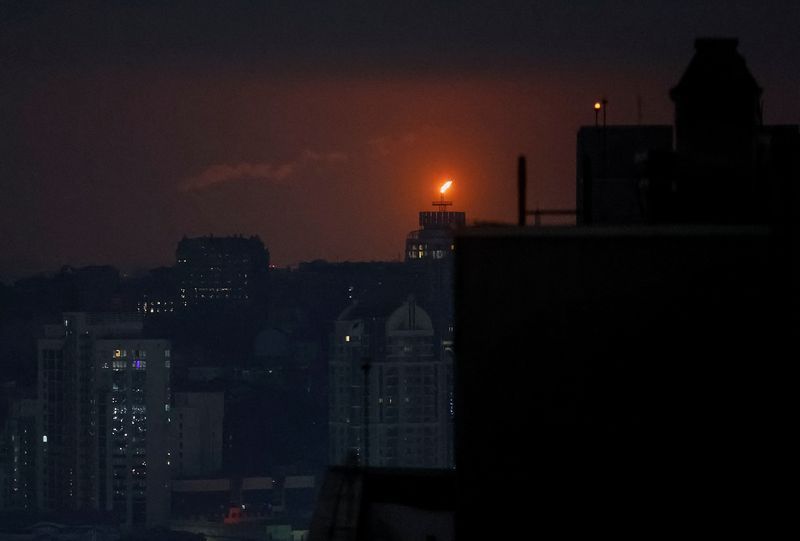
Russia unleashed a major aerial assault on Ukraine overnight into February 26, 2026, deploying a combination of missiles and drones targeting multiple urban centers. Ukrainian authorities reported at least five people killed and 18 injured across the country in the past 24 hours, with additional tallies pushing the injury count to 26 in some assessments. Kyiv, the capital, bore the brunt of the attack, with explosions reverberating through the city and air raid sirens blaring for hours. Reports confirmed strikes on residential areas and infrastructure, causing widespread alarm mere hours before the U.S.-Ukraine delegation was set to convene in Geneva.
In Kharkiv, Ukraine's second-largest city and a frequent flashpoint near the Russian border, the assaults injured at least 20 people, damaging buildings and prompting emergency responses. Other regions, including Lviv and Kherson, faced intermittent drone incursions, exacerbating blackouts and straining air defense systems. Ukrainian air defenses intercepted a significant portion of the incoming threats—estimated at over 100 projectiles—but enough penetrated to inflict notable damage. Power outages rippled through affected zones, a hallmark of Russia's strategy to erode civilian morale and infrastructure resilience.
These strikes represent one of the largest single-night operations in recent months, timed provocatively ahead of diplomatic efforts. No official Russian confirmation has been issued, but the pattern aligns with Moscow's doctrine of "active defense," blending precision strikes with psychological warfare.
Historical Context of the Conflict
The latest barrage must be viewed through the lens of a conflict that has escalated relentlessly since Russia's full-scale invasion in February 2022. By late 2025, the air war had intensified, with both sides leaning heavily on unmanned systems and long-range munitions. The provided timeline underscores this trajectory:
- December 31, 2025: Explosions rocked Melitopol during a Ukrainian offensive push in the south, signaling the start of renewed ground-air coordination.
- January 1, 2026: Ukraine retaliated with a drone strike in Kherson, destroying Russian logistics hubs and prompting vows of reprisal from Moscow.
- January 2, 2026: Russian missiles slammed into Kharkiv, injuring 15 and foreshadowing a pattern of tit-for-tat aerial exchanges.
- January 8, 2026: Coordinated Russian attacks triggered widespread blackouts across Ukraine, crippling energy grids in Kyiv and Lviv amid winter freezes.
These events built toward a crescendo of attrition warfare, where air power supplanted ground maneuvers as the decisive domain. Past strikes, like the January mass assault on Kyiv and Lviv, forced Ukraine to bolster its Patriot and NASAMS defenses, fostering civilian resilience through decentralized power grids and underground shelters. Russia's tactics evolved from blunt carpet bombing to hybrid drone-missile salvos, influenced by Iranian-supplied Shahed drones and North Korean munitions, which have stretched Ukrainian interceptors thin.
This historical escalation has hardened Ukrainian strategies, emphasizing asymmetric responses—such as deep strikes into Russian territory—while civilian adaptations, from app-based air raid alerts to community bunkers, have mitigated but not eliminated the toll. The February 26 strikes echo January's blackouts, reinforcing Moscow's aim to coerce concessions by amplifying winter hardships.
Strategic Implications for International Relations
The timing of these strikes—mere hours before U.S.-Ukraine talks in Geneva—cannot be coincidental, serving as a stark reminder of Russia's leverage tactics. The Geneva discussions, focused on bolstering Ukrainian aid amid U.S. political shifts, now unfold against a backdrop of fresh devastation. Sources indicate the U.S. delegation, led by senior State Department officials, arrived undeterred, but the attacks may harden Ukrainian demands for accelerated ATACMS deliveries and F-16 integrations.
Internationally, expect a chorus of condemnation. The European Union has signaled readiness for fresh sanctions targeting Russian energy exports, while NATO allies like the UK and Poland advocate for unrestricted long-range strikes into Russia. The strikes risk fracturing unity: hawkish voices in Washington push for escalation, while others fear a broader conflict. China's muted response underscores its balancing act, potentially vetoing UN measures.
These events could pivot the talks toward immediate ceasefires or, conversely, embolden Ukraine's position for ironclad security guarantees, reshaping alliances in Eastern Europe.
Military Tactics and Adaptations
Both belligerents are adapting rapidly to the drone-missile paradigm. Russia's February 26 operation featured saturation attacks: waves of cheap Shahed-136 drones overwhelming radars, followed by Kinzhal hypersonics and Kalibr cruise missiles probing defenses. This "swarm tactics" evolution counters Ukraine's improved intercepts, which downed 70-80% of threats per recent claims.
Ukraine, in turn, has refined its layered defenses—Soviet-era S-300s augmented by Western systems—and counterstrikes, including AI-guided drones reaching Crimea. The air war's asymmetry favors Russia logistically but exposes vulnerabilities: Ukrainian special forces have targeted launch sites, disrupting operations.
Drone warfare dominates, with over 10,000 monthly engagements reported. Russia's integration of glide bombs extends reach without risking pilots, while Ukraine's "spider web" of mobile launchers evades detection. These adaptations signal a shift to high-tech stalemate, where attrition tests industrial bases—Russia's bolstered by allies, Ukraine's by NATO resupplies.
Looking Ahead: What Comes Next?
Post-Geneva outcomes hinge on concessions. A best-case de-escalation might yield a 30-day aerial truce, allowing Ukraine to rebuild grids and Russia to reposition. More likely, however, is escalation: if talks falter, Russia could double drone production, targeting Odesa ports to choke Black Sea exports.
Ukraine's scenarios include offensive drone swarms reclaiming Donbas airspace or U.S.-approved strikes on Russian oil refineries, spiking global energy prices. Russia's playbook envisions winter offensives, leveraging conscripts and hypersonics. Watch for Iranian drone surges or Belarusian involvement as proxies.
Predictive models suggest a 60% chance of intensified air campaigns by March, with Geneva as the fulcrum—success averts humanitarian catastrophe; failure invites NATO's deeper entanglement.
Original Analysis: The Human Cost and Global Impact
Beyond battlefields, the strikes exact a profound humanitarian toll. In Kyiv and Kharkiv, overnight assaults shattered lives: families huddled in metros as missiles felled apartments, killing five—including children—and wounding dozens amid subzero temperatures. Cumulative 2026 casualties exceed 5,000 from air attacks, displacing 200,000 more. Ukraine's health system strains under trauma care, with mental health crises surging—PTSD rates hit 40% in frontline cities.
Civilian resilience shines: Kyiv's "invincible" ethos manifests in volunteer networks distributing generators, but fatigue looms. Globally, disruptions ripple: Ukrainian grain shortfalls fuel food inflation in Africa, while energy shocks from strikes on grids bolster OPEC+ prices, hitting developing economies.
Politically, the air war destabilizes Europe, fueling populist surges and migration waves. Long-term, it accelerates a multipolar arms race—drones proliferating to non-state actors—threatening global security. A prolonged escalation risks NATO-Russia brinkmanship, echoing Cold War flashpoints but amplified by hypersonics.
The Geneva talks offer a narrow path to restraint, but absent breakthroughs, the skies over Ukraine portend wider storms.






