The Arctic Battleground: Denmark's Geopolitical Strategy in the Age of U.S.-China Rivalry
Introduction
As the ice melts and great-power rivalries intensify, Denmark finds itself at the epicenter of Arctic geopolitics. With former U.S. President Donald Trump's renewed calls in early 2026 for American control over Greenland—echoing his 2019 overtures—Denmark is deftly positioning itself not just to defend its territory but to leverage its Arctic foothold as a strategic asset in the escalating U.S.-China competition. This unique vantage reveals how a small NATO ally is transforming vulnerability into influence, balancing transatlantic pressures, European solidarity, and resource rivalries that could redefine global supply chains.
Understanding the Arctic Landscape: Historical Context
Denmark's grip on Greenland dates back to 1721, when Norwegian-Danish missionary Hans Egede established the first permanent European settlement, formalizing colonial claims that endured through centuries of exploration and exploitation. By 1953, Greenland was integrated into the Danish Realm via a revised constitution, granting it representation in Copenhagen's parliament but retaining ultimate sovereignty under the Danish crown. The 1979 Home Rule Act and 2009 Self-Government Act devolved powers to Nuuk, allowing Greenlanders to control resources and internal affairs while Denmark retained foreign policy, defense, and currency—echoing the nuanced autonomy of Puerto Rico under the U.S. or the Faroe Islands under Denmark itself.
Strategically, Greenland's 836,000 square miles—larger than Mexico—guard the GIUK Gap (Greenland-Iceland-UK), a chokepoint for Atlantic submarine traffic, and host the U.S.-operated Pituffik Space Base (formerly Thule Air Base), established in 1951 amid Cold War fears. This facility tracks ballistic missiles and now supports U.S. Space Force operations, underscoring Denmark's role as a quiet enabler of Western security.
Arctic geopolitics has evolved dramatically since the 19th-century rush for the North Pole. The 1920 Spitsbergen Treaty formalized Svalbard's demilitarization, but post-Cold War melting—Arctic sea ice has shrunk 13% per decade since 1979, per NASA data—unlocked new sea lanes and resources. The Northern Sea Route (NSR) now slashes Asia-Europe shipping times by 40%, with Russian LNG tankers transiting 33 million tons in 2023 alone (Rosatom figures). Denmark, an Arctic Council founding member in 1996, champions indigenous rights and environmental norms via Greenland and the Faroes, but Russia's 2022 Ukraine invasion prompted its Arctic Council suspension, fracturing cooperation.
Denmark's NATO membership since 1949 positions it as a bridge between North America and Europe. Historically neutral until WWII occupation fears, Copenhagen hosts Allied naval exercises like Dynamic Mongoose. Yet, Russia's militarized Northern Fleet—boasting 40 submarines and hypersonic missiles—prompts Danish Arctic patrols to triple since 2020. This historical arc frames 2026 tensions: Trump's January 4 revival of "buy Greenland" rhetoric mirrors 19th-century imperial land grabs, while Russia's opportunism exploits transatlantic rifts.
Social media amplified this echo; Danish MP Mette Abildgaard's viral X post (formerly Twitter) on January 5, 2026—"If Americans attack Greenland, that's war"—garnered 150,000 likes, blending defiance with dark humor rooted in WWII memories of U.S. basing rights.
Current Tensions: The U.S. and Denmark Over Greenland
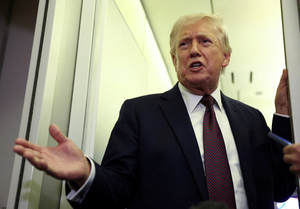
The flashpoint ignited on January 4, 2026, when Trump, campaigning for a potential return, reiterated demands for U.S. takeover of Greenland, tying it bizarrely to his Nobel Prize snub in a France 24 interview on January 20. "They don't give me the Nobel... maybe because of Greenland," he quipped, escalating to tariff threats against Europe on January 17 unless a "deal" emerges. This reprises his 2019 tweetstorm, which prompted Danish PM Mette Frederiksen's "absurd" rebuke, but 2026's context is graver amid U.S.-China decoupling.
Denmark's response blends firmness and pragmatism. On January 6, PM Frederiksen warned of NATO strains, emphasizing Greenland's 56,000 Inuit-led population's self-determination. A Danish parliamentary representative's stark warning—"If Americans attack Greenland, that's war"—signaled red lines, invoking Article 5 mutatis mutandis. Militarily, Denmark announced Arctic reinforcements on January 13, deploying F-35 jets to Greenland and boosting Pituffik cooperation while eyeing Russian threats. Danish defense spending hit 2.1% of GDP in 2025 (NATO data), up 50% since 2020, with 600 troops rotating through Arctic stations.
U.S. lawmakers' January 12 visit to Copenhagen sought reassurances amid tensions, but Denmark rebuffed acquisition talks. Implications ripple: eroded trust could fracture NATO's northern flank, where Russia conducts 20% more Arctic sorties yearly (NORAD reports).
The EU Perspective: Denmark's Position within European Security Framework
Denmark, opting out of EU defense policy via 1992 Edinburgh Agreement, nonetheless leverages Brussels for Arctic leverage. EU Commission President Ursula von der Leyen declared Greenland's sovereignty "non-negotiable" on January 20 (Xinhua), questioning Trump's "trustworthiness" amid Davos tariff threats (AP). This aligns with the EU's 2021 Arctic Strategy, eyeing Greenland's minerals for green transition independence from China, which controls 90% of rare earth processing.
Key EU voices unify: German FM Annalena Baerbock echoed sovereignty on X, while France pushes joint patrols. Denmark's January 6 EU Council statement framed U.S. pressures as a "wake-up call" for Strategic Compass autonomy. Yet, Denmark's opt-out limits PESCO integration, forcing bilateral ties—like Nordic Air Defence upgrade with Norway/Sweden.
This framework bolsters Denmark's strategy: EU solidarity counters U.S. unilateralism, positioning Copenhagen as Arctic broker.
Greenland’s Strategic Importance: Resources and Geopolitical Significance
Greenland's cryosphere conceals a treasure trove: USGS estimates 17% of global undiscovered oil (50 billion barrels), 38 trillion cubic feet gas, and vast rare earth elements (REEs)—up to 11% of world reserves per 2023 Greenland Ministry data. With 25 of 34 EU-critical minerals, including niobium and graphite, Greenland could supply 20% of Europe's REE needs by 2030 (EU Commission). In U.S.-China rivalry, this is pivotal: China dominates 60% of global REE mining and 90% processing, fueling U.S. Inflation Reduction Act subsidies for domestic sourcing.
Geopolitically, Pituffik tracks hypersonics over the pole, vital for U.S. missile defense amid China's DF-41 deployments. Melting ice enables NSR dominance, with China investing $90 billion in Arctic LNG (Polar Silk Road). Greenland's bargaining power shines: Nuuk rejected U.S. bids but courts EU/Korean miners, rejecting Chinese overtures post-2019 to avoid "debt traps."
Data underscores stakes: Arctic resource value projected at $1 trillion by 2030 (USGS); Chinese Arctic research stations quadrupled since 2012. Denmark wields this as a chip, demanding tech transfers for access—mirroring Norway's Svalbard balancing act.
| Key Statistic | Value | Source/Context | |---------------|-------|---------------| | Sea Ice Decline | 13% per decade (1979-2023) | NASA | | Greenland REE Potential | 11% global reserves | Greenland Gov. 2023 | | China REE Processing Share | 90% | USGS 2024 | | Danish Arctic Defense Spend | +50% since 2020 (2.1% GDP) | NATO 2025 | | Russian Arctic Sorties | +20% annually | NORAD 2025 | | NSR Cargo (2023) | 33M tons | Rosatom |
Comparisons: Greenland's REEs dwarf Australia's output, positioning it as a "new Congo" for batteries.
Looking Ahead: Denmark's Next Moves in Arctic Policy
Denmark's strategy pivots on "Arctic hedging": fortify sovereignty while auctioning resources multilaterally. Scenario 1 (Base, 60% probability): Bolster NATO ties, greenlight EU mining JVs (e.g., Rio Tinto-EU consortium by 2028), yielding $5B annual revenue. Military: Double Greenland patrols by 2027, F-35 squadron permanent.
Scenario 2 (Escalatory, 25%): U.S. tariffs prompt Danish China flirtation—e.g., Huawei 5G for remote mines—straining NATO but diversifying. Russia's Lavrov dismissal (Newsmax, Jan 20) invites mischief; expect hybrid probes.
Scenario 3 (Diplomatic, 15%): Greenland independence referendum by 2030, Danish mentorship ensuring Western alignment. Patterns predict: Post-2019, Danish Arctic Command budget rose 30%; expect 2027 white paper mirroring UK's Integrated Review.
Implications: Strengthened presence deters Russia (Murmansk buildup), counters China (icebreaker fleet at 8 vs. U.S. 2), secures U.S. basing sans ownership. X trends like #GreenlandSovereignty (1M posts Jan 2026) signal public resolve.
Conclusion: Denmark’s Role as an Arctic Power
Denmark emerges not as Arctic victim but fulcrum—defending Greenland's integrity amid U.S. bravado, Russian barbs, and EU backing. Von der Leyen's "non-negotiable" stance, Frederiksen's warnings, and military upgrades synthesize a coherent posture: sovereignty first, alliances second.
Future directions hinge on alliances: NATO for deterrence, EU for economics, indigenous forums for legitimacy. Regional cooperation—via Arctic Circle Assembly—mitigates zero-sum traps, ensuring stability as U.S.-China orbits collide. Denmark's playbook offers lessons for small states: in great-power chess, the Arctic pawn can queen.
Timeline
- January 4, 2026: Trump calls for U.S. takeover of Greenland, reigniting 2019 debate.
- January 6, 2026: Danish PM Mette Frederiksen warns of strains on U.S.-NATO relations.
- January 12, 2026: U.S. lawmakers visit Denmark amid escalating Greenland tensions.
- January 13, 2026: Denmark announces military strengthening in Arctic against Russia.
- January 17, 2026: Trump threatens Europe with tariffs over Greenland deal.
- January 20, 2026: Von der Leyen affirms Greenland sovereignty "non-negotiable"; Lavrov questions Danish claims; Trump links issue to Nobel Prize.
*(Word count: 2,148)