
Terrorism in Lebanon: French Peacekeeper Killed in Ambush, Hezbollah Blamed
In an incident of terrorism in Lebanon, a French peacekeeper serving with the United Nations Interim Force in Lebanon (UNIFIL) was killed and three others wounded during an ambush in southern Lebanon.[1] French President Emmanuel Macron has directly attributed responsibility to Hezbollah, which has firmly denied any involvement in the attack.[1] This event underscores ongoing tensions in the region, drawing sharp responses from involved parties and highlighting the risks faced by international peacekeepers.[1][2]
The Incident in Southern Lebanon
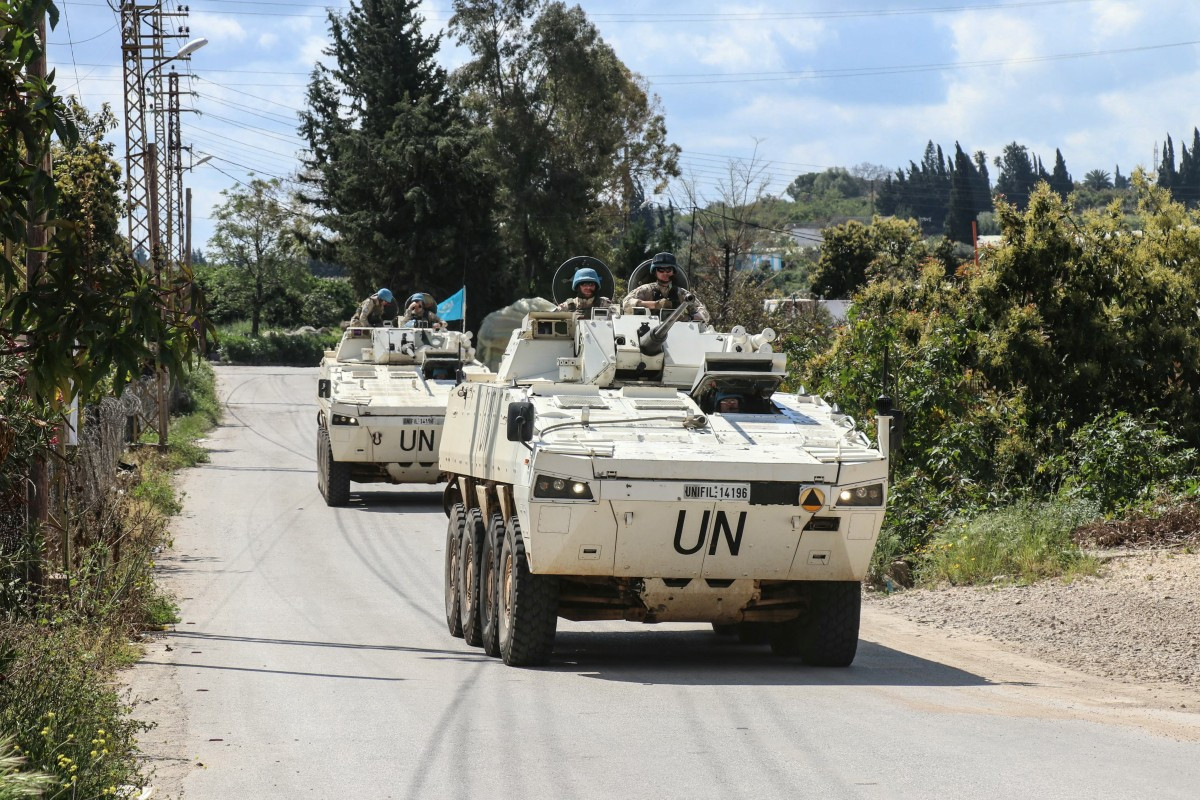
The ambush that marked this episode of terrorism in Lebanon took place in southern Lebanon, a area known for its complex security dynamics where UNIFIL operates.[1] At the center of the event was a French peacekeeper who was serving as part of the United Nations Interim Force in Lebanon, a multinational peacekeeping contingent.[1] This individual was killed in the attack, while three other peacekeepers sustained wounds during the same incident.[1]
Details from reports indicate that the ambush was a targeted action against the peacekeepers, resulting in these casualties.[1] The location in southern Lebanon places the event within a zone patrolled by UNIFIL forces, where such operations are routine amid broader regional challenges.[1] The loss of one life and injuries to three others represent a significant blow to the peacekeeping mission's personnel, prompting immediate attention from international observers.[1] French authorities quickly highlighted the severity of the attack, noting the direct impact on their contingent.[1]
This incident fits into a pattern of security threats faced by UNIFIL, though specifics here revolve around the ambush's execution and its immediate human cost.[1] The wounded peacekeepers' conditions were not detailed further in initial reports, but the event's gravity is evident from the fatalities and the nature of the assault.[1] Southern Lebanon's terrain and strategic importance amplify the risks for forces like those from France deployed there.[1] The ambush's success in causing casualties points to vulnerabilities in patrols or movements, even as UNIFIL maintains its mandate.[1] Overall, this event in southern Lebanon serves as a stark reminder of the perils encountered by peacekeepers executing their duties.[1]
France's Attribution of Blame
French President Emmanuel Macron has explicitly blamed Hezbollah for the death of the French peacekeeper and the wounding of the three others in the southern Lebanon ambush.[1] This attribution came swiftly following the incident, reflecting France's strong stance on the matter.[1][2] Macron's statement positions Hezbollah as responsible, linking the group directly to the attack on UNIFIL personnel.[1]
Further confirmation of France's position appears in reports emphasizing the government's blame directed at Hezbollah for the peacekeeper's death.[2] Published on 20260419T040000Z, these accounts align with Macron's remarks, underscoring a unified French narrative.[2] The presidential attribution carries significant weight, given France's contributions to UNIFIL and its historical engagements in the Middle East.[1][2] By naming Hezbollah, France signals a clear interpretation of the ambush's perpetrators, potentially influencing diplomatic responses.[1]
This blame attribution is not isolated; it draws from assessments of the incident's circumstances in southern Lebanon.[1][2] French authorities' statements emphasize the deliberate nature of the ambush, tying it to Hezbollah's activities.[1] The response from Paris highlights concerns over threats to its troops, prompting calls for accountability.[2] In the broader context, France's position could shape international discussions on UNIFIL's security and regional stability.[1][2] Macron's direct involvement elevates the issue, reflecting the incident's impact on bilateral and multilateral relations.[1] Repeated references to Hezbollah in French commentary reinforce the attribution's firmness.[1][2]
Hezbollah's Response
Hezbollah has issued a clear denial of responsibility for the ambush that killed the French peacekeeper and wounded three others in southern Lebanon.[1] The group's statement counters the blame placed by French President Emmanuel Macron, rejecting any involvement in the attack on UNIFIL forces.[1]
This denial forms a key part of the immediate aftermath, creating a direct contrast to France's accusations.[1] Hezbollah's position maintains that it had no role in the incident, despite the attribution from French authorities.[1] Reports capturing this response note the group's firm stance, which seeks to distance itself from the casualties inflicted on the peacekeepers.[1]
The denial's timing aligns with the unfolding events, as covered in coverage of the ambush and its repercussions.[1] By publicly rejecting responsibility, Hezbollah addresses the narrative shaped by Macron's blame.[1] This response introduces a point of contention, where differing accounts emerge regarding the perpetrators.[1] International observers now face these opposing claims from France and Hezbollah in assessing the southern Lebanon event.[1] Hezbollah's statement stands as its official rebuttal, embedded within reports of the incident.[1]
Context of the United Nations Force
The United Nations Interim Force in Lebanon (UNIFIL) provides the operational framework for the French peacekeeper who was killed and the three wounded in the southern Lebanon ambush.[1] As a peacekeeping mission, UNIFIL deploys personnel like the French contingent to maintain stability in the designated area.[1]
France's involvement underscores its commitment to UNIFIL, with troops actively serving in patrols and operations where the ambush occurred.[1] The force's interim nature reflects its ongoing role amid Lebanon's security landscape.[1] Incidents like this one test UNIFIL's capacity to fulfill its duties despite threats.[1]
The presence of French peacekeepers highlights multinational composition, with the ambush targeting these international efforts.[1] UNIFIL's activities in southern Lebanon place it at the forefront of potential confrontations.[1] This context frames the casualties as part of the mission's inherent challenges.[1] The United Nations Interim Force continues its mandate, even as events like the recent attack draw global attention.[1]
What to watch next: Further statements from French authorities and Hezbollah responses could clarify positions on the ambush, as France maintains its blame while Hezbollah upholds its denial.[1][2]