
Tensions Flare in West Bank with House Demolitions Amid Broader Israeli-Palestinian Strains
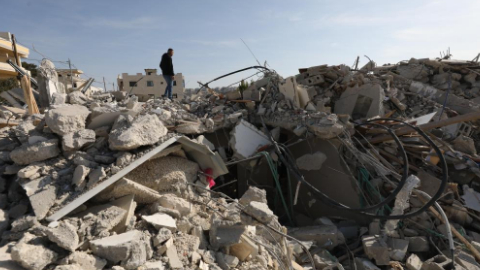
NABLUS, West Bank — Israeli forces carried out demolitions of houses in the occupied West Bank city of Nablus on January 9, 2026, exacerbating longstanding frictions in the region, even as an Israeli hostage released from Gaza captivity earlier in the month highlighted the human toll of the protracted conflict.
The demolition operation, reported by Xinhua, comes amid heightened military activity in the West Bank, a territory Israel has occupied since the 1967 Six-Day War. Nablus, a major Palestinian city in the northern West Bank, has long been a flashpoint for clashes between Israeli security forces and Palestinian residents. Such demolitions are typically justified by Israeli authorities as enforcement against structures built without permits or linked to militant activities, though they are frequently condemned by Palestinians and international observers as collective punishment that fuels resentment and potential unrest.
This incident follows closely on the heels of a significant development on January 2, 2026, when an Israeli hostage was freed after two years in Gaza. The release underscores the ongoing repercussions of the October 7, 2023, Hamas attack on southern Israel, which killed around 1,200 people and resulted in the abduction of over 250 hostages. Many were released in subsequent cease-fire deals brokered in late 2023 and early 2024, but a number remain in captivity or unaccounted for, sustaining deep societal divisions and periodic protests within Israel and the Palestinian territories.
The freed hostage now confronts profound challenges in rebuilding his life, a narrative echoed in numerous accounts from prior releases. Medical and psychological experts have documented cases of severe trauma, including post-traumatic stress disorder, physical injuries from captivity, and difficulties reintegrating into family and society after prolonged isolation. Israeli officials have emphasized rehabilitation programs, but families of remaining hostages continue to demand accelerated negotiations, often staging demonstrations that contribute to domestic civil unrest.
Context of Escalating West Bank Violence
The West Bank has seen a surge in unrest since the Gaza war erupted in 2023. According to United Nations data, violence in the territory reached record levels in 2024 and 2025, with over 800 Palestinians killed in Israeli operations targeting militants, and dozens of Israelis slain in attacks by Palestinian groups. Nablus, home to refugee camps like Balata and Askar, has been a hotspot for Israeli raids aimed at dismantling networks affiliated with groups such as Palestinian Islamic Jihad and Hamas.
House demolitions form a core element of Israel's security strategy in Area C of the West Bank—about 60% of the land under full Israeli administrative control per the 1990s Oslo Accords. Human Rights Watch and B'Tselem, Israeli rights groups, report that thousands of Palestinian structures have been razed since 1967, often sparking immediate protests, stone-throwing clashes, and tire burnings that evolve into broader civil disturbances. The January 9 demolitions in Nablus fit this pattern, potentially igniting local unrest as residents mourn lost homes and livelihoods.
Israeli Defense Forces (IDF) statements, consistent with past operations, frame such actions as necessary to deter terrorism. In 2025 alone, the IDF reported neutralizing hundreds of militant sites in the West Bank, amid a wave of attacks including shootings and stabbings. Palestinian Authority President Mahmoud Abbas's government, weakened by internal divisions, has struggled to maintain order, leading to vigilante actions and sporadic riots.
Broader Conflict Dynamics
The hostage release and West Bank demolitions occur against the backdrop of stalled peace efforts. Cease-fires in Gaza have been fragile, with intermittent rocket fire and airstrikes. Internationally, the U.S. has pushed for renewed talks, while the European Union and Arab states criticize settlement expansions and demolitions as obstacles to a two-state solution.
Within Israel, the hostage saga has polarized public opinion. Mass protests in 2024-2025 demanded government accountability from Prime Minister Benjamin Netanyahu's coalition, blending with judicial reform demonstrations and anti-war rallies. In Palestinian areas, economic hardship—exacerbated by checkpoints, unemployment nearing 30%, and restricted movement—breeds disillusionment, occasionally erupting into unrest.
Outlook Amid Fragility
As of January 2026, no immediate large-scale clashes have been reported from the Nablus demolitions, but the operation risks escalating cycles of retaliation. The released hostage's struggles serve as a poignant reminder of the conflict's personal costs, potentially galvanizing calls for comprehensive resolutions. Diplomatic channels remain active, with Qatar and Egypt mediating on hostages and Gaza aid, but underlying grievances persist.
International monitors urge restraint to avert wider unrest. The situation in Israel and the Palestinian territories remains volatile, with civil disturbances a recurring feature of this decades-old dispute.
(Word count: 612)






