
Tensions Escalate Over U.S. Interest in Greenland as Denmark Reacts to Provocative Social Media Post
Copenhagen/ Nuuk, Greenland — Denmark has voiced strong irritation over a social media post featuring a U.S.-flagged image of Greenland captioned "SOON," posted by Katie Miller, wife of senior Trump aide Stephen Miller, amid renewed U.S. President Donald Trump's public expressions of interest in acquiring the strategic Arctic island. The post, which appeared on January 4, 2026, has fueled concerns among Greenlanders and reignited diplomatic friction between Copenhagen and Washington.
Greenlanders are increasingly voicing alarm following Trump's latest remarks on Friday, January 9, 2026, where he reiterated his long-standing ambition to bring the autonomous Danish territory under U.S. control, even suggesting the potential use of force while dismissing Denmark's sovereignty claims. "Denmark and other European allies have voiced shock at Trump's threats," according to reports from the scene, highlighting the deepening rift over the resource-rich island that hosts a key U.S. military installation.
The provocative post by Katie Miller quickly drew backlash, with Danish officials labeling it as inflammatory and emblematic of broader U.S. territorial ambitions. Coming just days before Trump's pointed comments, it amplified fears of coercive diplomacy. Greenland, with its vast untapped mineral reserves, melting ice sheets opening new shipping routes, and geostrategic position amid rising great-power competition in the Arctic, has long been a focal point of international interest.
Renewed U.S. Ambitions Spark Local and International Concern
Trump's Friday statements marked a sharp escalation from his 2019 proposal to purchase Greenland outright, which Danish Prime Minister Mette Frederiksen famously rejected as "absurd." In his recent address, Trump brushed aside Denmark's legal authority over the self-governing territory, emphasizing U.S. security interests tied to the existing Thule Air Base. Established during World War II under a defense agreement, the base provides critical missile warning capabilities and supports U.S. Space Force operations, underscoring America's longstanding military footprint on the island.
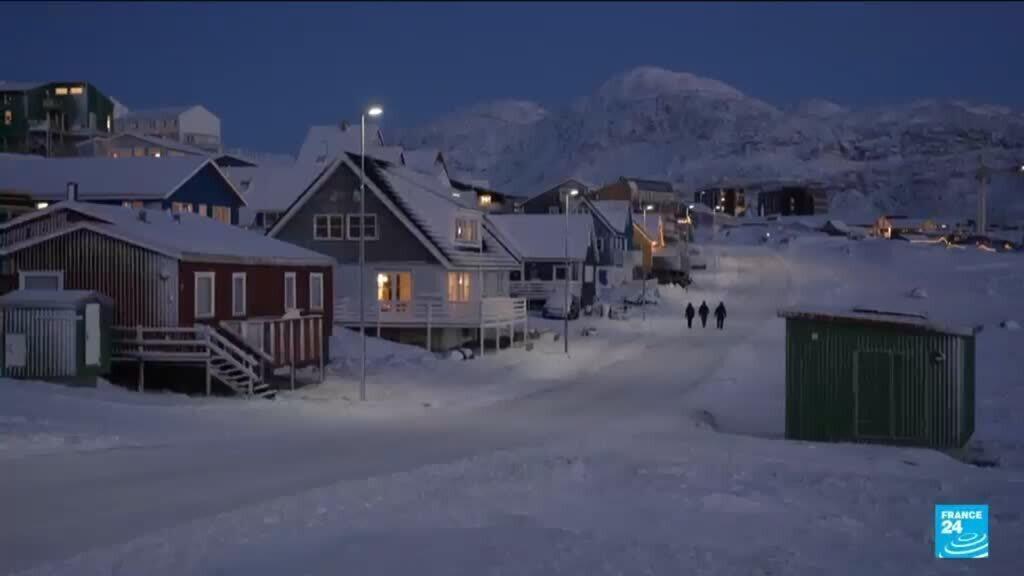
Local voices in Nuuk, Greenland's capital, expressed unease over the rhetoric. "We are not for sale," echoed sentiments from residents and leaders, as reported in the wake of Trump's remarks. The France 24 coverage detailed how Greenlanders, already navigating complex identity issues between Danish oversight and aspirations for greater independence, view U.S. overtures as a threat to their autonomy. With a population of around 56,000, primarily Indigenous Inuit, Greenland relies heavily on Danish subsidies while pushing for self-determination through resource development.
Denmark's foreign ministry has reiterated its firm stance on sovereignty, calling the social media post "irresponsible" and summoning U.S. diplomats for clarification. European Union partners, including NATO allies, have similarly condemned the language of force, warning it undermines transatlantic unity at a time of heightened Arctic tensions with Russia and China.
Historical Context and Strategic Stakes
Greenland's geopolitical significance has intensified in recent years. Climate change is accelerating ice melt, exposing rare earth minerals essential for green technologies and unlocking the Northwest Passage for commercial shipping. The U.S. has bolstered its Arctic presence through investments in infrastructure and partnerships with allies like Canada, while Russia militarizes its northern frontier and China seeks mining footholds via "polar silk road" initiatives.
The 1951 Defense of Greenland Agreement grants the U.S. rights to operate Thule, but any expansion or territorial claim would require Danish consent. Trump's revival of acquisition talks aligns with his administration's "America First" foreign policy, prioritizing control over critical territories. Previous iterations, including overtures during his first term, strained bilateral ties but did not lead to concrete action.
Greenlandic leaders, led by Premier Múte B. Egede, have emphasized economic partnerships over outright purchase schemes. Recent elections in 2021 saw pro-independence parties gain ground, advocating balanced deals with multiple nations to reduce Danish dependence without alienating strategic players.
Diplomatic Fallout and Future Outlook
The episode risks broader repercussions for NATO cohesion, given Denmark's membership and Greenland's role in collective defense. U.S. officials have downplayed the rhetoric as negotiating posture, but the "SOON" post has complicated damage control efforts. Analysts note that while military action remains highly improbable—due to alliance commitments and international law—economic pressure or sweetened offers could resurface.
As Arctic competition heats up, Greenland stands at the crossroads of superpower interests. Copenhagen has signaled readiness for talks on enhanced cooperation, such as expanded U.S. base access, but insists sovereignty is non-negotiable. For Greenlanders, the developments underscore the delicate balance between global powers and local self-rule.
The World Now will continue monitoring this fast-evolving story as reactions pour in from Washington, Brussels, and beyond.
(Word count: 612)






