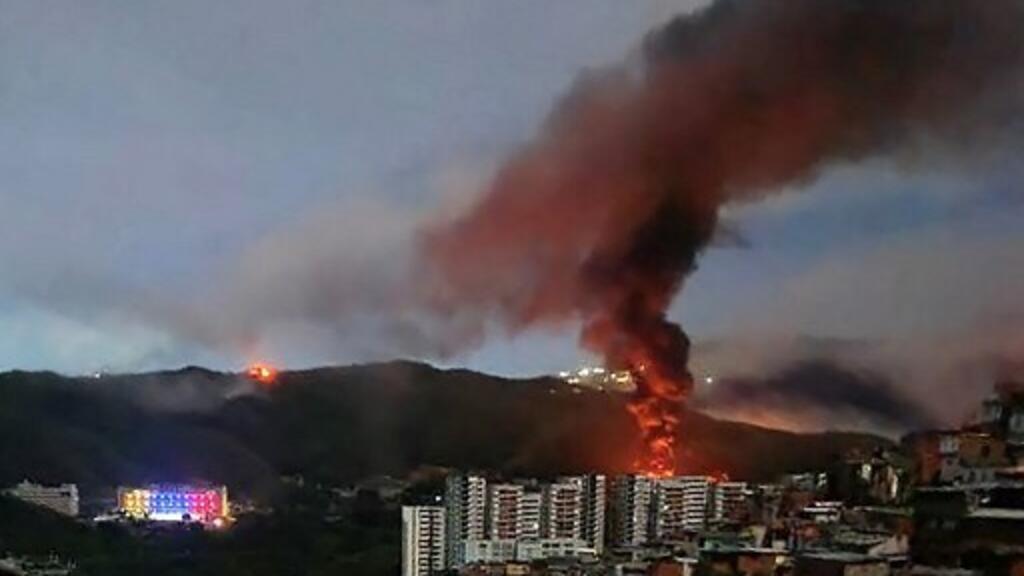

Tensions Escalate in Venezuela Following US Military Action and Maduro's Openness to Talks
In a dramatic turn of events, Venezuelan President Nicolás Maduro has expressed an unexpected willingness to engage in discussions with the United States regarding drug trafficking, amid heightened tensions following his recent capture by U.S. forces. This development comes as Venezuela grapples with ongoing economic challenges and political instability exacerbated by U.S. sanctions and military actions.
On January 2, 2026, Maduro stated he was open to dialogue about drug trafficking issues, a significant shift that could indicate a strategic pivot in his administration's approach to international relations. However, he did not address questions surrounding the U.S. military operation that led to his capture, which has been characterized by some as a form of "military aggression." This operation was part of a broader U.S. campaign targeting drug cartels operating in Venezuela, which has been plagued by allegations of government complicity in the drug trade.
The U.S. military's actions against Maduro, which reportedly culminated in his capture on January 2, have drawn international condemnation, with many countries, including Russia and Cuba, denouncing the operation as "state terrorism." The Russian foreign ministry expressed grave concern regarding the U.S. actions, labeling them as "armed aggression" and calling for a unified international response against such interventions. Similarly, the Cuban government criticized the U.S. for what it described as a brutal assault on Venezuela's sovereignty.
In the backdrop of this geopolitical turmoil, oil tankers continue to arrive in Venezuela despite a U.S. blockade aimed at limiting the country's oil exports. The state-run oil company, PDVSA, appears to be maintaining its crude sales, indicating resilience in the face of international pressure. This influx of oil shipments is crucial for Venezuela's economy, which has been significantly weakened by years of sanctions and mismanagement.
The U.S. military's operations against Maduro can be traced back over several months, with a timeline that reflects an escalating strategy to address drug trafficking and political corruption in Venezuela. Following Maduro's capture, U.S. Deputy Secretary of State Christopher Landau stated that Maduro would "finally face justice for his crimes," suggesting that U.S. authorities are prepared to pursue legal actions against the former president.
Media reports suggest that María Corina Machado, a prominent opposition leader, is emerging as a potential successor to Maduro amidst this political upheaval. Her rise could signal a shift towards a new leadership style that might be more amenable to international dialogue and reform.
As the situation develops, the international community is closely monitoring the implications of Maduro's fall and the U.S. military's involvement in Venezuela. Prime Minister Keir Starmer of the United Kingdom has stated that Britain had no involvement in the U.S. strikes and emphasized the importance of upholding international law during this crisis.
The European Union has also called for restraint and respect for international law, reflecting widespread concerns about the legality and morality of U.S. military interventions in sovereign nations. The EU's stance underscores the delicate balance of power and diplomacy that will be required to stabilize Venezuela and address the underlying issues contributing to its ongoing crises.
In conclusion, Venezuela stands at a crossroads as it navigates the aftermath of Maduro's capture and the potential for renewed dialogue with the U.S. The coming weeks will be critical in determining the country's political future and its relationships with both neighboring countries and global powers.






