
Taiwan President Vows to Defend Sovereignty Amid Renewed Chinese Military Drills
Taipei, Taiwan – Taiwan's President Lai Ching-te pledged on January 2, 2026, to robustly defend the island's sovereignty in direct response to fresh military exercises launched by China around the Taiwan Strait. The medium-severity incident underscores persistent cross-strait tensions, with Beijing's drills simulating potential blockade and invasion scenarios, prompting Taipei to reaffirm its commitment to self-defense.
The exercises, which began early on Friday, January 2, 2026, at 08:06:42 GMT, involved Chinese People's Liberation Army (PLA) aircraft and naval vessels encroaching on Taiwan's air defense identification zone (ADIZ). Taiwanese authorities reported detecting over a dozen PLA warplanes and several warships crossing the median line of the strait, a de facto boundary long observed but frequently violated by Beijing. President Lai's statement, delivered during a national address, emphasized Taiwan's resolve: "We will defend our sovereignty against any threats," according to official transcripts. This marks the latest in a series of escalatory maneuvers by China, which views Taiwan as an inseparable province and has intensified military activities since Lai's election in January 2024.
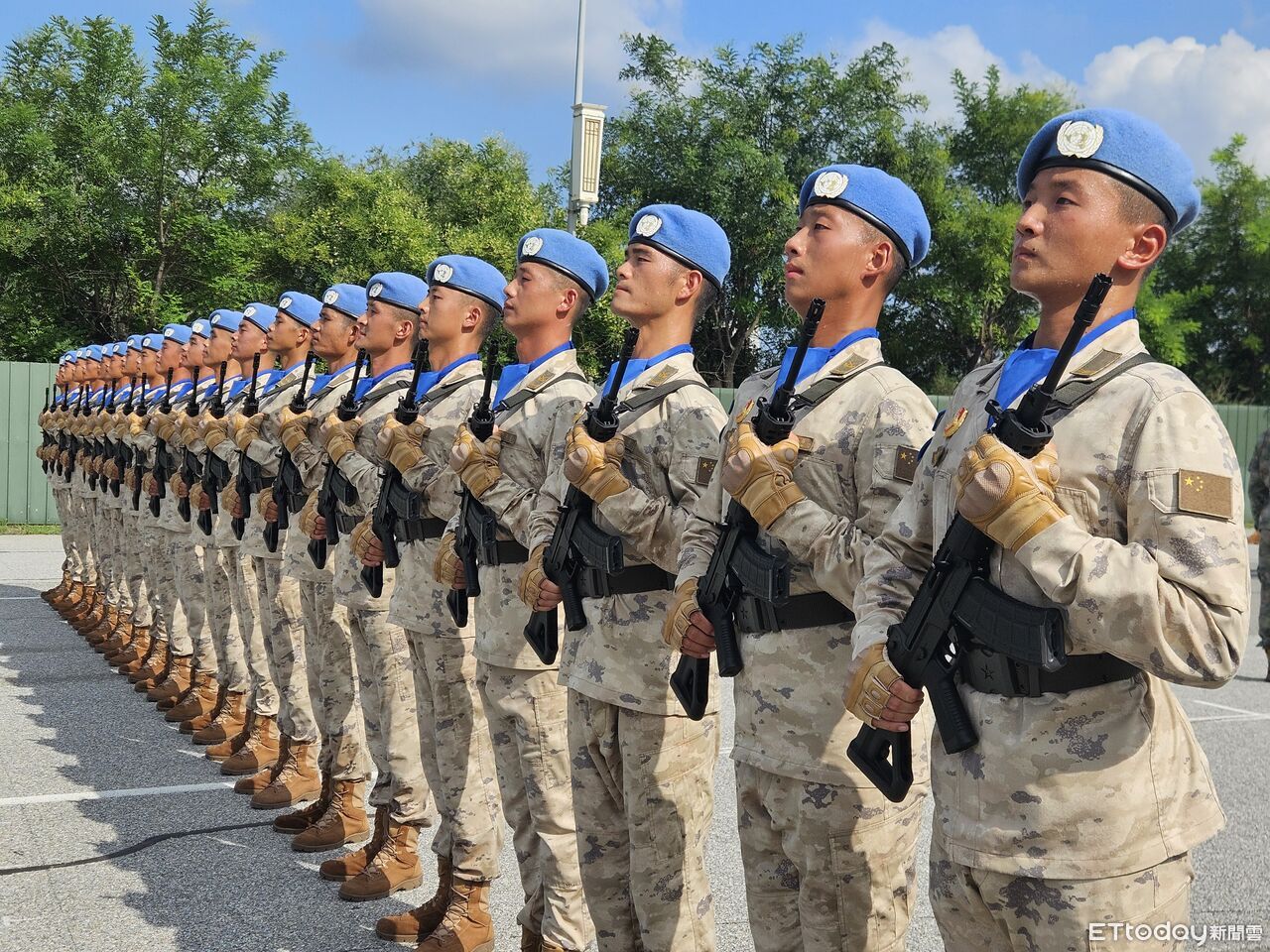
In parallel, a new report from a U.S. think tank, highlighted in Taiwanese media on January 6, 2026, has amplified discussions on the potential costs of any Chinese military action against Taiwan. The analysis, published by ETtoday, details a simulated "CCP attack on Taiwan" scenario where the PLA could suffer over 100,000 casualties. It outlines devastating consequences across four key areas: military losses, economic fallout, international isolation, and domestic instability. The report warns of "heavy costs" that could cripple China's warfighting capabilities for years, including the destruction of significant naval assets and amphibious forces necessary for a cross-strait invasion.
Escalating Cross-Strait Dynamics
China's military drills follow a pattern established in recent years, often triggered by perceived provocations such as high-profile visits to Taiwan by foreign officials or domestic political developments in Taipei. Since Lai Ching-te assumed office in May 2024, Beijing has conducted multiple large-scale exercises, including "Joint Sword" operations in 2024 that encircled the island with aircraft carriers and missile tests. These activities aim to normalize PLA presence in the strait and deter Taiwan's moves toward formal independence, as articulated in China's 2005 Anti-Secession Law.
Taiwan's Ministry of National Defense has responded routinely by scrambling fighter jets and monitoring PLA movements, while avoiding direct confrontation. The island nation maintains a policy of neither provoking nor yielding, bolstered by asymmetric defense strategies like anti-ship missiles, submarines, and cyber capabilities. U.S. arms sales, including advanced F-16 fighters and Harpoon missiles under the Taiwan Relations Act of 1979, continue to underpin Taipei's deterrence posture.
The U.S. think tank report adds a layer of strategic analysis amid these tensions. Drawing from wargaming simulations—similar to prior studies by institutions like the Center for Strategic and International Studies (CSIS)—it projects that a full-scale invasion would require China to sustain massive troop landings across the 100-mile-wide strait, vulnerable to Taiwan's defenses and potential U.S.-Japan intervention. Casualty figures exceeding 100,000 align with historical amphibious operations, such as World War II battles, where attackers faced disproportionate losses. The four "heavy cost" dimensions cited include:
- Military: Loss of two aircraft carriers, dozens of amphibious ships, and thousands of aircraft.
- Economic: Disruptions to global supply chains, with Taiwan producing over 90% of advanced semiconductors.
- Diplomatic: Alienation of Southeast Asian neighbors and sanctions from the West.
- Internal: Potential unrest from high casualties and resource strain.
ETtoday's coverage, published on January 6, 2026, at 02:15:00Z, frames the report as a sobering reminder for Beijing, potentially influencing President Xi Jinping's calculus on unification by force.
Historical Context and International Stakes
Taiwan's geopolitical flashpoint status traces to the Chinese Civil War, when Nationalist forces retreated to the island in 1949, establishing the Republic of China government. Beijing's claims intensified under Xi, with military modernization accelerating since 2012. The U.S. maintains "strategic ambiguity," committing to arm Taiwan but not explicitly pledging defense, though President Joe Biden has repeatedly stated U.S. forces would respond to an invasion.
Recent global events, including Russia's invasion of Ukraine in 2022, have drawn parallels, with Taiwan bolstering civil defense drills and stockpiling reserves. Allies like Japan, Australia, and the Philippines have voiced concerns, conducting joint exercises in the region.
Outlook Amid Uncertainty
As Chinese drills persist into the weekend, Taiwan remains on high alert, with no immediate signs of de-escalation. President Lai's vow signals unity at home, where polls show over 80% support for maintaining the status quo. The U.S. think tank's projections may deter adventurism but could also provoke nationalist backlash in China. International observers watch closely, as any miscalculation risks broader Indo-Pacific conflict.
The World Now will continue monitoring developments in this critical theater.
(Word count: 712)






