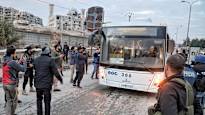

Syrian Forces Assert Control in Aleppo as Kurdish Commanders Announce Ceasefire and Withdrawal Deal; Assad Meets EU Leaders in Damascus
Damascus, Syria – Syrian government forces have advanced into areas of Aleppo previously held by Kurdish-led YPG/SDF militias, coinciding with an announcement from a Kurdish commander of a ceasefire agreement and withdrawal from the region. In a parallel diplomatic development, Syrian President Bashar al-Assad hosted European Union leaders in Damascus, signaling potential shifts in international engagement amid ongoing territorial consolidations.
The developments, which began unfolding on January 9, 2026, highlight a fragile détente in northern Syria's volatile security landscape. A commander from the Kurdish forces, speaking to Finnish public broadcaster Yle on January 11, confirmed that an agreement had been reached for a ceasefire and the withdrawal of YPG/SDF fighters from Aleppo positions. This pact comes as Syrian army units moved to assert control over these areas, reducing immediate clashes in one of Syria's most strategically vital cities.
Aleppo, Syria's second-largest city and a former industrial hub, has long been a focal point of the country's civil war, which erupted in 2011. The city changed hands multiple times during intense battles, including a decisive government recapture in 2016 with Russian backing. Kurdish forces, primarily the People's Protection Units (YPG) under the Syrian Democratic Forces (SDF) umbrella, have controlled pockets in the northeast, including parts of Aleppo province, as U.S.-allied partners against the Islamic State (ISIS). However, these holdings have drawn opposition from both the Assad government, which views them as separatist, and Turkey, which considers the YPG an extension of the Kurdistan Workers' Party (PKK), designated a terrorist group by Ankara, Washington, and the EU.
The reported ceasefire and withdrawal represent a tactical retreat by the Kurds, potentially averting broader confrontation. According to the Yle report, the agreement aims to de-escalate tensions following Syrian army incursions. While specifics on the terms—such as timelines, verification mechanisms, or guarantors—remain undisclosed in available reports, the move aligns with Syria's government efforts to reassert sovereignty over territories held by non-state actors since the war's outset.
Simultaneously, President Assad's meeting with EU leaders in Damascus underscores evolving European diplomacy toward Syria. The European Union has maintained sanctions on the Assad regime since 2011, citing human rights abuses, chemical weapons use, and suppression of the uprising. However, recent geopolitical realignments—including the Abraham Accords' regional ripple effects, Russia's war in Ukraine diverting attention, and migration pressures on Europe—have prompted discussions on normalization. EU officials have visited Damascus sporadically in recent years to address refugee returns and reconstruction, though full sanctions relief remains contingent on political reforms.
This engagement occurs against a backdrop of Syria's gradual stabilization. Government forces, supported by Russia and Iran, control approximately 70% of the country, per United Nations estimates. The SDF holds about 25% in the northeast, rich in oil resources, while Hayat Tahrir al-Sham (HTS) dominates Idlib in the northwest. Turkish incursions, such as Operation Olive Branch in 2018 and subsequent patrols, have carved out buffer zones in northern Aleppo, complicating the current dynamics.
The Aleppo developments could reshape local power balances. Syrian state media has portrayed the advances as a restoration of "national unity," while Kurdish sources emphasize the ceasefire as a negotiated pause rather than capitulation. International observers, including the UN Special Envoy for Syria, have called for inclusive talks under the Astana process—led by Russia, Turkey, and Iran—to prevent renewed violence.
Background: Syria's Fractured Geopolitics
Syria's conflict has claimed over 500,000 lives and displaced 13 million people, according to the Syrian Observatory for Human Rights. Aleppo's 2016 siege and bombardment drew global condemnation, marking a turning point. The YPG/SDF rose to prominence post-2014, liberating Raqqa from ISIS in 2017 with U.S. support, but faced isolation after the 2019 U.S. troop drawdown under President Trump. Turkey's cross-border operations have repeatedly targeted these forces, leading to deals like the 2019 U.S.-brokered pause and Russian-Turkish patrols.
EU-Syria ties, frozen since the war's start, saw tentative thaws in 2023-2025, with visits from French and German officials amid earthquake recovery efforts in February 2023, which killed nearly 6,000 in Syria. The bloc's 27 member states vary in approach: some like Austria advocate engagement, while others prioritize accountability.
Outlook
As Syrian forces consolidate in Aleppo, the ceasefire's durability will depend on compliance and external pressures. U.S. support for the SDF, currently around 900 troops, could influence outcomes, while Turkey monitors closely for PKK threats. The Damascus summit may yield humanitarian aid pledges or sanction tweaks, but analysts note entrenched divisions persist. The UN Security Council, meeting next week on Syria, is expected to address these shifts, urging adherence to Resolution 2254 for a political solution.
These events mark incremental progress toward stability in a war-weary nation, though risks of escalation remain amid competing regional agendas.
(Word count: 712)






