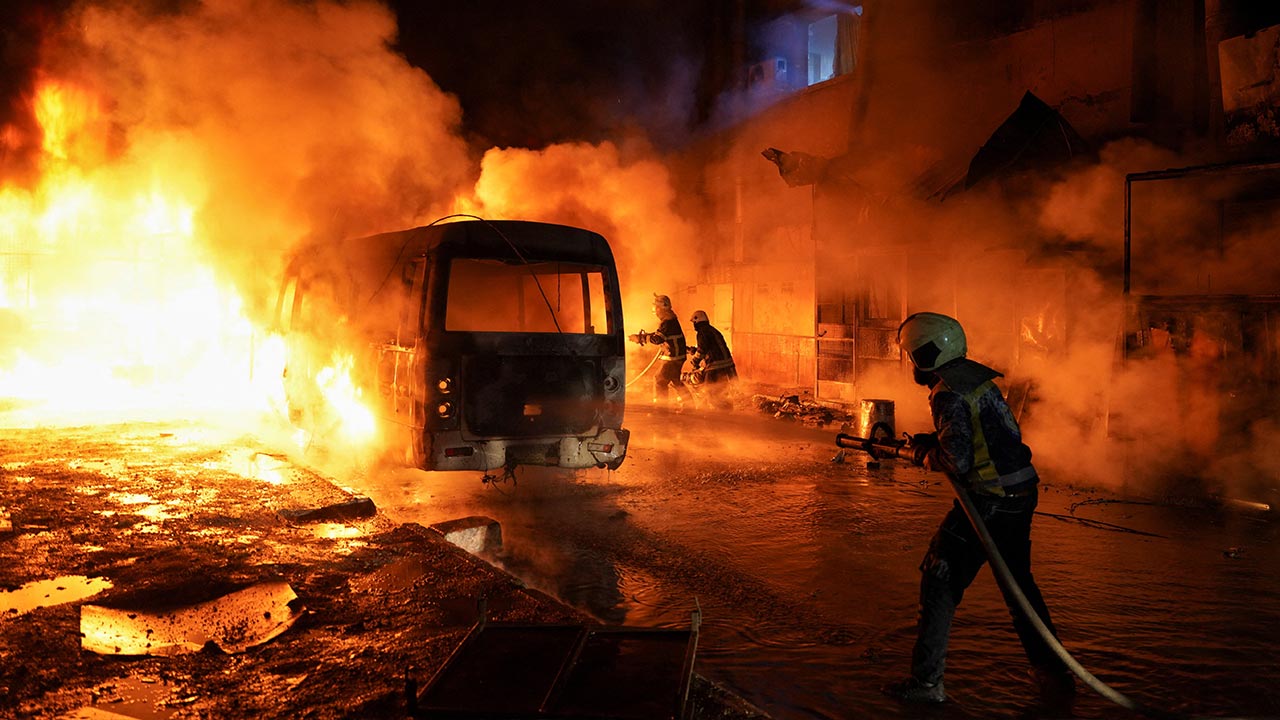

Syrian Army Launches Concentrated Artillery Strikes on SDF Positions in Aleppo Neighborhoods
Aleppo, Syria – Syrian government forces initiated intense artillery barrages targeting positions held by the U.S.-backed Syrian Democratic Forces (SDF) within urban neighborhoods of Aleppo city on January 8, 2026, escalating tensions in a long-contested region of the country's civil war.
The strikes, described as concentrated and ongoing, began around 1:09 p.m. UTC, according to event monitoring data. They mark a significant flare-up in hostilities between the Syrian Arab Army (SAA), loyal to President Bashar al-Assad, and the SDF, a Kurdish-led coalition primarily controlling northeastern Syria. Reports indicate the artillery fire was directed at SDF-held areas inside Aleppo's city limits, raising concerns over civilian safety in densely populated districts.
This development was first reported by Malaysian outlet Astro Awani, citing regional sources, under the headline "Tentera Syria lancar serangan terhadap SDF di kejiranan Aleppo" (Syrian Army Launches Attack on SDF in Aleppo Neighborhoods), published late on January 8, 2026. The incident has been classified as high severity by global event trackers, underscoring its potential to destabilize an already fragile security environment.
Escalation Amid Ongoing Territorial Disputes
The strikes come amid persistent friction between Damascus and the SDF, which controls significant territory east of the Euphrates River, including key oil fields. Aleppo, Syria's second-largest city and a former industrial hub, has been under full SAA control since government forces recaptured it from rebel groups in late 2016 following a brutal siege. However, SDF elements have occasionally operated in or near the city, leveraging alliances with local militias or conducting operations against shared threats like the Islamic State (IS).
Syria's multifaceted civil war, which erupted in 2011 as pro-democracy protests, has evolved into a proxy conflict involving regional powers. The SAA, supported by Russia and Iran, has reclaimed most major urban centers, but the SDF—formed in 2015 and backed by U.S. special forces—holds about a quarter of Syrian territory. Tensions have simmered due to Assad's demands for SDF disarmament and unification under central authority, contrasted by the group's push for autonomy in Kurdish-majority areas.
Recent months have seen sporadic clashes along frontlines in northern Syria, particularly in Deir ez-Zor and Hasakah provinces. Turkish-backed Syrian National Army (SNA) forces, which view the SDF as an extension of the Kurdistan Workers' Party (PKK)—designated a terrorist group by Ankara—have also engaged SDF positions, complicating the battlefield. The Aleppo strikes suggest a possible SAA push to neutralize perceived SDF encroachments within government-held zones, potentially triggered by intelligence on militant movements.
No immediate casualty figures have been released, but the use of artillery in urban settings heightens risks to civilians. Aleppo's neighborhoods, home to millions, still bear scars from earlier bombardments, with reconstruction efforts hampered by economic sanctions and war damage. International monitors, including the United Nations Office for the Coordination of Humanitarian Affairs (OCHA), have repeatedly warned of the dire humanitarian situation, with over 16 million Syrians needing aid as of late 2025.
Broader Geopolitical Context
Russia's military intervention since 2015 has been pivotal for Assad, providing air support and ground coordination that enabled victories like Aleppo's liberation. Iran-backed militias, such as Hezbollah and Iraqi groups, bolster SAA ranks. Conversely, the U.S. maintains around 900 troops in SDF areas to counter IS remnants, which conducted low-level attacks as recently as 2025.
Turkey's operations, including cross-border incursions since 2016, aim to create a buffer against Kurdish forces. A 2020 ceasefire brokered by the U.S., Russia, and Turkey established deconfliction lines, but violations persist. The Aleppo incident could strain these fragile agreements, prompting calls for restraint from global actors.
The United Nations has long advocated for a political solution via UN Security Council Resolution 2254 (2015), which calls for a ceasefire, constitution drafting, and elections. However, stalled Astana and Geneva talks reflect deep divisions. Economic collapse, hyperinflation, and the 2023 earthquakes exacerbating displacement—over 7 million internally displaced—underscore the urgency.
Potential Implications and Outlook
As of January 9, 2026, no official statements from Damascus or the SDF have confirmed the strikes' scope or objectives. SAA spokespersons have historically justified operations against "separatist militias," while SDF commanders decry them as aggression undermining anti-ISIS efforts. U.S. officials have not commented publicly, but past patterns suggest potential diplomatic pressure on Assad.
Should the barrages continue, they risk drawing in external actors, widening the conflict front. Analysts note Aleppo's strategic value: its position links government heartlands to Kurdish frontiers, controlling supply routes. A broader SAA offensive could test SDF resilience, already strained by Turkish offensives and internal economic woes.
International observers urge de-escalation to prevent a humanitarian catastrophe. The European Union and United States maintain sanctions on Assad's regime, while aid flows through cross-border mechanisms. Monitoring groups like the Syrian Observatory for Human Rights (SOHR) will likely provide updates on casualties and displacements.
This episode highlights Syria's enduring volatility 15 years into its war, where local skirmishes threaten regional stability. Stakeholders await developments that could either contain or ignite further confrontation.
(Word count: 712)






