Switzerland Hosts Vance and Iranian Officials Amid Strait of Hormuz Tensions
Switzerland tensions have intensified with the arrival of U.S. Vice President JD Vance for direct negotiations with Iran, as disagreements persist over claims regarding the Strait of Hormuz and the implementation of a recent interim agreement.
Vance Arrives for Iran Peace Talks in Switzerland
U.S. Vice President JD Vance arrived in Switzerland on Sunday for peace talks with Iran as both nations seek a durable end to their war while disagreeing over Iran’s claims that it had closed the vital Strait of Hormuz. [1] Although the U.S. and Iran had agreed to a 60-day ceasefire while negotiations take place, Tehran’s Islamic Revolutionary Guard Corps on Saturday declared the Strait of Hormuz shut, though the U.S. military said commercial vessels had continued operating in the waterway. [1] Those developments could complicate talks in which both sides want to advance an interim deal brokered by Pakistan and signed on Wednesday by Presidents Donald Trump and Masoud Pezeshkian to end the almost four-month war. [1] Vance and his wife arrived at Emmen Air Base in Switzerland at 5:59 a.m., a vice presidential spokesperson said. [1] Iran’s delegation arrived in Switzerland ahead of planned talks with the United States, the Swiss Foreign Ministry announced on X late Saturday night. [2] The vice president and second lady Usha Vance arrived at Emmen Air Base in Switzerland at around 6 a.m. [5]
Dispute Over Strait of Hormuz Closure
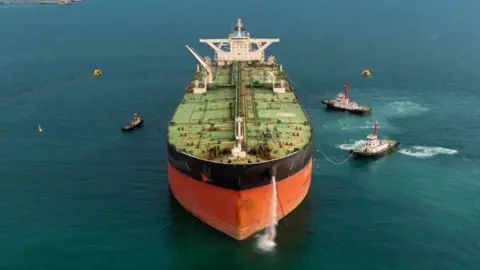
Pointing to what it called Israeli “crimes” in Lebanon that violated U.S. commitments to a ceasefire, the Revolutionary Guards warned ships would be at risk if they approached the Strait, a vital conduit for global oil and gas supplies. [1] But U.S. Central Command said 55 merchant ships transited the strait on Saturday with more than 17 million barrels of oil bound for global markets. [1] U.S. forces will ensure commercial traffic continues, Central Command said. [1] After Iran's statement, US Central Command spokesperson Tim Hawkins said "traffic continues to flow". [3] He said US forces were "monitoring the situation to ensure this remains the case", adding that "Iran does not control the Strait of Hormuz". [3] Centcom said 55 merchant ships transited the strait on Saturday with more than 17 million barrels of oil for global markets. [3] Mohammad Mokhber, an adviser to Iran’s supreme leader, Ayatollah Mojtaba Khamenei, accused the U.S. on X of failing to implement the first clause of its 14-point interim deal with Iran, which includes a ceasefire “on all fronts”, including Lebanon. [1] He said that, as long as the agreement was only on paper, the flow of Middle East energy would remain halted. [1]
Fragile Ceasefire and Clashes in Lebanon
An emergency session to address the ongoing conflict between Israel and Hezbollah has been added to the schedule of the first day of the Switzerland talks. [2] That issue will be raised during the first session of negotiations between the US and Iran, according to a diplomat attending the talks. [2] The Lebanon truce appeared fragile as Israeli forces and the Iran-backed militant group Hezbollah attacked each other. [1] Lebanese Civil Defence said 20 people had been killed by Israeli strikes in Lebanon on Saturday, hours after a truce took effect there. [1] On Saturday, at least 47 people were killed in Lebanon following a series of Israeli air strikes, the country's health ministry has said. [3] The Israel Defense Forces said it had struck 80 targets linked to Hezbollah and killed "dozens" of its members. [3] The IDF says four of its soldiers were also killed. [3] Israel says it is not party to the Iran-U.S. deal and will keep its forces in the Lebanese territory it occupies. [1] A military statement said Israel was committed to the ceasefire but would continue to act against any threat to Israel or its forces. [1] Israeli broadcaster Channel 12 reported that the prime minister and defence minister had instructed the military to hold fire in Lebanon but that it would not withdraw from areas it had captured. [1]
Key Players and Mediation Role
The Iranian delegation is led by chief negotiator Mohammad Baqer Qalibaf and includes Foreign Minister Abbas Araqchi as well as senior security, central bank and oil officials, Iranian media said. [1] The delegation includes Iranian Foreign Minister Abbas Araghchi and Iranian Parliament Speaker Mohammed-Bagher Ghalibaf. [2] In addition to Vance, the U.S. negotiating team includes envoys Steve Witkoff and Jared Kushner, Trump’s son-in-law. [1] US Special Envoys Jared Kushner and Steve Witkoff have reportedly already arrived in Switzerland for the talks. [2] Pakistani Prime Minister Shehbaz Sharif and the army chief, Field Marshal Syed Asim Munir, will attend this weekend’s sessions, the country’s ministry of foreign affairs said. [1] Officials from the US and Iran will be joined at the talks by Pakistan's Prime Minister Shehbaz Sharif and the head of the country's armed forces, Field Marshal Asim Munir. [3] Pakistan has acted as a mediator throughout the war, and hosted a previous round of negotiations between the US and Iran. [3]
Statements from Vance and Iranian Officials
Vance, in an interview with Fox News before leaving the U.S., said he was confident the ceasefire would hold, and that he had seen no evidence that the Strait of Hormuz was closed. [1] Negotiators will likely have a “couple days of talks”, he told reporters at Joint Base Andrews in Maryland. [1] “I think we’re going to hopefully make progress on the nuclear issue, make progress on the Lebanon ceasefire issue.” [1] Vance said he hoped to make progress "on the nuclear issue" and on the "Lebanon ceasefire issue". [3] Speaking to the press before he boarded his flight, he was asked about clashes between Israel and Hezbollah and Israeli air strikes in southern Lebanon and said: "Things are actually getting better there, and things are slowing down a little bit." [3] Iranian Foreign Ministry spokesperson Esmaeil Baghaei said Iran would press in Switzerland for fulfilment of commitments, citing past failures by the other side to honour agreements. [1] Iran's foreign ministry spokesman Esmail Baghaei said his country would be "demanding that the other side fulfil its commitments". [3]
Broader Context of the Interim Deal
The framework was signed last week, and negotiators are now in a 60-day sprint to reach an agreement on the technical details. [4] The meeting follows the signing of the Memorandum of Understanding between the US and Iran by US President Donald Trump and Iranian President Hassan Rouhani in France last week. [2] Vance and Ghalibaf digitally signed the agreement, with Trump witnessing the signing, according to the US official. [2] The US and Iran have already signed a memorandum of understanding to negotiate an array of issues central to ending the Middle East conflict. [5] Talks were originally slated to begin on Friday but were delayed due to continued fighting between Israel and Hezbollah in Lebanon. [5] Iran has threatened to close the Strait of Hormuz in response to further bloodshed in Lebanon but the US military vowed to keep the vital shipping lane open. [5] Trump said no toll would be charged for passage through the strait during or after the 60-day ceasefire — unless the U.S. imposes one should peace talks fail. [1]
What to watch next: Negotiators will likely have a couple days of talks focused on the nuclear issue and the Lebanon ceasefire, with an emergency session on the Israel-Hezbollah conflict added to the first day.