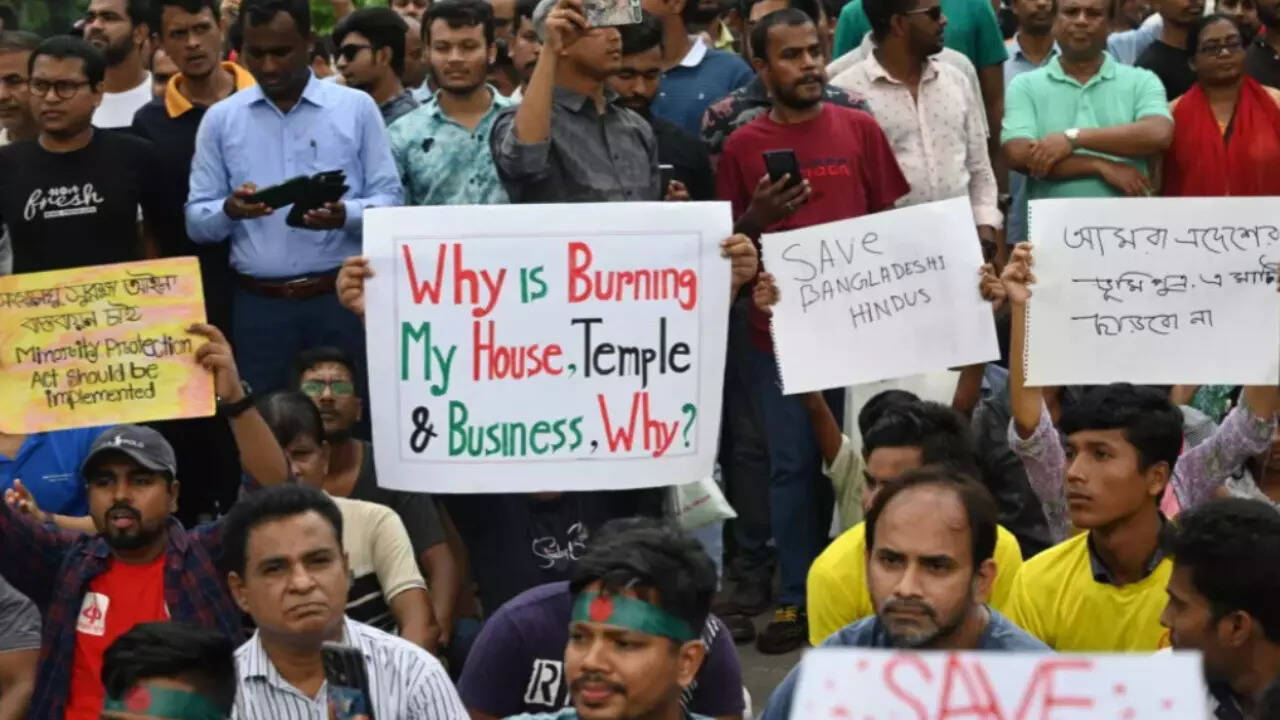

Surge in Violence Against Hindus in Bangladesh: Businessman Set Ablaze by Mob, Marking Sixth Killing in 18 Days
Dhaka, Bangladesh — A Bangladeshi Hindu businessman was attacked by a mob and set on fire on January 2, 2026, in an incident that has heightened fears of escalating communal violence against the country's Hindu minority. The assault, which prompted his family to demand justice, comes amid a sharp rise in targeted killings, with reports indicating at least six such murders of Hindus in the past 18 days.
The attack on the unidentified businessman occurred on Friday, January 2, at around 11:10 GMT, according to event tracking data. Eyewitness accounts and initial reports describe a mob descending on the victim, dousing him with flammable liquid, and igniting him, leaving him critically injured or possibly deceased. His family has publicly appealed for intervention from authorities, citing a pattern of unchecked aggression against the Hindu community in the wake of Bangladesh's prolonged political instability.
This incident is part of a broader wave of violence documented in recent reports. On January 6, the Times of India highlighted the murders of two additional Hindu men, bringing the tally to six killings within an 18-day period. The surge underscores deepening sectarian tensions in the South Asian nation, where Hindus, who constitute about 8% of the population, have faced increased harassment, property damage, and lethal attacks.
Escalating Unrest in Post-Revolution Bangladesh
Bangladesh has been grappling with civil unrest since August 2024, when mass student-led protests forced the resignation and flight of longtime Prime Minister Sheikh Hasina. Her ouster ended 15 years of Awami League rule and installed Nobel laureate Muhammad Yunus as chief adviser of an interim government. While the movement initially demanded democratic reforms and an end to corruption, the power vacuum has given rise to sporadic violence, including reprisal attacks against perceived Awami League supporters, many of whom belong to the Hindu minority.
Hindus have historically supported the secular-leaning Awami League, making them vulnerable during periods of Islamist-influenced backlash. International observers, including the United Nations and human rights groups like Human Rights Watch, have documented over 2,000 incidents of violence against minorities since Hasina's departure, including temple desecrations, home burnings, and killings. India's government, home to Bangladesh's largest diaspora, has repeatedly raised alarms, with External Affairs Minister S. Jaishankar stating in late 2024 that New Delhi was "deeply concerned" about the safety of Hindus across the border.
Local reports from the Times of India article detail the latest murders as emblematic of this trend. The two Hindu men killed in the most recent episode were targeted in separate incidents linked to ongoing unrest, with perpetrators allegedly acting under the cover of political chaos. Community leaders have accused authorities of failing to prosecute attackers, allowing a climate of impunity to foster further aggression.
Government Response and Community Outcry
The interim government under Yunus has pledged to restore order and protect minorities. In December 2025, Yunus announced plans for elections by late 2026 and the formation of a commission to investigate post-revolution violence. However, critics argue that security forces have been stretched thin, with army deployments in key cities like Dhaka and Chattogram focusing more on political rallies than communal protection.
Hindu advocacy groups, such as the Bangladesh Hindu Buddhist Christian Unity Council, have called for immediate arrests and compensation for victims. The businessman's family, in statements circulated via social media, emphasized the need for swift justice to prevent a "genocide-like situation," echoing concerns voiced by Indian Prime Minister Narendra Modi in 2024.
Regional implications are significant. India, sharing a 4,000-kilometer border with Bangladesh, has seen an uptick in refugee claims from Hindus fleeing violence. Diplomatic ties, already strained by Hasina's exile in India, could face further pressure if the killings continue unchecked.
Broader Context of Instability
This violence occurs against a backdrop of economic woes and political fragmentation. Bangladesh's garment industry, a global export powerhouse, has slowed amid strikes and supply disruptions. Inflation hovers above 10%, and youth unemployment fueled the 2024 uprising. Islamist groups like Jamaat-e-Islami, banned under Hasina but now active, have been accused by some of orchestrating minority attacks, though the government denies systemic involvement.
As of January 6, 2026, no arrests have been confirmed in the businessman's case, and investigations into the six killings remain ongoing. Rights monitors urge international monitoring to ensure accountability.
The situation remains fluid, with civil unrest rated at medium severity for the latest incident. Without decisive action, experts warn, Bangladesh risks prolonged instability that could spill over regionally. For now, the Hindu community braces for more uncertainty in a nation still searching for stability post-revolution.
(Word count: 712)






