
Supreme Court Denies Bail to Umar Khalid and Sharjeel Imam in 2020 Delhi Riots Case Amid AAP Protests Over Law and Order Failures
New Delhi, India – The Supreme Court of India on January 5, 2026, denied bail to student activists Umar Khalid and Sharjeel Imam, charged in connection with the deadly 2020 Delhi riots, extending their prolonged detention without trial. The decision has drawn expressions of disappointment from their families, highlighting ongoing concerns over judicial delays in high-profile cases. Just days later, on January 9, Aam Aadmi Party (AAP) lawmakers staged a protest outside the Delhi Assembly, accusing the BJP-led administration of diverting public attention from critical issues including deteriorating law and order.
The Supreme Court's ruling marks another chapter in a case that has lingered for over five years. Umar Khalid, a former Jawaharlal Nehru University student, and Sharjeel Imam, a research scholar, have been in custody since their arrests in 2020 under the stringent Unlawful Activities (Prevention) Act (UAPA) and other charges related to the riots. Families of the accused have emphasized the absence of trial proceedings, with supporters arguing that the extended pre-trial detention violates constitutional rights to speedy justice.
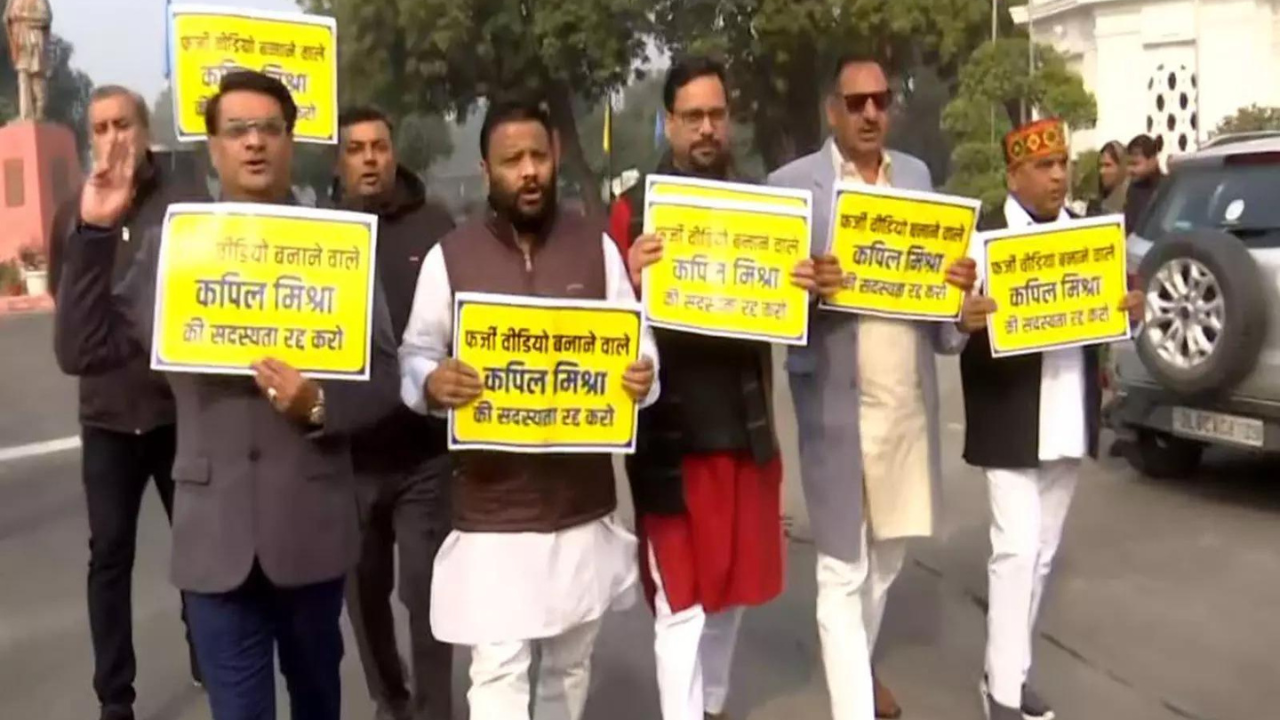
This development coincides with heightened political friction in the national capital. On January 9, AAP MLAs, including Sanjeev Jha, gathered outside the Delhi Assembly to protest what they described as the BJP-led state government's attempts to shift focus from pressing civic problems. Jha specifically accused the administration of circulating a "fraudulent" video involving Leader of Opposition Atishi to distract from failures in maintaining law and order, supplying contaminated water, combating pollution, and cleaning the polluted Yamuna River.
The protest underscores deepening divides between Delhi's ruling AAP and the BJP, which controls the central government and influences the city's governance through the Lieutenant Governor. AAP leaders framed their demonstration as a stand against alleged misinformation tactics amid residents' grievances over basic services.
Background on the 2020 Delhi Riots
The 2020 Delhi riots erupted in February amid protests against the Citizenship Amendment Act (CAA), which fast-tracks citizenship for non-Muslim refugees from neighboring countries. Clashes in northeast Delhi neighborhoods like Jaffrabad, Maujpur, and Bhajanpura resulted in at least 53 deaths—mostly Muslims—and over 200 injuries, according to official figures. Properties worth hundreds of crores were damaged, and the violence was marked by allegations of communal targeting from all sides.
Khalid and Imam were accused of delivering inflammatory speeches that allegedly incited the violence. Prosecutors invoked UAPA provisions, which allow for extended detention and make bail difficult to obtain. Lower courts and high courts have previously rejected their bail pleas, citing the gravity of charges. The Supreme Court's latest denial on January 5 continues this pattern, with the bench reportedly emphasizing the need for thorough investigation into larger conspiracy claims.
Human rights organizations, including Amnesty International (prior to its India operations suspension), have flagged the use of UAPA in such cases for potentially stifling dissent. As of 2025 data from the National Crime Records Bureau, thousands remain undertrial under anti-terror laws, fueling debates on bail reforms.
Political Context in Delhi
Delhi's governance remains a flashpoint between AAP, which won a supermajority in the 2020 Assembly elections, and the BJP, dominant nationally. The AAP protest ties directly into law and order critiques, a perennial election issue. Chief Minister Arvind Kejriwal's administration has repeatedly clashed with the Centre over control of police, which falls under the Union home ministry.
Sanjeev Jha's accusations center on a purported video involving Atishi, AAP's Leader of Opposition in the upcoming Delhi Assembly polls. The AAP claims it is fabricated to undermine their campaign on governance deliverables like free electricity and water, while ignoring pollution spikes—Delhi's Air Quality Index often exceeds hazardous levels—and the Yamuna's toxic foam, a symbol of environmental neglect.
No immediate response from BJP leaders was reported in available accounts, but the party has historically countered AAP by highlighting security lapses during the 2020 riots, when AAP was in power.
Broader Implications
These events reflect simmering civil unrest in India's political landscape, where judicial decisions intersect with street protests and partisan rhetoric. The bail denial revives calls from civil society for expedited trials in UAPA cases, while AAP's demonstration amplifies public discontent over urban crises.
As Delhi gears toward assembly elections expected in early 2026, law and order remains a battleground. Families of Khalid and Imam continue to appeal for justice, with potential for further legal challenges. Meanwhile, AAP vows to sustain pressure on governance lapses, signaling no let-up in Delhi's turbulent political atmosphere.
(Word count: 682)






