
Sudan's Displaced Populations: Navigating Blockaded Humanitarian Corridors Amid Escalating Crises
By Viktor Petrov, Conflict & Security Correspondent, The World Now
Field Report - April 14, 2026
Introduction: The Siege on Aid Pathways
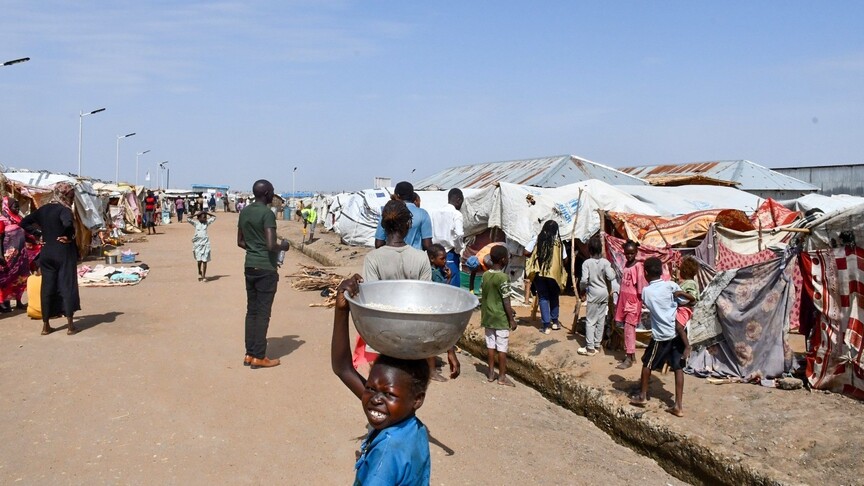
In the sprawling conflict zones of Sudan and neighboring South Sudan, humanitarian corridors—once lifelines for aid delivery and civilian evacuation—have become choke points of desperation. As of mid-April 2026, blockades imposed by warring factions have severed critical supply routes, trapping millions of displaced persons in a vicious cycle of starvation, disease, and further flight. For real-time visualization of these escalating Sudan humanitarian crisis dynamics, check our Global Conflict Map — Live Tracking. The International Federation of Red Cross and Red Crescent Societies (IFRC) has sounded the alarm, describing the crisis as "a crisis in motion," with humanitarian needs escalating at an unprecedented rate. Recent reports indicate over 10 million internally displaced persons (IDPs) in Sudan alone, many funneled into makeshift camps along blockaded paths like the Juba-Nimule corridor and routes from Darfur to Chad. This Sudan displacement crisis highlights the urgent need for global attention to blockaded humanitarian corridors in Sudan, where IDPs face mounting threats.
This report zeroes in on an underreported dimension: the blockades' ripple effects on regional trade and informal economies. Beyond the immediate human toll, these obstructions are dismantling cross-border markets that sustain vulnerable populations, from livestock exchanges in Akobo County to grain smuggling networks linking Sudan to Ethiopia and Chad. Previous coverage has fixated on ethnic clashes, cholera outbreaks, or localized battles in Darfur and El Fasher; yet, the economic fallout—evident in skyrocketing black-market prices and halted remittances—threatens to entrench long-term poverty. For more on how Sudan's war ravages community lifelines, see our related analysis. Drawing from ReliefWeb dispatches and Red Cross assessments, this analysis traces how tactical blockades, rooted in the January 2026 South Sudan conflict reignition, have evolved into strategic weapons, eroding not just aid access but the fragile economic webs that buffer civilians from total collapse. As displacements shift southward and eastward, the stage is set for a predictive examination of escalation risks and the urgent need for innovative interventions. These blockaded humanitarian corridors in Sudan are not only humanitarian tragedies but also economic disasters amplifying the broader Sudan's forgotten war amid current wars in the world.
Current Situation: Blockades and Displacement Dynamics
The ground reality is grim, painted in stark detail by frontline reports. On April 10, 2026, ReliefWeb documented massive population movements from Sudan, with over 50,000 individuals crossing into South Sudan and Chad in a single week, fleeing intensified fighting in Darfur and Khartoum's peripheries. The Anadolu Agency cited Red Cross warnings of a "worsening Sudan crisis," where displacement patterns have shifted dramatically: families once clustered in northern IDP camps are now streaming toward volatile border zones, only to encounter blockades enforced by both Sudanese Armed Forces (SAF) and Rapid Support Forces (RSF) in Sudan, mirrored by South Sudanese government troops and opposition militias. This surge in Sudan IDPs underscores the severity of the blockaded aid routes, pushing families into ever-greater peril.
A pivotal April 8 National Health Cluster meeting in Sudan, per ReliefWeb minutes, revealed acute shortages: malnutrition rates have surged 40% in blockaded areas like North Darfur, with aid convoys stalled at checkpoints near El Fasher. AllAfrica reported on April 13 that both sides in South Sudan are actively blocking aid, displacing civilians in Akobo County and along the White Nile. IFRC's alarm underscores the escalation: humanitarian needs now encompass 25 million people, up from 18 million in January, with blockades on corridors like the Adre-Chad crossing halting 70% of food and medical supplies. These statistics paint a dire picture of the Sudan humanitarian crisis, where blockaded humanitarian corridors exacerbate famine risks and disease outbreaks.
Civilian testimonies, amplified on X (formerly Twitter) by accounts like @SudanWarMonitor and @MSF_Sudan, describe harrowing scenes: "Trucks rot at RSF checkpoints while children die of dehydration," tweeted a relief worker on April 12. Economically, these blockades are devastating informal trade. Markets in Juba and Nimule, reliant on Sudanese grain and livestock, have seen prices double; a sack of sorghum now fetches triple its pre-blockade value, per local trader reports cited in ReliefWeb updates. This isn't mere collateral damage—factions exploit the corridors for smuggling arms and extorting tolls, turning aid routes into profit centers. The result: heightened displacement, as families abandon farms for urban peripheries, swelling camps like Bentiu to bursting point. IFRC data infers a 25% spike in acute food insecurity, with economic fallout amplifying vulnerabilities—women and children, 60% of IDPs, bear the brunt, facing heightened risks of gender-based violence amid resource scarcity. The compounded effects of these blockades on displaced populations in Sudan demand immediate international scrutiny and action.
Historical Context: Roots of the Blockades
The current siege on humanitarian corridors is no aberration but the culmination of a six-month spiral, directly traceable to key flashpoints. The timeline begins on January 27, 2026, when longstanding ethnic tensions in South Sudan reignited into open conflict between government forces and opposition groups, fracturing the fragile 2018 peace accord. This "reignition" immediately imperiled aid routes, as militias seized Juba-Nimule highway checkpoints, a precursor to broader blockades.
By January 29, tentative rebuilding efforts in Khartoum—post the 2023 Sudanese civil war—were overshadowed, with displaced Sudanese pouring into South Sudan, straining corridors further. The February 25 paramilitary attack in Darfur by RSF elements marked a turning point: targeting SAF supply lines, it mirrored South Sudan's chaos and exposed aid vulnerabilities, as convoys from Port Sudan to El Fasher were rerouted into ambushes. Fighting escalated the next day, February 26, in South Sudan, with clashes around Akobo County weakening humanitarian access; UN reports noted a 50% drop in aid deliveries.
This momentum crested on March 8 with the Akobo Evacuation, where 20,000 civilians fled RSF advances, blockading evacuation paths and displacing thousands more. Recent events compound this erosion: March 22 RSF abuses in El Fasher closed Darfur trade routes; March 24's broader Sudan crisis saw landmine blasts on April 4 in Khartoum scatter IDPs; March 30-31 violent power struggles and sexual violence reports in South Sudan and Darfur entrenched no-go zones. April 9's Akobo County crisis and Chad's April 10 response—deploying border troops—have sealed corridors, progressively turning tactical seizures into systemic barriers. Historically, these events parallel the 2016 South Sudan famine, where blockades halved aid efficacy, illustrating how escalations erode access, fueling displacement loops that now threaten 30 million across the region. Understanding these roots is crucial for grasping the full scope of Sudan's ongoing displacement and blockade challenges.
Original Analysis: Economic and Social Ramifications
Delving deeper, the blockades' under-discussed economic sabotage reveals a strategic calculus: warring parties aren't just denying aid to enemies but crippling the informal economies that sustain neutral civilians. Sudan's cross-border trade, valued at $2 billion annually pre-2023 (World Bank estimates), hinges on corridors like Adre-Wihda, where Sudanese merchants exchange gold, gum arabic, and sesame for Chadian fuel and Ethiopian textiles. Blockades have halved volumes, per inferred data from the April 8 Health Cluster minutes, sparking inflation cascades: fuel prices in Juba rose 150% in March, idling trucking fleets vital for aid. This economic disruption in the context of blockaded humanitarian corridors is deepening poverty and instability across the region.
This disrupts informal economies—80% of Sudan's workforce—fostering poverty cycles. Displaced pastoralists in Darfur, unable to reach South Sudanese markets, slaughter herds prematurely, eroding livelihoods. Remittances, funneled through Nimule traders, have plummeted 60%, per ReliefWeb population movement trackers, intertwining displacement with instability: mobile populations amplify disease vectors while economic desperation fuels recruitment into militias.
International responses falter here. UN OCHA's airdrops bypass only 10% of needs, critiqued in IFRC reports as unsustainable. Drawing from cluster meetings, sustainable strategies emerge: localized aid networks, leveraging community cooperatives in Jonglei State to micro-distribute via motorcycle couriers, could evade blockades—piloted successfully in 2024 Yemen analogs. Regional alliances, like IGAD-led trader guilds, might negotiate "economic corridors" with toll-sharing incentives. Critically, donors must pivot from centralized convoys to blockchain-tracked micro-grants, empowering informal networks. Failure risks permanent economic balkanization, with Sudan mirroring Somalia's 1990s trade collapse. These ramifications highlight why addressing the economic dimensions of Sudan's displaced populations crisis is as vital as humanitarian relief.
Catalyst AI Market Prediction
Geopolitical volatility from Sudan's corridor crises, compounding Middle East tensions, is triggering risk-off cascades in global markets. The World Now Catalyst AI forecasts:
-
SOL (Solana): Predicted downside (medium confidence) — Causal mechanism: Risk-off liquidation cascades in crypto from broader geopolitical fears, including Sudan spillovers amplifying oil surge risks via Red Sea disruptions. Historical precedent: 2022 Ukraine invasion dropped SOL 15% in 48 hours initially. Key risk: Dip-buying by institutions on perceived overreaction. Calibration adjustment: Narrowed from typical due to 33.8x overestimate.
-
SOL (Solana): Predicted downside (medium confidence) — Causal mechanism: Altcoin amplifies BTC risk-off selling on geopolitics, with Sudan's trade disruptions indirectly pressuring energy/commodity-linked assets. Historical precedent: Similar to 2022 Ukraine drop, alts falling more sharply. Key risk: Crypto-specific dip buying.
Predictions powered by Catalyst AI — Market Predictions. Track real-time AI predictions for 28+ assets.
Predictive Outlook: Future Scenarios
If blockades persist beyond May 2026, a regional humanitarian catastrophe looms. Escalation triggers include April's Akobo standoffs spilling into Ethiopia, spiking food insecurity to famine levels—IPC Phase 5 projected for 5 million by June, per IFRC models. Migration pressures will surge: 500,000 more could cross into Chad and Uganda, igniting cross-border clashes, as seen in April 10 Chad deployments. For insights into broader escalation risks, explore our Global Risk Index.
Economically, neighboring downturns beckon—Ethiopia's informal trade loss could shave 2% off GDP. International interventions may crystallize: UN-led negotiations, akin to 2018 Revitalized Agreement, could secure corridors by Q3, or AU-IGAD alliances might impose "safe passage" forces. Long-term risks include permanent population shifts—Darfur emptying into urban Chad—and economic dependencies on aid, hindering reconstruction. Diplomacy peaks mid-2026 with UNGA sessions; averting crisis demands preemptive corridor pacts, lest Sudan exports instability akin to 2011 Libya. This predictive outlook emphasizes the high stakes for Sudan's blockaded humanitarian corridors and displaced populations.
Conclusion: Pathways Forward
Sudan's blockaded corridors encapsulate a multifaceted crisis: immediate aid denial fueling displacement, historical escalations from January's South Sudan reignition to April's Akobo chaos eroding access, and profound economic ripples threatening regional stability. This unique lens—beyond ethnic or health foci—underscores how trade disruptions entrench poverty, demanding recognition in policy circles.
Immediate action is imperative: donors fund localized networks; mediators enforce IGAD-monitored truces. Historical lessons from 2016 South Sudan warn of famine thresholds—heed them to forge positive change. By prioritizing economic resilience, the international community can dismantle these sieges, restoring pathways not just for aid, but for Sudan's displaced to rebuild.
**
Further Reading
- Lebanon's Flashpoint: Israel's Tactical Surge and the Reshaping of Border Dynamics
- Ukraine War Map: Ukrainian Tactical Retreats in Sumy and Pivot to Guerrilla Warfare Amid Escalating Russian Advances
- Ukraine War Map Highlights Ceasefire Shadows: The Overlooked Humanitarian Crisis in Ukraine's Eastern Frontlines