Strike united arab emirates at Barakah plant draws UN Security Council condemnation
The strike united arab emirates targeting the Barakah Nuclear Power Plant has prompted a strong response from the United Nations Security Council, which described the drone attack as a clear violation of international law. Council members highlighted the incident as a direct challenge to established norms governing the protection of nuclear facilities. Reports indicate that the attack occurred amid broader regional tensions involving missile strikes during Operation Epic Fury.
UN Security Council Statement
The United Nations Security Council issued a statement on Tuesday condemning the drone attack on the Barakah Nuclear Power Plant in the United Arab Emirates [1]. Council members emphasized that the action represented a clear violation of international law and called for accountability in line with existing global standards. The statement underscored the council's unified position against any actions that endanger nuclear sites, drawing on established frameworks that prohibit targeting such infrastructure. This response reflects the council's ongoing role in addressing threats to international peace and security, particularly when nuclear facilities are involved. Additional context from the statement notes that the condemnation was issued swiftly to signal the seriousness with which the body views any breach of these protections [1]. The council's action aligns with prior resolutions that safeguard critical energy installations from hostile acts.
Attack Details
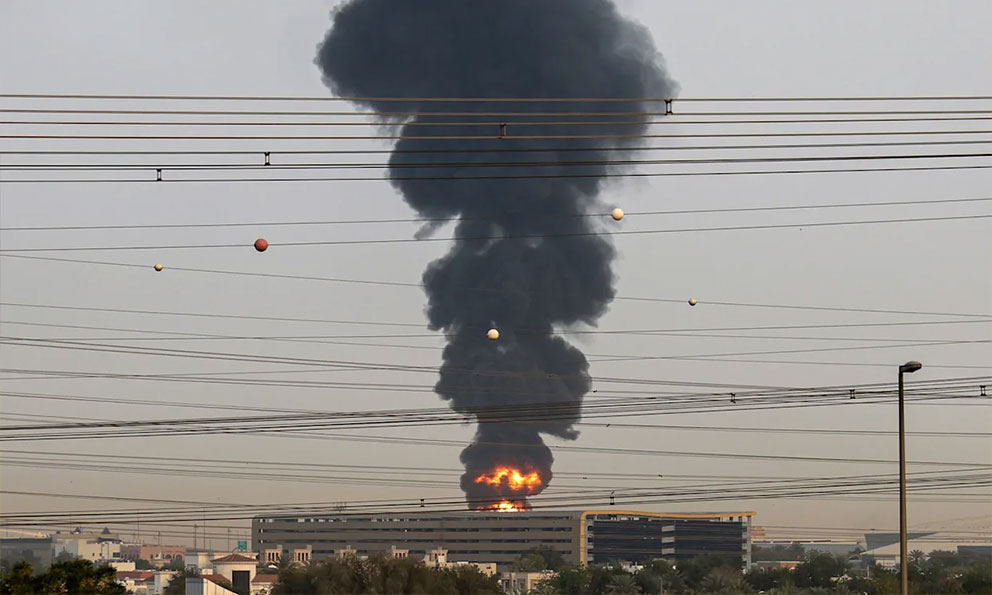
The drone attack specifically targeted the Barakah Nuclear Power Plant and was assessed as a clear violation of international law [1]. Reports detail that the strike was carried out using unmanned aerial vehicles, which directly impacted the facility's operations. The incident unfolded as part of wider missile activity associated with Operation Epic Fury, though the primary focus remained on the nuclear site itself. Council assessments noted the precision of the targeting yet stressed the inherent risks of any engagement near nuclear materials. This event marks a notable escalation in the use of drone technology against energy infrastructure in the region. The details provided in official statements confirm the attack's intent and execution without ambiguity [1].
{IMAGE_2}
Risks to Civilians and Infrastructure
Council members warned that the incident posed a serious threat to civilians, critical infrastructure, and the environment [1]. The potential for radioactive release or structural damage at the Barakah plant was cited as a primary concern in the statement. Such risks extend beyond immediate casualties to long-term effects on surrounding populations and ecosystems. The assessment draws attention to how attacks on nuclear facilities can disrupt essential services and heighten regional instability. Environmental safeguards were highlighted as particularly vulnerable in these scenarios, given the sensitive nature of the materials involved. The council's warning serves to remind all parties of the broader consequences that follow from targeting these sites [1].
Evacuation Assistance
Canada assisted the United States in evacuating American citizens from the UAE amid missile strikes during Operation Epic Fury [2]. The assistance came as embassy closures and ongoing strikes created urgent conditions for diplomatic personnel and civilians alike. United States officials coordinated with Canadian counterparts to facilitate the safe departure of stranded Americans from the United Arab Emirates [2]. This cooperation occurred during the opening days of Operation Epic Fury, when direct U.S. channels faced limitations due to the security environment. Reports confirm that the effort remained low-profile yet effective in moving citizens out of harm's way [3]. The involvement of Canada provided a practical solution to logistical challenges posed by the regional unrest.
{IMAGE_3}
Context of Operation Epic Fury
Missile strikes and embassy closures rattled the Gulf during the opening days of Operation Epic Fury, prompting the United States to seek external support for evacuations [2]. The operation created conditions in which multiple nations coordinated responses to protect their citizens. Canada’s role emerged as a key element in these efforts, allowing for the movement of American personnel despite the disruptions [3]. Details from reporting indicate that the strikes affected several areas, leading to heightened security measures across the UAE. The operation’s early phase underscored the need for allied assistance in managing civilian safety amid active conflict zones. Such developments illustrate the interconnected nature of regional security arrangements during this period [2].
Broader International Implications
The United Nations Security Council’s condemnation of the drone attack reinforces existing prohibitions against targeting nuclear facilities under international law [1]. This stance builds on prior council actions that prioritize the protection of civilian and environmental interests in conflict settings. The combination of the Barakah incident and related missile activity during Operation Epic Fury has drawn attention to the challenges of maintaining stability in the Gulf region [2]. Canada’s assistance to U.S. evacuation efforts further demonstrates how diplomatic partnerships can mitigate immediate risks to citizens [3]. These events collectively point to the importance of sustained dialogue among international actors to prevent further escalation. The council’s statement serves as a reference point for future responses to similar incidents [1].
Coordination Among Allies
Allied coordination played a central role in managing the aftermath of the strike united arab emirates and associated missile activity. Canada’s provision of evacuation support to the United States highlights practical mechanisms for responding to sudden security threats in the UAE [2]. This assistance was particularly relevant during embassy closures that limited standard U.S. operational capacity [3]. The events unfolded against the backdrop of Operation Epic Fury, which introduced additional layers of complexity to civilian movements. Reports emphasize that such partnerships rely on established channels of communication between governments [2]. The overall response reflects a pattern of mutual support among nations facing shared regional challenges.
What to watch next: Continued monitoring of the United Nations Security Council’s follow-up actions regarding the Barakah attack and any updates on evacuations tied to Operation Epic Fury.