Sudan Conflict Genocide Markers Identified by UN in el-Fasher and el-Obeid
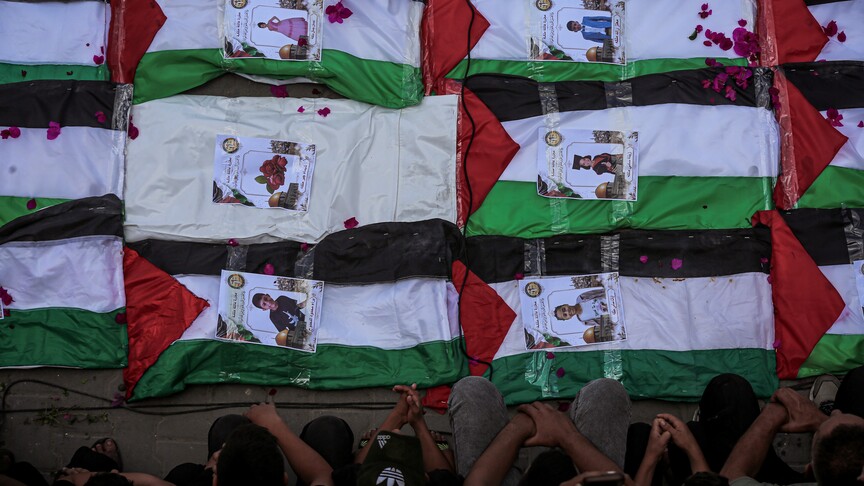
A UN Fact-Finding Mission has concluded that Sudan's Rapid Support Forces committed genocide in el-Fasher through mass killings, systematic abductions, gang rapes and deliberate starvation, with similar patterns now emerging around el-Obeid amid the broader Sudan conflict. The mission's findings detail how the RSF carried out door-to-door executions, identity-based targeting, drone bombardments and indiscriminate shootings in el-Fasher, killing more than 6,000 people in three days after an 18-month siege. [4] Survivors described rapes occurring in rooms with bodies of killed civilians present, while the RSF imposed a prolonged siege that impeded relief supplies and shelled food production systems, constituting the war crime of starvation. [3]
UN Fact-Finding Mission Findings on el-Fasher
The UN Fact-Finding Mission determined that the RSF's systematic campaign of violence against civilians during and after its siege of el-Fasher amounted to genocide. [3] The mission found additional evidence that the widespread and systematic pattern of conduct by the RSF, including large-scale killings, mass rapes and deliberate starvation, was part of an intended policy. [3] In el-Fasher the RSF carried out door-to-door executions, identity-based targeting, aerial drone bombardments and indiscriminate shootings, killing more than 6,000 people in three days after an 18-month siege. [4] Survivors in el-Fasher described being raped in rooms where bodies of recently killed civilians, including their own family members, were still lying on the ground. [3] The report found that the RSF and its allies committed the war crime of starvation by imposing a prolonged siege on the city, impeding relief supplies and shelling food production systems. [3] The mission noted that the UN repeatedly warned about the risk of atrocities in el-Fasher before the city fell, but that those warnings were not heeded. [4] The fact-finding mission had already concluded in its February report that mass killings of non-Arab communities when the RSF captured el-Fasher bore hallmarks of genocide. [3]
Warnings and Inquiry for el-Obeid
The Fact-Finding Mission warned that similar patterns of violence and devastation are now emerging in el-Obeid. [2] The patterns documented in el-Fasher, including encirclement, attacks on civilian infrastructure, restrictions on humanitarian access and widespread abuses against civilians, serve as a stark warning for el-Obeid. [4] UN investigators are launching an urgent inquiry into el-Obeid following a Human Rights Council resolution. [2] Members of the UN Human Rights Council on Monday condemned the violence and set up an urgent inquiry into reported abuses there. [3] The RSF is currently deploying tactics used in el-Fasher around el-Obeid, where its forces have encircled the city, attacking critical infrastructure and restricting access to essential services. [4] El Obeid has faced siege-like conditions for 18 months, with attacks on critical infrastructure such as power stations causing blackouts, disrupting water supplies and hampering hospitals' ability to operate. [4] In three weeks in June, the UN verified 15 drone strikes killing at least 45 civilians in el-Obeid and the surrounding area. [4] The mission will investigate alleged violations and abuses of international human rights law and humanitarian law in el-Obeid. [4]

UN report identifies markers of genocide by Rapid Support Forces in Sudan's el-Fasher and el-Obeid. — Source: africanews
Scale of the Sudan Conflict
Two years into the war between the Sudanese Armed Forces and the RSF, the Sudan conflict has killed at least 59,000 people and displaced at least 14 million more. [4] With 33.7 million people requiring humanitarian assistance and access to people in need severely restricted, the UN considers Sudan the worst humanitarian crisis in the world. [4] The conflict between the Sudanese Armed Forces and RSF has killed at least 59,000 people, displaced 14 million and created the world's worst humanitarian crisis, with 33.7 million requiring aid. [4]
ICC Breakthrough in Investigations
The ICC has obtained concrete evidence linking RSF leaders to war crimes and crimes against humanity in el-Fasher and el-Geneina, building on patterns from the 2000s Darfur violence. [5] The ICC has reached a breakthrough in its investigation into the massacres of civilians in the cities of el-Fasher and el-Geneina. [5] The ICC has concrete evidence linking leaders of the RSF to recent war crimes in Darfur. [5] The ICC has been investigating allegations of war crimes in Darfur for more than 20 years since the previous round of violence in the 2000s. [5] Previous investigations have led to seven arrests and six separate cases being brought before the court for alleged war crimes and crimes against humanity. [5] Last year, the ICC sentenced one former militia leader to 20 years in prison after he was successfully convicted of 27 counts of war crimes and crimes against humanity, committed in Darfur from 2003 to 2004. [5]
{IMAGE_3}
Regional Population Movements
Refugee and displacement flows from Sudan have moved into neighboring countries including Chad, South Sudan, Ethiopia, Egypt, Uganda, Central African Republic and Libya. [1] The UN High Commissioner for Refugees has tracked these population movements from Sudan across the listed neighboring countries. [1]
Calls for Accountability and Action
The Fact-Finding Mission reiterated its calls for effective accountability, including prompt cooperation with, and action by, the International Criminal Court. [2] UN High Commissioner for Human Rights Volker Turk called for urgent Security Council action, a pause in hostilities to allow humanitarian aid and cooperation by the International Criminal Court. [4] The international community must heed these lessons and act to prevent further catastrophe. [4] The Fact-Finding Mission will continue its investigations and will report on the situation in and around el-Obeid to the Human Rights Council and the General Assembly, as it is mandated to do. [2] El Obeid must not become the next crime scene. [4]
What to watch next: The UN Fact-Finding Mission will report on the situation in and around el-Obeid to the Human Rights Council and the General Assembly while the ICC continues its probe into RSF leaders.