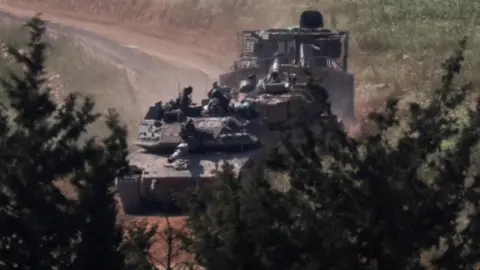

Strikes in Lebanon: Netanyahu Orders Army to Attack Hezbollah Targets
Israeli Prime Minister Benjamin Netanyahu has ordered the army to vigorously attack Hezbollah targets in Lebanon, despite a recently extended ceasefire.[1][2] This directive comes amid reports of six people killed in Israeli strikes in Lebanon, with four deaths occurring on Saturday according to Lebanese state media.[3][5] Over 2,490 people have been killed in Lebanon from Israeli attacks since March 2, including five deaths in the past 24 hours, as ceasefire violations persist from both sides, including Hezbollah rocket fire into Israel.[4][5]
Netanyahu's Order for Strikes
Israeli Prime Minister Benjamin Netanyahu has issued a clear directive to the Israeli military, ordering it to "vigorously attack" Hezbollah targets across Lebanon.[1] This instruction emphasizes forceful action, with Netanyahu explicitly telling the army to respond aggressively to threats posed by the militant group.[2] The order arrives in a tense context, just as a ceasefire between Israel and Lebanon—brokered by the United States—has been extended by an additional three weeks.[1] Netanyahu's statement underscores Israel's determination not to tolerate breaches of the agreement, positioning the strikes as a necessary measure to deter Hezbollah activities.[2]
This development highlights the precarious nature of the truce, which was initially agreed upon last week to halt escalating cross-border exchanges.[3] By mandating vigorous operations, Netanyahu signals a shift toward proactive defense, even as diplomatic efforts aim to sustain the pause in major hostilities. The prime minister's rhetoric frames these actions as defensive responses to ongoing provocations, aligning with Israel's broader security strategy against Hezbollah's arsenal and presence in southern Lebanon.[1][2] Such orders reflect a pattern where military directives are calibrated to maintain pressure on adversaries while navigating international calls for restraint.
Recent Casualties from Strikes
Recent Israeli strikes in Lebanon have resulted in significant casualties, with six people reported killed in attacks on southern Lebanon.[3] Lebanese state media detailed a particularly deadly incident on Saturday, where four individuals lost their lives in strikes targeting the region.[5] These events mark the latest in a series of operations that have challenged the ceasefire's effectiveness, occurring despite the agreement's recent extension.[1]
The strikes focused on southern Lebanon, an area long contested due to Hezbollah's entrenched positions.[3] Reports indicate that these actions followed patterns of targeted operations against suspected militant infrastructure, though specific details on the victims or precise locations remain tied to state media accounts.[5] The death toll from these immediate incidents—six overall, including the four from Saturday—illustrates the human cost of the renewed intensity, even as broader hostilities have somewhat subsided.[3][5] This cluster of fatalities serves as a stark reminder of the volatility in the border zone, where military exchanges can rapidly escalate from isolated incidents to wider confrontations.
Ceasefire Violations and Challenges
The ceasefire between Israel and Lebanon, facilitated by the United States last week, has faced repeated violations from both parties.[3] Israeli strikes in Lebanon, such as those killing six people in the south, represent one side of these breaches, with forces acting despite the truce's extension.[1][3] On the other hand, Hezbollah has contributed to the fragility by firing rockets into Israel, prompting Israeli military responses and further testing the agreement's limits.[5]
These mutual infractions have undermined the ceasefire's goal of de-escalation, turning what was intended as a stabilizing measure into a tenuous arrangement.[3][5] Netanyahu's order for vigorous attacks explicitly cites such violations as justification, framing Israeli actions as retaliatory rather than initiatory.[2] The pattern of rocket fire from Hezbollah followed by airstrikes exemplifies the cycle of retaliation that has persisted, even after the US-brokered deal and its three-week prolongation.[1] Challenges to the ceasefire are compounded by the difficulty in enforcing compliance along a porous border, where low-level engagements continue to erode trust between the warring sides.[5]
Broader Impact of Attacks
Since March 2, Israeli attacks in Lebanon have resulted in over 2,490 deaths, providing a grim statistical backdrop to the current escalation.[4] This cumulative toll underscores the prolonged intensity of the conflict, with recent violations adding five more lives lost in the past 24 hours alone.[4] The figures highlight the sustained pressure on Lebanese communities, particularly in the south, where repeated strikes have inflicted widespread devastation.
These numbers reflect not just immediate casualties but the broader strain on Lebanon's infrastructure and population amid ongoing hostilities.[4] As ceasefire efforts falter, the death toll continues to climb, with the past day's five fatalities signaling that violations remain a persistent threat to any lasting pause.[4] This data, drawn from comprehensive tracking, illustrates how operations against Hezbollah have exacted a heavy price, fueling debates over proportionality and civilian impact even as military objectives are pursued.
Current Status of Hostilities
The ceasefire agreement between Israel and Lebanon has achieved a significant reduction in hostilities overall, marking a notable downturn from prior levels of cross-border fire.[5] However, persistent challenges, including Israeli strikes killing four on Saturday and Hezbollah rocket launches, indicate that the truce remains fragile and recently extended under strain.[5]
This partial success in curbing major engagements has allowed some breathing room, yet the latest incidents reveal underlying tensions that could unravel progress.[5] The Israeli military's reports of incoming rockets directly link to subsequent actions, perpetuating a tit-for-tat dynamic despite the agreement's framework.[5] While hostilities have diminished in scope, the continuation of these violations points to an incomplete implementation, with both sides maneuvering within the ceasefire's ambiguous boundaries.
What to watch next: Continued monitoring of ceasefire compliance, as further Hezbollah rocket fire or Israeli strikes could prompt escalated responses amid the extended truce.[1][5]






