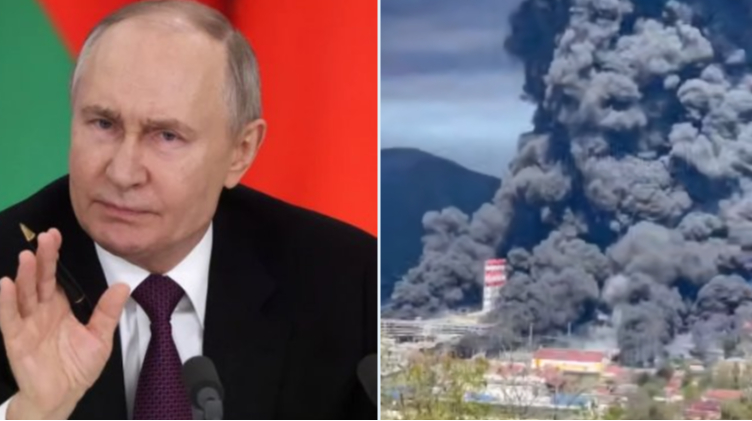

Strike on Russia: Third Ukrainian attack hits Tuapse oil refinery, causing evacuations
A third Ukrainian strike has hit a Russian oil refinery in Tuapse, prompting evacuations and efforts to contain an oil spill.[4] Russian President Vladimir Putin has warned that such strikes on energy facilities in the area could lead to an environmental disaster,[1] while also stating that Ukraine has intensified drone attacks on civilian targets in Russia, including the Tuapse refinery.[2] Residents near the facility have been evacuated as authorities work to manage the fallout from the incident.[4] This strike russia event underscores escalating tensions in the ongoing conflict, with immediate consequences for local communities and infrastructure.
Overview of the Tuapse Strikes
The recent strikes on the Tuapse oil refinery represent a significant escalation in Ukrainian operations targeting Russian energy infrastructure. According to reports, this marks the third such Ukrainian strike on the facility, highlighting a pattern of repeated attacks on this key industrial site in southern Russia.[4] The refinery, a critical component of Russia's energy sector, has now become a focal point amid intensified drone operations. Putin himself referenced the Tuapse refinery in comments broadcast on Russian television, noting it as the latest example of drone strikes against civilian infrastructure that are becoming more frequent.[2]
These attacks come in the context of broader Ukrainian efforts to disrupt Russian energy production, though details on the specific methods—such as the drones employed—align with Putin's description of stepped-up assaults.[2] The Tuapse facility's location on the Black Sea coast amplifies concerns over potential spillover effects, as the strikes have already led to visible damage and secondary issues like fires.[4] This strike russia incident is not isolated but part of a series, with earlier strikes contributing to the current crisis, prompting a coordinated response from local authorities.[4] The repeated nature of the assaults—now on the third occasion—suggests a strategic focus on energy targets, which Russian officials frame as deliberate strikes on civilian economic assets.[2]
Eyewitness accounts and official updates indicate that the refinery was left burning following the latest hit, a development that necessitated swift action to protect nearby populations.[4] While the full extent of damage to the refinery's processing units remains unclear from available reports, the operational halt implied by the fires and spills points to temporary disruptions in oil refining capacity.[4] This overview situates the Tuapse strikes within the wider dynamics of the conflict, where energy infrastructure has emerged as a contested domain, balancing military objectives with risks to civilian areas.[2]
Putin's Statements on the Attacks
Russian President Vladimir Putin has directly addressed the Tuapse strikes, framing them as part of a broader intensification of Ukrainian drone attacks on civilian targets across Russia. In remarks aired on Russian television, Putin stated that "drone strikes against civilian infrastructure are becoming more frequent," explicitly citing the recent assault on the Tuapse oil refinery as a prime example.[2] He emphasized that Ukraine has "stepped up attacks on civilian infrastructure in Russia," positioning the incident within a pattern of escalating aggression.[2]
Putin further warned of severe repercussions, claiming that strikes on Tuapse energy facilities could precipitate an environmental disaster.[1] This assertion from the Kremlin leader underscores Moscow's narrative of Ukrainian actions threatening not just military but ecological stability, particularly given the refinery's proximity to populated areas and the sea.[1] His comments, reported by Ukrainian outlet Ukrainska Pravda, highlight the potential for widespread contamination from damaged storage or processing units.[1]
These statements serve to rally domestic support while signaling resolve against what Putin describes as intensified offensives. By linking the Tuapse event to a national trend of drone incursions, Putin portrays the strikes as indiscriminate, aimed at civilian economic lifelines rather than purely military objectives.[2] The timing of his remarks—delivered on Tuesday amid ongoing developments—reflects real-time Kremlin engagement with the crisis, blending condemnation with cautionary notes on environmental hazards.[1][2]
Immediate Impacts of the Strikes
The third Ukrainian strike on the Tuapse oil refinery has triggered prompt evacuations for residents in the vicinity, as authorities responded to the immediate hazards posed by the attack.[4] Reports describe the facility as burning, with thick smoke and flames visible, compelling officials to instruct those nearby to leave their homes for safety.[4] This evacuation order highlights the direct threat to civilian life from the conflagration and associated risks.
In addition to population displacement, the strikes have resulted in an oil spill, with ongoing efforts focused on containment to prevent further spread.[4] The spill, stemming from earlier hits compounded by the latest one, poses immediate environmental challenges, as teams work to localize the contamination and mitigate impacts on surrounding land and water.[4] While specific casualty figures from the Tuapse incident are not detailed in reports, the urgency of the response underscores the scale of disruption.
Damage assessment points to significant structural compromise at the refinery, where fires have raged unchecked initially, affecting operations and necessitating a full-scale emergency protocol.[4] Local response measures, including fire suppression and spill barriers, reflect the multifaceted nature of the impacts—from human safety to ecological preservation—in the wake of this strike russia escalation.[4] These consequences illustrate how targeted infrastructure attacks can cascade into broader community and environmental crises.
Related Incidents in the Conflict
Amid the Tuapse developments, a related Russian drone attack on Kyiv provides context for the tit-for-tat nature of aerial operations in the conflict. On April 28, a daytime Russian drone strike injured two civilians and damaged about 10 cars in the Ukrainian capital.[3] Photos from the scene captured the extent of the destruction to vehicles, with the assault occurring during daylight hours, amplifying risks to urban populations.[3]
This incident in Kyiv mirrors the drone tactics seen in Tuapse but from the opposing side, where Russian forces targeted what appears to be civilian areas.[3] The injuries sustained by the two civilians underscore the human toll of such strikes, paralleling concerns over civilian infrastructure raised by Putin regarding Ukrainian actions.[3] While not directly linked operationally, the Kyiv attack occurred recently, offering a snapshot of reciprocal drone warfare that frames the Tuapse events within ongoing hostilities.[3]
Current Status and Responses
Efforts to manage the aftermath of the Tuapse strikes remain active, with evacuations still in effect for residents near the burning refinery.[4] Authorities continue to direct people to vacate the area, prioritizing safety amid persistent fire risks.[4] Simultaneously, specialized teams are engaged in containing the oil spill triggered by the series of strikes, aiming to prevent escalation into a larger ecological issue.[4]
The refinery's status indicates ongoing combustion, complicating full damage control, though response operations are progressing.[4] These measures align with Putin's warnings of potential disaster, as containment work directly addresses the spill's containment to avert wider contamination.[1][4] Local and regional authorities are coordinating the response, with updates emphasizing sustained vigilance.[4]
What to watch next: Monitor developments at the Tuapse refinery for progress on fire suppression and oil spill containment, as well as any further Kremlin statements on environmental risks from these strikes.[1][4]