
Strike on Iran: US Seizes Cargo Ship in Blockade Enforcement
US forces seized an Iranian-flagged vessel after firing on it, as stated by President Trump, amid efforts to enforce a blockade in the Strait of Hormuz.[2][4][5] This incident, part of broader US actions described as a strike on Iran, underscores escalating tensions, with reports also emerging of damage to Iranian civilian aviation assets and concerns over nuclear proliferation following targeted strikes on key personnel.[1][3]
Overview of US Action on Iranian Vessel
The US Navy's operation against the Iranian-flagged cargo ship marked a direct enforcement of the blockade in the Strait of Hormuz, a critical chokepoint for global oil shipments. President Trump detailed that a US destroyer targeted the vessel, identified as the Touska, which was attempting to evade the blockade.[2][4] According to Trump's statements, the ship was stopped by US forces blowing a hole in its engine room, rendering it inoperable and allowing for its seizure.[4] This method of interdiction highlights the precision and force applied in the encounter, as confirmed in live updates from multiple reporters.[5]
The sequence of events began with the cargo ship maneuvering to bypass the US-enforced restrictions, prompting an immediate response from the destroyer.[2] Firing on the vessel followed, leading to the engine room breach that facilitated the boarding and seizure.[4][5] Such actions are framed within the context of maintaining naval superiority in the region, where the Hormuz blockade aims to curb Iranian maritime movements amid ongoing hostilities.[2][4] The operation's success, as reported, demonstrates the US Navy's capability to interdict vessels without broader escalation, though it raises questions about the vessel's cargo and intended destination, details not specified in the available accounts.[5]
This seizure fits into a pattern of heightened US naval presence, where destroyers patrol to detect and neutralize evasion attempts.[2] The blowing of the engine room hole was a targeted disablement tactic, avoiding crew casualties while achieving the objective of halting the ship's progress.[4] Live reporting emphasized the rapid execution, with Trump confirming the Navy's role in both firing and subsequent control of the vessel.[5] Analysts note that such blockades require vigilant monitoring of shipping lanes, where Iranian-flagged ships pose particular challenges due to their registry and potential ties to state interests.[2]
Reports of Damage from Attacks
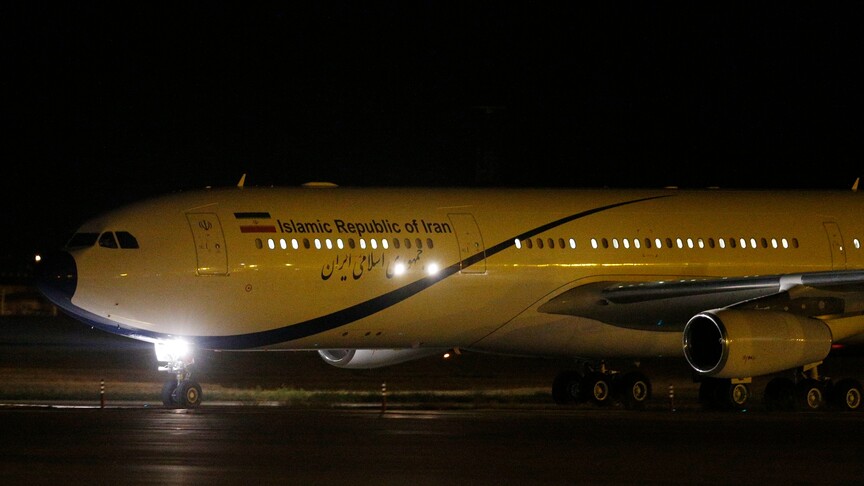
An Iranian official has reported that over 20 passenger planes sustained damage during US-Israeli attacks, part of the ongoing strike Iran operations.[3] This disclosure came from an airlines official who emphasized that while the aircraft were affected, broader claims of extensive airport disruption are inaccurate, with most capacity remaining operational.[3]
The damage assessment points to specific impacts on aviation infrastructure, likely at key facilities supporting civilian and possibly military logistics. The official's statement underscores a measured response to the strikes, noting that runway and terminal functions continue largely unaffected despite the plane losses.[3] This suggests that while the attacks inflicted tangible harm—grounding over two dozen aircraft—the resilience of Iran's air transport network persists, allowing for sustained operations.[3]
Details on the exact locations or types of planes involved remain limited to the official's tally, but the incident reflects the scope of US-Israeli military actions targeting Iranian assets.[3] The preservation of most airport capacity implies contingency measures, such as dispersed operations or alternative hubs, mitigating the strikes' logistical fallout.[3] This report arrives amid a strike Iran context where precision strikes aim to degrade capabilities without total paralysis, as evidenced by the selective damage profile.[3]
Context of US-Iran Tensions
The killing of Iranian nuclear scientists in US-Israeli strikes has intensified longstanding US-Iran tensions, spotlighting vulnerabilities in Iran's nuclear program.[1] These assassinations, attributed to coordinated operations, have prompted alarms over the potential for enriched uranium and specialized expertise to enter the black market.[1]
Experts warn that the strikes disrupt oversight and security protocols, weakening controls on nuclear materials that could otherwise be safeguarded.[1] The loss of key personnel—scientists integral to Iran's atomic advancements—creates gaps in knowledge transfer and material handling, heightening proliferation risks.[1] This scenario evokes historical concerns about rogue actors exploiting instability in sanctioned nuclear programs, where state disruptions could inadvertently fuel illicit networks.[1]
The US-Israeli campaign targets figures central to uranium enrichment and weaponization efforts, aiming to set back Iran's capabilities.[1] However, the unintended consequence is a fear that surviving stockpiles or tacit knowledge might disseminate unchecked, complicating international non-proliferation efforts.[1] Tensions are compounded by Iran's retaliatory postures, including maritime evasions, linking nuclear strikes to broader confrontations like the recent vessel seizure.[1]
Official Statements and Updates
President Trump provided direct confirmation of the US Navy's actions, stating that a destroyer hit an Iran cargo ship attempting to evade the blockade.[2] In parallel updates, he elaborated that US forces seized the Iran-flagged ship by blowing a hole in its engine room, effectively halting its passage through the Hormuz strait.[4]
Live updates from CNN reporters corroborated Trump's account, noting the Navy fired on and seized the Iranian-flagged vessel as part of blockade enforcement.[5] These statements from the US president frame the incident as a necessary measure to uphold the naval restriction, with the destroyer's intervention preventing a breach.[2][5] Trump's remarks, reported across outlets, emphasize the operation's decisiveness, positioning it as a success in containing Iranian shipping amid hostilities.[4]
The consistency across sources—Straits Times, Al Jazeera, and CNN—reinforces the narrative of a targeted, Trump-endorsed action.[2][4][5] No discrepancies appear in the core details: detection of evasion, firing, engine disablement, and seizure.[2][4][5] These official disclosures serve to signal US resolve, potentially deterring further attempts while updating allies on operational efficacy.[5]
Potential Implications
The slaying of Iranian nuclear scientists in US-Israeli strikes raises significant alarms over nuclear proliferation, with fears that uranium stockpiles and expertise could reach black market channels.[1] Weakened material controls post-strikes exacerbate these risks, as the absence of key overseers might lead to unsecured assets.[1]
Proliferation concerns extend to non-state actors or adversarial nations acquiring Iranian nuclear know-how, undermining global safeguards.[1] The strikes, while degrading capabilities, inadvertently heighten the urgency for enhanced monitoring of Iran's fissile materials.[1] This dynamic could prompt international calls for inspections or sanctions adjustments to plug potential leaks.[1]
Broader implications tie into maritime enforcement, where blockade breaches like the Touska attempt intersect with nuclear security lapses, suggesting multifaceted threats.[1] Stakeholders must address how targeted killings balance short-term setbacks against long-term dispersal dangers.[1]
What to watch next includes Iran's response to the vessel seizure and any black market indicators tied to disrupted nuclear controls, as flagged in expert warnings.[1][4] Ongoing blockade enforcement and damage assessments to aviation assets will also shape escalation trajectories.[2][3][5]