
Strike on Iran: Nuclear Sites Completely Destroyed in Operation Midnight Hammer
Former President Trump has claimed that US strikes under Operation Midnight Hammer have completely obliterated Iran's nuclear sites, rendering the recovery of enriched uranium a protracted and challenging process.[1][3] This strike on Iran marks a significant escalation in tensions, with Trump describing the operation as a total destruction of key facilities.[1][3][4]
Overview of the US Strikes on Iran
The US strikes on Iran, codenamed Operation Midnight Hammer, targeted the country's nuclear facilities in a decisive military action.[1][3][4] According to reports, these strikes followed a period of intense conflict in the region, specifically after 12 days of Israeli bombing on parts of Iran.[4] Trump emphasized that the operation resulted in the complete obliteration of what he referred to as Iran's "nuclear dust sites," leaving the infrastructure in ruins.[1][3] This strike on Iran was launched by the US in June of the previous year, amid heightened hostilities that had already seen Israeli forces conducting airstrikes across Iranian territory.[4]
Details from Trump's statements highlight the thoroughness of the destruction, with facilities reduced to a state where recovery efforts would face immense obstacles.[1][3] The operation's name, Operation Midnight Hammer, underscores the precision and intensity of the assault, aimed directly at Iran's nuclear capabilities.[1][3][4] Reports indicate that the strikes were not isolated but part of a broader response to ongoing threats posed by Iran's nuclear program.[4] The timing, coming after Israel's sustained bombing campaign, suggests a coordinated escalation by US and allied forces to neutralize perceived nuclear threats.[4]
Eyewitness accounts and official assertions point to the sites being turned into dust, with no viable structures remaining intact.[1][4] This level of devastation implies that any attempt to salvage materials or rebuild would require extensive excavation and technical expertise, far beyond immediate capabilities.[1][3] The strike on Iran thus represents a pivotal moment, shifting the strategic landscape in the Middle East by severely impairing Iran's nuclear ambitions.[1][3][4]
Statements from Former President Trump
Former President Trump provided detailed commentary on the outcomes of Operation Midnight Hammer, asserting that the US strikes had achieved a "complete and total obliteration" of Iran's nuclear sites.[3] In his remarks, he specifically noted that "digging nuclear dust sites will be a difficult process," emphasizing the challenges in recovering enriched uranium from the debris.[1] Trump described the recovery of Iran's enriched uranium as requiring a "long and difficult process," due to the thorough destruction inflicted by the operation.[3]
These statements were made in the context of ongoing US-Iran dynamics, where Trump positioned the strikes as a definitive blow against Tehran's nuclear program.[1][3] He reiterated that the facilities were left in such a state that retrieval efforts would be protracted, involving sifting through contaminated rubble and overcoming structural collapses.[1][3] Trump's language, including terms like "obliterated" and "nuclear dust sites," painted a picture of irreversible damage, intended to deter any swift Iranian resurgence.[1][3]
The former president's comments also touched on the strategic success of the mission, framing it as a necessary action to prevent nuclear proliferation.[1][3] By highlighting the difficulties in uranium recovery, Trump underscored the long-term impact of the strikes, suggesting that Iran would face years of setbacks in reconstituting its program.[1][3] These assertions have been central to public discourse on the strike on Iran, shaping perceptions of US military efficacy.[1][3]
Related US Military Actions
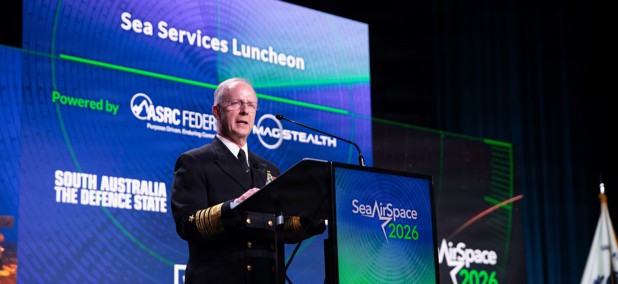
In conjunction with the nuclear site strikes, US naval forces demonstrated adaptability through the sinking of an Iranian warship by a US submarine.[2] This incident, highlighted by Adm. Caudle, Chief of Naval Operations, at the Sea-Air-Space event, was described as "a glimpse of the future force."[2] The submarine's success reflects the US Navy's ongoing drive to evolve its capabilities in response to regional threats.[2]
The sinking of the Iranian vessel illustrates the multifaceted nature of US military engagements, extending beyond airstrikes to underwater operations.[2] Adm. Caudle's remarks position this action as emblematic of naval innovation, where submarines play a critical role in neutralizing enemy naval assets.[2] This event provides context for Operation Midnight Hammer, showing how the US integrated various domains of warfare to counter Iranian responses.[2]
Such actions underscore the Navy's emphasis on adaptation, ensuring that forces remain agile amid escalating conflicts.[2] The warship's loss likely disrupted Iranian naval operations, complementing the aerial campaign against nuclear sites.[2] This integration of submarine warfare highlights the comprehensive strategy employed by the US in the strike on Iran theater.[2]
Broader Context of Iran Conflicts
The US strikes occur against a backdrop of prolonged tensions, including 12 days of Israeli bombing on parts of Iran prior to Operation Midnight Hammer.[4] This Israeli campaign set the stage for the American intervention, with the US operation launched in June of the previous year.[4] Concurrently, US-Iran talks have reached a limbo, complicating diplomatic avenues amid military escalations.[4]
Adding to the volatility, Iran has conducted attacks on Indian-flagged oil tankers in the Strait of Hormuz, raising serious questions about its capacity to safeguard even friendly shipping.[5] The incident involving the Jag Arnav and another tanker occurred on a Saturday, highlighting the risks in a key maritime chokepoint.[5] Despite India maintaining working ties with Iran, including renewed oil purchases under a US sanctions waiver, the attack has proven awkward for Tehran.[5]
Analysts note that this firing on non-adversarial vessels signals potential maritime chaos as conflicts intensify.[5] The Strait of Hormuz, vital for global oil transit, becomes increasingly precarious, with Iran's actions inadvertently endangering allies like New Delhi.[5] These events frame the broader Iran conflicts, where military strikes intersect with disruptions to international trade routes.[4][5]
Implications of the Strikes
The reported obliteration of Iran's nuclear sites carries significant implications for recovery efforts and regional stability.[1][3][4] Trump's assertion that sites were turned to dust means that enriched uranium retrieval will demand a long and arduous process, potentially delaying Iran's nuclear program by years.[1][3] This devastation, following Israeli bombings and US strikes, has pushed US-Iran talks into limbo, straining diplomatic relations further.[4]
The challenges in "digging nuclear dust sites" involve not only physical excavation but also handling radiological hazards, making reconstitution a formidable task.[1][3] For US-Iran relations, the strikes signal a hardened stance against proliferation, though they risk provoking retaliatory actions like those seen in the Strait of Hormuz.[4][5] The total destruction claimed by Trump could reshape power dynamics, forcing Iran to reassess its strategies amid naval losses and shipping vulnerabilities.[2][4]
Long-term, the implications extend to global non-proliferation efforts, with the operation serving as a deterrent.[1][3][4] However, incidents like the tanker attacks underscore the fragility of maritime security, potentially drawing in more international actors.[5] Overall, the strikes' success in impairing nuclear capabilities comes at the cost of heightened tensions.[1][3][4]
What to watch next: Observers will monitor Iran's attempts to recover enriched uranium from the obliterated sites, as Trump has warned of the prolonged difficulties involved, alongside any escalation in Strait of Hormuz incidents affecting friendly shipping.[1][3][5]