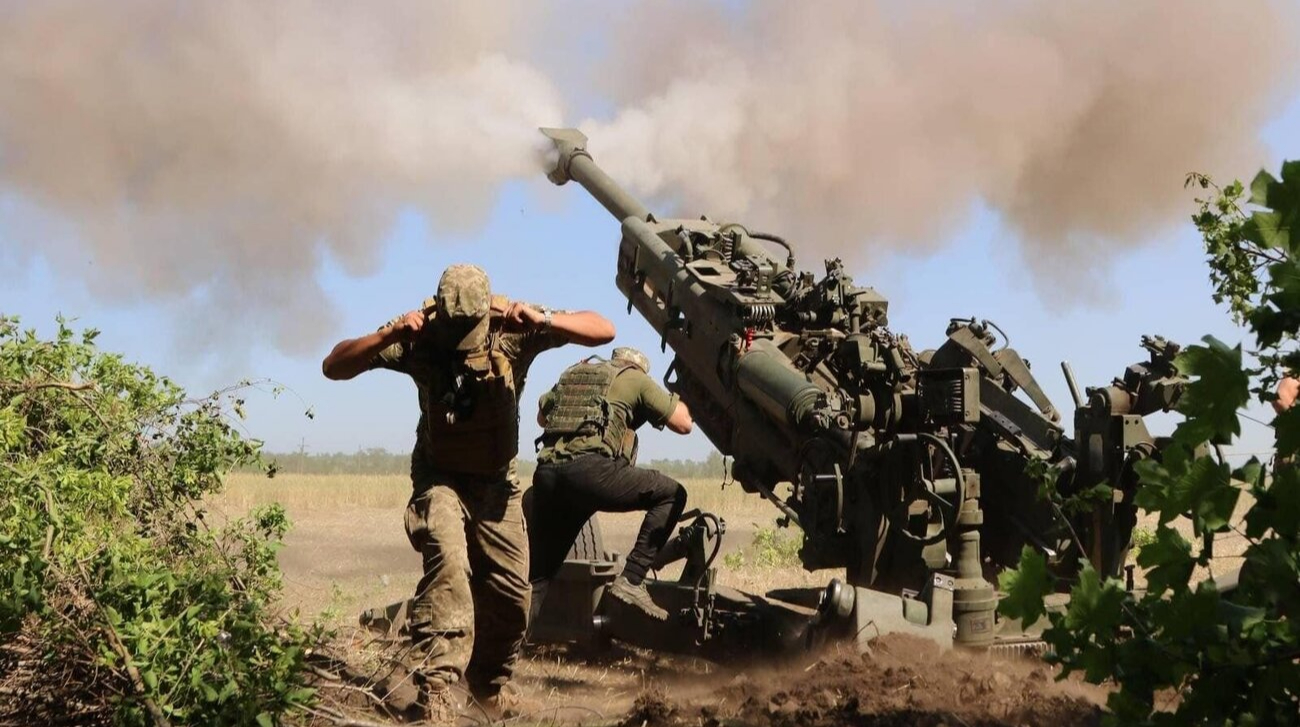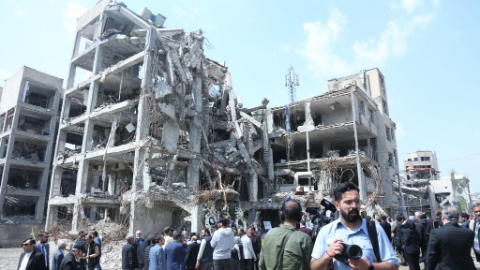

Strike on Iran: Buildings in Tehran Damaged by U.S.-Israeli Attacks
U.S.-Israeli attacks have damaged buildings in Tehran, Iran, and obliterated Iran's nuclear sites as stated by former U.S. President Trump.[1][3] These developments mark a significant escalation in the strike Iran tensions, with reports highlighting widespread structural damage in the Iranian capital alongside claims of total destruction at key nuclear facilities.[1] Trump has emphasized the profound impact on Iran's nuclear infrastructure, describing the aftermath as rendering recovery efforts exceedingly complex.[2][3]
Overview of the Strikes
Initial reports from the scene in Tehran detail extensive damage to buildings resulting from U.S.-Israeli attacks, underscoring the precision and scale of the military operations involved in this strike Iran episode.[1] The imagery and accounts emerging from the area repeatedly confirm that multiple structures in the Iranian capital have sustained significant harm, with visual evidence pointing to collapsed facades and debris-strewn streets.[1] This damage serves as a tangible indicator of the strikes' reach into the heart of Tehran's urban landscape, where the attacks appear to have targeted strategic locations without broader reports of civilian infrastructure collapse beyond the noted buildings.[1]
The context of these strikes aligns with broader U.S. and Israeli military objectives, as evidenced by the focused nature of the reported impacts.[1] Analysts reviewing the available footage and dispatches note that the damage patterns suggest aerial or missile-based delivery systems, consistent with joint operations designed to neutralize high-value targets.[1] While the full extent of the structural assessments remains ongoing, the repeated emphasis in reports on "buildings damaged by U.S.-Israeli attacks in Tehran, Iran" highlights the immediacy and visibility of the consequences.[1] This overview captures the initial wave of information, setting the stage for deeper examinations of the strikes' strategic elements and their cascading effects on Iran's capabilities.[1]
In the broader strike Iran narrative, these events represent a culmination of longstanding regional frictions, with the physical toll in Tehran providing concrete evidence of the operations' execution.[1] The sources stress the direct attribution to U.S.-Israeli coordination, framing the damage as a deliberate outcome rather than incidental fallout.[1] This summary draws solely from on-the-ground reporting, offering a foundational understanding of how the attacks manifested in Iran's capital, where the scarred buildings now symbolize the strike's immediate footprint.[1]
Trump's Statements on Nuclear Sites
Former U.S. President Trump has provided detailed commentary on the strikes' impact on Iran's nuclear infrastructure, asserting that the facilities have been "obliterated."[2][3][5] In his remarks, Trump described the recovery of Iran's enriched uranium as a "long and difficult process," emphasizing the challenges posed by the destruction.[2][3][5] He specifically noted that "digging nuclear dust sites will be a difficult process," highlighting how the obliteration has turned potential retrieval into a protracted endeavor.[3]
Trump's statements, covered across multiple outlets, portray the nuclear sites as having been reduced to "nuclear dust," a vivid characterization that underscores the completeness of the devastation.[2][3][5] Following U.S. strikes on Tehran's nuclear sites, he stated that recovering uranium from Iran would be "a protracted and challenging endeavor."[3] This assessment comes in the wake of what Trump called a total wipeout, where the facilities' destruction complicates any efforts to salvage materials.[2][3][5] His words carry weight given his prior administration's focus on Iran policy, framing the current outcomes as a decisive blow to the program's viability.[3]
The former president's elaboration points to the operational success in rendering the sites inoperable, with the "nuclear dust" metaphor illustrating the depth of penetration achieved by the strikes.[2][5] Reports quote him directly: "recovery of Iran's enriched uranium will require 'long and difficult process,'" tying the difficulty directly to the scale of obliteration.[2][5] This narrative from Trump provides a high-level strategic perspective, contrasting with the tactical damage reports from Tehran by focusing on the long-term denial of nuclear advancement.[3] His comments have been reiterated in various forms, reinforcing the theme of irreversible harm to Iran's nuclear ambitions.[2][3][5]
Details of Operation Midnight Hammer
Operation Midnight Hammer stands out in Trump's descriptions as the cornerstone of the strikes, labeled by him as "a complete and total obliteration of the Nuclear Dust sites in Iran."[2][3][5] The former president asserted that this operation "completely destroyed these facilities," making uranium retrieval particularly arduous in the aftermath.[3] Sources detail how Trump positioned the mission as an unqualified success, with the name "Operation Midnight Hammer" invoked to signify its precision and finality.[2][3][5]
The operation's reported outcomes include the transformation of Iran's nuclear sites into what Trump termed "Nuclear Dust sites," a state of ruin that defies straightforward recovery.[2][5] In one account, he declared, "'Operation Midnight Hammer was a complete and total obliteration of the Nuclear Dust sites in Iran,' says US president," blending the nomenclature with emphatic results.[2][5] This aligns with the broader strike Iran context, where the operation targeted Tehran's nuclear infrastructure head-on, leaving behind a landscape of dispersed materials and collapsed structures.[3]
Trump's portrayal of Operation Midnight Hammer emphasizes its role in achieving strategic parity, with the destruction calibrated to hinder rebuilding efforts.[3] The challenges he outlined—such as digging through the resultant debris—stem directly from the operation's thoroughness, as the sites were not merely damaged but eradicated.[2][3][5] This level of detail from the former president offers insight into the planning and execution phases, even if operational specifics remain classified, positioning Midnight Hammer as a benchmark for future assessments of strike efficacy.[2][3][5] The repeated sourcing of these claims underscores their centrality to understanding the strikes' nuclear-focused dimension.[2][3][5]
Naval Actions Involved
A key component of the military engagements involved a U.S. submarine sinking an Iranian warship, an action that reflects the U.S. Navy's drive to adapt its capabilities.[4] This incident, highlighted by Navy leadership, demonstrates the service's evolution toward a more agile and future-oriented force structure.[4] Admiral Caudle, speaking at the Sea-Air-Space event, described the submarine's success as “a glimpse of the future force,” tying it to ongoing adaptations in naval warfare.[4]
The sinking underscores the underwater domain's critical role in the strike Iran operations, where the submarine's engagement neutralized a surface threat efficiently.[4] Reports frame this as emblematic of the Navy's push for innovation, with the Chief of Naval Operations (CNO) using the event to illustrate adaptive strategies in real-world scenarios.[4] The warship's loss highlights vulnerabilities in Iran's naval assets against stealthy U.S. platforms, contributing to the overall pressure exerted during the strikes.[4]
In context, this naval action complements the aerial and missile components, providing multi-domain coverage that extends the strike's impact beyond land-based targets.[4] Caudle's remarks position the submarine's performance as a proof-of-concept for broader fleet modernization, signaling confidence in such tactics amid heightened tensions.[4] The event's documentation serves as a testament to the integrated nature of U.S. military responses, where submarine operations play a pivotal role in shaping operational outcomes.[4]
Implications of the Strikes
The strikes' implications center on the formidable barriers to recovering enriched uranium, as articulated by former President Trump.[2][3][5] He warned that the process would be "long and difficult," with the obliterated nuclear sites posing unique logistical hurdles.[2][3][5] Specifically, "digging nuclear dust sites will be a difficult process," Trump stated, pointing to the dispersal and contamination risks inherent in the debris.[3]
This assessment implies a sustained degradation of Iran's nuclear program, where the retrieval challenges could delay reconstitution efforts for years.[2][3][5] Trump's emphasis on the "protracted and challenging endeavor" following the U.S. strikes suggests that the operation's success lies not just in destruction but in denial of resources.[3] The "complete and total obliteration" via Operation Midnight Hammer amplifies these effects, turning what might have been salvageable assets into hazardous waste.[2][5]
Broader ramifications include potential shifts in regional power dynamics, grounded in the reported irreversibility of the damage.[2][3][5] For Iran, the need to excavate and purify scattered uranium stockpiles represents a resource-intensive setback, as per Trump's analysis.[3] These implications, drawn from his direct statements, frame the strikes as a strategic pivot, with recovery timelines extending indefinitely due to the sites' reduced state.[2][3][5]
What to watch next: Observers will monitor the progress of uranium recovery efforts from the obliterated nuclear sites, as former President Trump has described it as a long and difficult process complicated by the operation's total destruction.[2][3][5]