
Strike Iran: Two Cargo Ships Attacked in Strait of Hormuz
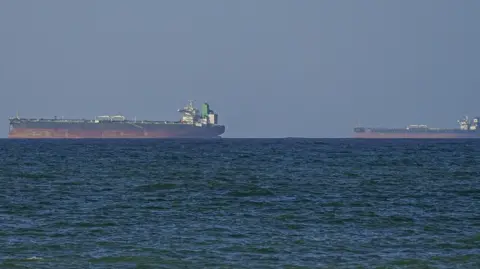
Iranian forces attacked multiple cargo ships in the Strait of Hormuz, marking a significant escalation in regional tensions amid ongoing U.S.-Iran frictions.[1][3] These incidents, described in some reports as a "strike Iran" response to American actions, involved gunfire targeting vessels transiting one of the world's most critical shipping lanes.[2] One cargo ship sustained heavy damage, while at least three vessels were hit overall, though all crews were reported safe.[1][3] A Greek-owned container ship operated by Maersk was among those targeted by Iran's Islamic Revolutionary Guard Corps (IRGC), with a second attack occurring near the Iranian coast just three hours later.[4][5]
Overview of the Attacks
The attacks on cargo ships in the Strait of Hormuz unfolded on Wednesday, involving Iranian forces firing on multiple vessels in quick succession.[1][3] Maritime security sources and the United Kingdom Maritime Trade Operations (UKMTO) confirmed that at least three container ships were struck by gunfire during these events.[3] One of the cargo ships was reported as heavily damaged by Iranian forces, according to a British maritime agency, highlighting the intensity of the assault.[1] These incidents occurred against a backdrop of heightened naval activity in the strait, a vital artery for global oil trade where disruptions can have immediate ripple effects on international shipping routes. The UKMTO's reporting underscores the coordinated nature of the response from maritime authorities tracking the situation in real time.[3] Iranian forces, including gunboats linked to the IRGC, were directly implicated in the operations, which targeted commercial traffic passing through the area.[1][3] This overview captures the main sequence: initial strikes leading to confirmed hits on multiple ships, with advisories issued promptly to mariners to heighten vigilance. The timing, following U.S. President Trump's extension of a ceasefire, added a layer of geopolitical timing to the events, as shipping continued despite warnings.[1]
Specific Incidents Reported
Details of the individual attacks reveal a pattern of targeted engagements near key coastal points. Iran's IRGC gunboat fired on a container ship off the Oman coast, an action captured in reports from maritime trackers.[2] Separately, a Greek-owned container ship, the Liberian-flagged EPAMINONDAS (IMO 9153862) managed by Maersk, was approached and targeted by an IRGC patrol boat in the Strait of Hormuz without prior warning, according to the maritime security firm Diaplous.[5] This incident exemplifies the direct involvement of IRGC assets in the operations. Just three hours after the first reported strike, a second attack occurred near the Iranian coast, where a cargo ship came under fire but sustained no damage, as per UKMTO advisories.[4] These specifics paint a picture of rapid, successive incidents spanning a narrow timeframe and geographic band—from Oman's coastal waters to positions close to Iran—demonstrating the tactical focus on vessels navigating the strait.[2][4][5] No injuries were noted in any of these reports, but the proximity of the events raised immediate concerns among shipping operators about safe passage. The involvement of a high-profile Greek-owned vessel further amplified international attention, given the global reliance on such carriers for containerized trade.[5]
Reasons Behind the Attacks
Iranian sources attributed the attacks to retaliatory measures against U.S. actions, framing them explicitly as responses to provocations.[2][3] The IRGC described its aggression toward the container ship off Oman as a direct counter to the U.S. seizure of an Iranian commercial vessel, positioning the gunfire incidents within a cycle of tit-for-tat naval confrontations.[2] This motivation aligns with broader Iranian restrictions imposed on ships using the Strait of Hormuz, initially in retaliation for U.S.-Israeli bombardments of the country and subsequently in response to a U.S. blockade.[3] In this "strike Iran" context, the operations served as a calibrated demonstration of resolve, targeting foreign-flagged commercial ships to signal displeasure without fully halting traffic.[2][3] Iranian statements, as relayed through media, emphasized these linkages, portraying the attacks not as unprovoked aggression but as defensive assertions of sovereignty in waters they claim influence over.[2] The U.S. seizure incident, in particular, was highlighted as the immediate trigger, underscoring how recent American interdictions fueled the IRGC's decision to engage passing cargo vessels.[2][3] This rationale provides insight into the strategic calculus, where maritime disruptions become leverage in larger diplomatic standoffs.
Safety and Damage Assessment
Assessments of the incidents consistently reported positive outcomes for human safety alongside varying degrees of vessel impact. All crews across the affected ships were confirmed safe, with no injuries documented in the gunfire exchanges.[3][4] The UKMTO specifically noted that in the second attack near the Iranian coast, all crew members remained unharmed and no damage was reported to the vessel itself.[4] However, one cargo ship from the initial wave was described as heavily damaged by Iranian forces, per the British maritime agency's evaluation, indicating that while lives were not at risk, material consequences were significant for at least one target.[1] Maritime security sources echoed the crew safety across the three vessels hit by gunfire, attributing this to the vessels' evasive maneuvers and the nature of the attacks, which appeared calibrated to disable rather than destroy.[3] UKMTO's role in disseminating these updates was crucial, providing real-time damage and safety readouts that reassured operators while alerting others to potential threats.[1][4] Overall, the lack of casualties stands out as a key mitigant, though the heavy damage to one ship prompts questions about repair timelines and insurance implications for future transits.[1][3][4]
Broader Context of the Events
The attacks occur amid Iran's imposition of restrictions on ships using the Strait of Hormuz, a chokepoint handling roughly 20% of global oil flows, though exact figures are not detailed in reports.[3] These measures were first enacted in retaliation for the U.S.-Israeli bombardment of Iran, escalating into further responses following a U.S. blockade.[3] This context frames the gunfire incidents as part of an ongoing pattern of maritime coercion, where Iran leverages its naval proximity to influence traffic and deter perceived adversaries.[3] UKMTO and other trackers have been monitoring heightened risks, with the Wednesday events fitting into a narrative of persistent tensions that have led to repeated advisories for vessels to exercise caution.[3] The strait's strategic importance amplifies the stakes, as disruptions here reverberate through energy markets and supply chains worldwide, even if no full closure materialized.[3] Iranian actions, including those by the IRGC, reflect a strategy of asymmetric pressure, responding to U.S. and allied moves with calibrated disruptions rather than all-out conflict.[3]
What to watch next: Monitor for additional Iranian restrictions on Strait of Hormuz shipping or U.S. responses to the vessel seizure claims, as ongoing advisories from UKMTO indicate potential for further incidents in retaliation cycles.[3]