Strike Iran: Three Ships Targeted and Two Seized in Hormuz Strait
Iranian forces targeted three container ships in the Strait of Hormuz on Wednesday, seizing two in a series of incidents that have heightened tensions along this vital Middle East trade route.[3] A Greek-linked container ship came under attack from an Iranian speedboat and is now heading toward the Persian Gulf,[1] while monitors and Iran's Revolutionary Guards reported one vessel hit 15 nautical miles northeast of Oman, with its crew confirmed safe.[4] Iran's parliament speaker declared that the Islamic republic will not reopen the Strait of Hormuz as long as a US naval blockade remains in place, labeling it a "blatant violation of the ceasefire."[3] Amid these developments in the strike Iran context, oil prices have held steady around 100 dollars, reflecting market expectations of a relatively quick resolution.[5]
Overview of the Attacks
The attacks in the Strait of Hormuz represent the latest escalation in regional maritime confrontations, with Iranian forces directly targeting three container ships on Wednesday and successfully seizing two of them.[3] This action underscores the precarious security situation in one of the world's most critical chokepoints for global trade, where a significant portion of the world's oil supply transits daily. Reports from monitors and Iranian Revolutionary Guards confirm the scope of the operations, highlighting how swiftly these incidents unfolded.[4]
A key element of the strike Iran operations involved a Greek-linked container ship that was attacked by an Iranian speedboat specifically in the Strait of Hormuz.[1] This vessel's involvement draws attention to the international ramifications, as Greek shipping interests are prominent in global container fleets navigating these waters. The seizure of two ships out of the three targeted points to a deliberate strategy by Iranian forces, potentially aimed at asserting control amid ongoing disputes.[3] FRANCE 24 reporting from Tehran emphasized that these events threaten the crucial trade route, amplifying concerns over disruptions to commerce in the broader Middle East conflict.[3]
Further details from monitoring sources indicate that the attacks were not isolated but part of a coordinated effort, with the Strait of Hormuz serving as the focal point.[4] The parliament speaker's pronouncement ties these military actions to larger geopolitical frictions, refusing to restore normal passage until the US naval presence is addressed.[3] This overview captures the immediacy of the threats, where container ships—essential for carrying goods beyond oil—became direct targets, signaling broader risks to maritime navigation.[1][3][4]
Details of the Ship Incidents
Specific incidents reveal the precision and impact of the Iranian operations in the Strait of Hormuz. One prominent case involved a Greek-linked container ship that came under attack from an Iranian speedboat on Wednesday.[1] Positioned off Iran, this vessel was targeted amid its transit through the strait and has since resumed movement, heading directly for the Persian Gulf.[1] This development suggests that while the attack disrupted operations temporarily, the ship was able to continue its course, avoiding a full halt.
Another detailed report concerns a ship struck 15 nautical miles northeast of Oman, a location perilously close to the Hormuz waterway's approaches.[4] Monitors and Iran's Revolutionary Guards documented the hit, but reassuringly, the crew aboard was reported safe, with no injuries or casualties noted.[4] This incident exemplifies the localized nature of the threats, where vessels navigating near Omani waters faced direct fire, yet emergency protocols appear to have functioned effectively to protect personnel.
The pattern across these ship incidents—three targeted, two seized—illustrates a mix of aggressive seizures and less damaging strikes.[3][4] The Greek-linked ship's trajectory toward the Persian Gulf post-attack indicates resilience in shipping operations despite the strike Iran hostilities,[1] while the Oman-proximate hit underscores the geographical vulnerability of the region, where strait's narrow confines amplify risks.[4] These details, drawn from on-the-ground monitoring and official acknowledgments, provide a granular view of how Iranian forces executed the targeting, balancing seizure with reported restraint in crew safety.[1][4]
Regional Context and Statements
Official statements from Iranian leadership have framed these maritime incidents within a tense regional landscape. Iran's parliament speaker explicitly stated on Wednesday that the Islamic republic would not reopen the Strait of Hormuz as long as the US naval blockade persists, describing it as a "blatant violation of the ceasefire."[3] This position links the ship targeting directly to broader US-Iran frictions, positioning the seizures as a response to perceived encroachments in the strait.
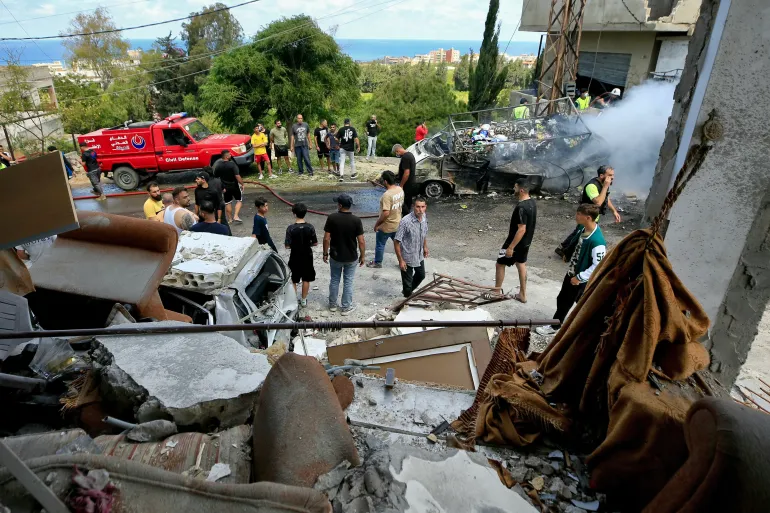
In the wider Middle East context, related developments involving Iran-backed actors add layers to the volatility. A French soldier died of wounds from an attack on UN peacekeepers in Lebanon, which President Emmanuel Macron attributed to Iran-backed Hezbollah.[2] While occurring last week, this incident highlights ongoing proxy tensions that intersect with Iran's maritime assertions, as reported by UNIFIL spokesperson Tilak Pokharel.[2] Such events contribute to a backdrop of instability where Iran's regional influence manifests across multiple fronts, from Lebanon to the Persian Gulf.[2][3]
The parliament speaker's comments from Tehran, covered by FRANCE 24's Reza Sayah, emphasize the Hormuz standoff's ties to ceasefire dynamics and US naval activities.[3] This rhetoric accompanies the practical actions of seizing ships, reinforcing Iran's stance against what it views as blockades.[3] Together, these statements and parallel developments paint a picture of interconnected pressures, where strike Iran maneuvers in Hormuz resonate with Iran's broader strategic posture in the region.[2][3]
Economic Implications
The financial markets have responded with measured calm to the ship targeting in the Strait of Hormuz. Oil prices have held around 100 dollars following the attacks on multiple vessels in the strait.[5] Analysts attribute this stability to the market's pricing in of a relatively quick resolution to the incidents, avoiding a sharper spike that might have occurred under prolonged uncertainty.[5]
This outlook reflects confidence that diplomatic or operational channels could swiftly address the disruptions caused by Iranian forces seizing two of the three targeted container ships.[5] The Norwegian financial commentary notes that while the events warranted attention, the absence of a sustained escalation has kept oil from climbing higher, signaling trader expectations of de-escalation.[5] In a region where Hormuz handles about 20% of global oil flows—though not explicitly quantified here—these incidents test market resilience, yet the steady pricing around 100 dollars underscores a belief in containment.[5]
Current Status and Outcomes
Immediate outcomes from the strike Iran incidents show a mixed picture of disruption and continuity. Two of the three container ships targeted by Iranian forces have been seized, marking a tangible success for the operations in asserting control over the Strait of Hormuz.[3] The parliament speaker's refusal to reopen the strait pending removal of the US naval blockade solidifies Iran's current posture, potentially prolonging restricted access.[3]
On the safety front, the crew of the ship hit 15 nautical miles northeast of Oman remains safe, as confirmed by monitors and Revolutionary Guards.[4] Similarly, the Greek-linked container ship attacked by a speedboat is actively heading for the Persian Gulf, indicating no long-term immobilization.[1] These reports point to effective crew evacuations or protections during the seizures and strikes.[4]
Overall, the current status reflects heightened but contained tensions, with seizures achieved but no major humanitarian fallout reported.[3][4]
What to watch next: Monitor developments on the US naval blockade's status, as Iran's parliament speaker has conditioned reopening the Strait of Hormuz on its removal,[3] alongside oil price movements that could shift if resolution timelines extend beyond market expectations.[5]