
Strike in Ukraine: Video Released of Drone Attacks on Russian Warships in Crimea
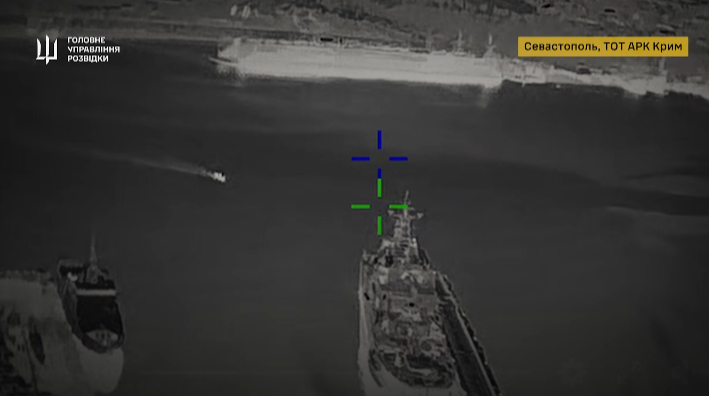
Ukrainian intelligence has released a video showing drone strikes on Russian landing ships Yamal and Nikolai Filchenkov in occupied Crimea, highlighting a significant escalation in the ongoing strike Ukraine conflict along the Black Sea front.[1] This footage comes amid intensified aerial exchanges, as Russia launched 142 drones overnight, with Ukrainian air defenses countering effectively by destroying or jamming 113 of them.[2] In a related development, President Zelensky has noted that Ukraine's long-range strikes have caused billions of dollars in losses to Russian oil revenue during March.[3]
Overview of Strikes on Russian Warships
The release of video footage by Ukrainian intelligence marks a pivotal moment in documenting Ukraine's maritime strike capabilities against Russian naval assets stationed in occupied Crimea.[1] The video specifically captures drone strikes targeting the Russian landing ships Yamal and Nikolai Filchenkov, two vessels critical to Russia's logistical operations in the region.[1] These ships, part of Russia's Black Sea Fleet, have been repeatedly highlighted in Ukrainian operations as key enablers of occupation forces' sustainment efforts.
This intelligence release serves multiple strategic purposes, including verification of strike efficacy and psychological impact on adversary morale. The footage provides visual confirmation of the drones' precision in approaching and engaging the targets, underscoring advancements in Ukraine's unmanned aerial systems tailored for naval interdiction.[1] Crimea, under Russian occupation since 2014, remains a focal point for such operations due to its role as a staging ground for amphibious and supply missions supporting frontline activities.
The decision to publicize this video aligns with broader patterns of information warfare, where visual evidence bolsters domestic and international support while signaling resolve to Russian command structures.[1] Analysts note that strikes on landing ships like the Yamal and Nikolai Filchenkov disrupt not only immediate troop movements but also long-term projection of power across the Azov and Black Seas. The intelligence agency's prompt dissemination ensures the event's integration into the narrative of attritional warfare, where incremental naval losses compound over time.[1]
Russian Drone Launches and Ukrainian Air Defence Response
Russia's overnight launch of 142 drones, encompassing Shahed-type and other variants including jet-powered UAVs, represents one of the largest single-night barrages in recent phases of the aerial campaign.[2] Ukrainian air defense forces responded decisively, destroying or jamming 113 of these incoming threats, which equates to an interception rate that has proven vital in mitigating infrastructure damage across multiple regions.[2]
The inclusion of jet-powered UAVs in this salvo introduces new tactical challenges, as these faster platforms demand enhanced radar tracking and interceptor agility compared to slower propeller-driven models.[2] Despite the scale of the attack, Ukrainian defenses demonstrated resilience, with electronic jamming playing a key role in neutralizing a significant portion without kinetic engagement. This approach preserves missile stocks while achieving comparable outcomes.
Some strikes from the Russian drones were recorded during the assault, indicating partial penetration of defenses and impacts on targeted areas, though specifics on locations or damage remain tied to the defensive success metric.[2] The overnight timing leverages darkness for evasion, yet Ukraine's layered air defense architecture—combining ground-based systems, aviation, and electronic warfare—interdicted the majority, preventing widespread disruption. This event fits into a pattern of massed drone employment by Russia to overload defenses, a doctrine refined since late 2022.
Economic Consequences of Ukrainian Strikes
Ukraine's long-range strikes have inflicted billions of dollars in losses to Russian oil revenue specifically during March, according to statements from President Zelensky.[3] These operations target critical nodes in Russia's energy export infrastructure, which funds a substantial portion of its military expenditures.
Zelensky's assessment underscores the strategic calculus behind deep strikes, where economic attrition parallels battlefield gains.[3] Oil facilities, refineries, and related logistics have been focal points, with cumulative effects manifesting in reduced export volumes and revenues. The "billions of dollars" figure highlights the scale, positioning these actions as a counter to Russia's resource dominance.
This financial pressure exacerbates Russia's budgetary strains amid protracted conflict, potentially influencing allocation decisions for procurement and sustainment.[3] Zelensky's public emphasis frames the strikes as multifaceted warfare, blending military and economic dimensions to erode adversary resilience over time.
Key Developments in Recent Ukrainian Strikes
Recent interconnected events illustrate the multifaceted nature of the strike Ukraine dynamic, weaving naval, aerial, and economic threads from intelligence releases, defensive tallies, and official tallies.[1][2][3] The video of drone strikes on Yamal and Nikolai Filchenkov in Crimea exemplifies Ukraine's proactive maritime posture, directly challenging Russian naval presence.[1]
Concurrently, Russia's 142-drone launch—met by Ukraine downing or jamming 113—reveals the tit-for-tat escalation in unmanned warfare, with recorded strikes underscoring persistent threats despite high interception rates.[2] Layered atop this is the economic toll from long-range strikes, where Zelensky reports billions in Russian oil revenue shortfalls for March, linking tactical hits to macroeconomic impacts.[3]
These developments collectively signal a maturing Ukrainian operational tempo, integrating intelligence-driven strikes with robust air defense and strategic depth attacks. The Crimea footage not only validates specific successes but contextualizes them within broader nightly drone duels.[1][2] Zelensky's revenue loss disclosure ties long-range precision to sustained pressure on Russia's war economy, forming a cohesive narrative of asymmetric gains.[3]
Assessment of Strike Outcomes
The outcomes of these strikes, as reported, emphasize Ukrainian successes across offensive and defensive domains.[1][2] On the attacking side, the intelligence video confirms effective drone engagements against high-value Russian landing ships Yamal and Nikolai Filchenkov, validating targeting intelligence and execution precision in Crimea's contested waters.[1]
Defensively, the downing or jamming of 113 out of 142 Russian drones overnight showcases air defense maturity, limiting damage even as some strikes landed.[2] This balance—offensive disruption paired with defensive denial—defines the current phase, where neither side achieves dominance but incremental erosion persists.
Reported results focus on verifiable metrics: visual proof of naval hits and quantitative drone interceptions, providing a factual baseline for assessing operational tempo.[1][2]
What to watch next
Ongoing Russian drone launches, including advanced variants, and Ukrainian responses will likely intensify, alongside further intelligence releases on naval strikes and updates on economic impacts from long-range operations as stated by officials.[1][2][3]