
Strike in Lebanon Kills 14 Amid Temporary Ceasefire
Israeli strikes in Lebanon have killed 14 people amid a temporary ceasefire, highlighting the fragile nature of the truce between Israel and Hezbollah.[1] This strike in Lebanon underscores the tensions persisting despite recent diplomatic efforts, as military actions resumed in the region.[1][2]
Overview of the Strikes
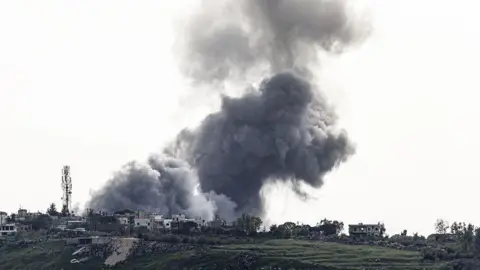
The Israeli strikes in south Lebanon represent a significant escalation in the ongoing conflict, resulting in the deaths of 14 individuals.[1][2] These attacks occurred in a context where hostilities had been paused under a temporary ceasefire, yet the operations proceeded regardless of the truce's intended pause on fighting.[1] Reports detail that the strikes targeted areas in south Lebanon, a region that has been central to exchanges between Israeli forces and Hezbollah militants.[2] The immediate outcome of these strikes has been the confirmed loss of 14 lives, drawing international attention to the breakdown in de-escalation measures.[1][2] This event fits into a pattern where military actions resume abruptly, complicating efforts to maintain stability along the border.[2] The precision and timing of the strikes suggest a response to perceived violations or threats, though the exact triggers remain tied to the ceasefire's failure.[2] Overall, these strikes serve as a stark reminder of the volatility in the area, with the death toll providing a measurable impact of the renewed engagements.[1][2]
Ceasefire Context
The temporary ceasefire between Israel and Hezbollah was a key diplomatic achievement, announced by the US two days prior to the strikes, extending the truce by three weeks following intensive talks.[1] This extension was intended to provide a longer window for negotiations and de-escalation, building on an initial temporary halt in hostilities.[1] However, the ceasefire ultimately failed, leading to the resumption of strikes in south Lebanon.[2] The US involvement in announcing the extension highlights the international stakes, as external mediation sought to prevent further escalation.[1] Despite this three-week prolongation, the agreement could not hold, with military actions breaking out shortly after.[1][2] The failure of the ceasefire points to underlying issues, such as mutual accusations of violations or unresolved security concerns along the Israel-Lebanon border.[2] This backdrop explains why the strikes occurred even as the extension was fresh, illustrating the challenges in enforcing such truces amid deep-seated animosities.[1][2] The sequence—from announcement to extension to collapse—demonstrates the precarious balance in the conflict dynamics.[1]
Warnings and Evacuation Notices
Israel has issued explicit warnings to residents in towns beyond the 'buffer zone' in south Lebanon, urging them to leave the areas amid the renewed strikes.[2] These notices are directed at civilian populations in regions vulnerable to military operations, emphasizing the establishment of a buffer zone as a security measure.[2] The directive to evacuate comes in direct response to the resumption of hostilities, aiming to minimize civilian casualties during potential further actions.[2] By specifying towns beyond the buffer zone, Israel delineates a clear geographic scope for the warnings, focusing on southern areas proximate to the border.[2] Such evacuation calls are a standard protocol in the conflict, intended to protect non-combatants while allowing freedom of military movement.[2] The timing of these warnings aligns with the strikes that killed 14 people, reinforcing the immediacy of the threat perception.[2] Residents in these specified towns face heightened risks, prompting urgent relocation to safer zones.[2]
Current Status of the Conflict
Strikes have resumed in south Lebanon following the failure of the ceasefire between Israel and Hezbollah, marking a return to active military engagements.[2] This resumption indicates that the temporary pause has fully collapsed, with operations now ongoing in key border areas.[2] The conflict's current phase involves Israeli actions in response to the breakdown, compounded by the warnings to residents beyond the buffer zone.[2] Hezbollah's involvement in the ceasefire's failure suggests reciprocal escalations, though the immediate trigger for resumption remains the truce's ineffectiveness.[2] As of the latest reports, the situation remains fluid, with south Lebanon as the focal point of these developments.[2] The extension announced by the US two days earlier now appears undermined, shifting the conflict back to a phase of direct confrontations.[1][2] Ongoing monitoring is essential, as the resumption could lead to broader implications for regional stability.[2]
Casualties and Impact
The Israeli strikes have resulted in 14 deaths in Lebanon, a toll reported amid the temporary ceasefire that was recently extended.[1][2] These casualties occurred in south Lebanon, where the operations took place despite the diplomatic efforts to prolong the truce.[1][2] The immediate human impact is evident in the loss of lives, affecting families and communities in the targeted areas.[1][2] This death count underscores the strikes' severity, occurring just after the US-announced three-week extension.[1] The buffer zone warnings further amplify the potential for additional impacts on civilians who may not have evacuated.[2] The combination of resumed strikes and ceasefire failure has direct consequences, with the 14 fatalities serving as a primary metric of the engagement's cost.[1][2] Broader effects include heightened displacement risks in warned towns and strained humanitarian responses in south Lebanon.[2] The persistence of such casualties despite truce extensions highlights the conflict's toll on the ground.[1][2]
What to watch next: Monitor whether residents heed Israel's warnings to leave towns beyond the buffer zone and if further strikes in south Lebanon follow the ceasefire's failure, as the US-extended truce hangs in the balance.[1][2]