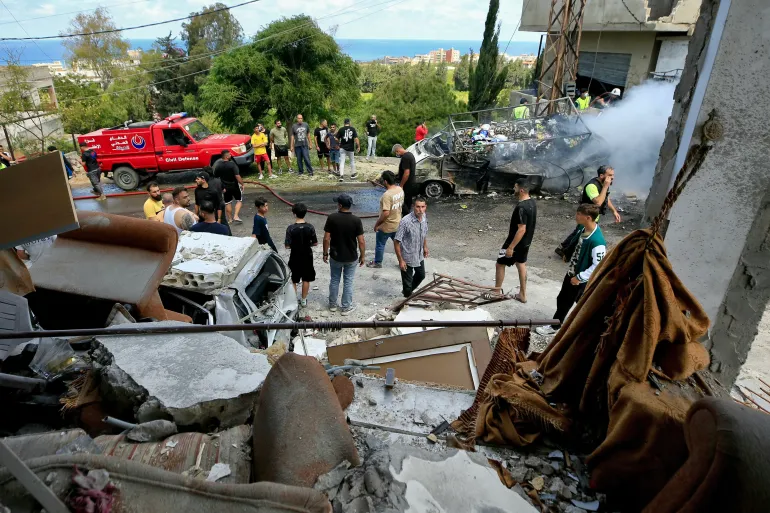

Israeli Strike Kills Three Lebanese Soldiers in Southern Lebanon
An Israeli strike on a Lebanese army patrol in southern Lebanon killed two officers and a soldier, prompting condemnations from Egypt, the UNIFIL peacekeeping mission, Lebanon’s president and prime minister. The incident forms part of Lebanon strikes that have drawn official responses focused on sovereignty concerns.
Strike Kills Three Lebanese Soldiers
The core event involved an Israeli strike targeting a Lebanese army patrol in southern Lebanon. This action resulted in the deaths of two officers and one soldier. Reports confirm the casualties occurred during the patrol operation in the region. Sources detail the strike as the direct cause of these losses among Lebanese military personnel. The incident has been documented through official statements that reference the specific number of fatalities and the location in southern Lebanon. [1] [3]
Further details from available accounts emphasize that the patrol was operating within Lebanese territory at the time of the strike. The loss of three soldiers underscores the immediate human impact of the event. No additional operational specifics beyond the reported deaths have been provided in the source materials. This breaking development centers strictly on the strike’s outcome and the confirmed casualties.
Egypt Issues Strong Condemnation
Egypt’s Ministry of Foreign Affairs issued a statement describing the attack as a dangerous escalation. The ministry characterized the strike as a violation of Lebanese sovereignty, international law, and international humanitarian law. Egypt called for Israel’s withdrawal from Lebanese territory in response to the incident. [1]
The official Egyptian position highlights the strike’s implications for regional stability. By labeling it an escalation, the statement points to potential broader effects on cross-border relations. Egypt’s call for withdrawal ties directly to the need for respect of established territorial boundaries. These points were conveyed in a formal release issued on Saturday following the event. [1]
The condemnation from Egypt aligns with a focus on legal frameworks that govern state actions. The ministry’s remarks reference both international law and international humanitarian law as benchmarks violated by the strike. This reaction serves as one of the primary international responses documented in connection with the deaths of the three Lebanese soldiers.
UNIFIL Cites Breach of Resolution 1701
The UNIFIL peacekeeping mission condemned the strike, stating it violates Lebanon’s sovereignty and territorial integrity. UNIFIL also referenced a breach of Security Council Resolution 1701 in its assessment of the incident. [2]
The mission’s statement underscores the strike’s incompatibility with existing UN mandates applicable to the area. By citing Resolution 1701, UNIFIL draws attention to specific obligations that the attack is said to contravene. The condemnation focuses on the preservation of Lebanon’s territorial integrity as a core principle. [2]
This position from the peacekeeping force adds an institutional layer to the reactions surrounding the event. UNIFIL’s remarks remain centered on the sovereignty aspects and the resolution without extending into operational recommendations beyond the noted violations.
Lebanese Leadership Denounces Attack
Lebanese President condemned the killing of the three soldiers in the Israeli strike. Prime Minister Nawaf Salam called the attack a “crime” against Lebanon. [3]
These statements from Lebanon’s leadership frame the incident in terms of direct accountability for the soldiers’ deaths. The president’s remarks address the loss of military personnel specifically. The prime minister’s description of the event as a crime emphasizes its impact on the country as a whole. [3]
Together, the responses from the president and prime minister represent the domestic official stance on the strike. They reinforce the narrative of the attack as an infringement on Lebanese state functions and personnel.
Context of Regional Tensions
The strike occurred in southern Lebanon and has been classified in statements as a violation of sovereignty. Egypt’s ministry linked the event to broader concerns over Lebanese territory and international legal standards. [1] UNIFIL similarly positioned the attack against principles of territorial integrity and Resolution 1701. [2]
These classifications remain grounded in the official reactions that followed the deaths of the two officers and the soldier. The location in southern Lebanon serves as the geographic anchor for all cited condemnations. No further contextual elements beyond these sovereignty references appear in the source materials.
What to watch next: Official statements from Egypt, UNIFIL, and Lebanese leaders may lead to further diplomatic exchanges centered on the reported violations of sovereignty and Resolution 1701.





