
Strike in Lebanon: Israeli forces hit Hezbollah launcher despite ceasefire
Israeli forces struck a launcher in southern Lebanon despite a temporary ceasefire, as reported in recent developments from the region.[2] This strike in Lebanon occurred amid a fragile 10-day truce that took effect on Friday between Lebanon and Israel.[2] The incident has drawn attention due to its timing and the separate attack on UN peacekeepers, highlighting ongoing tensions in southern Lebanon.[1][2][3]
Overview of the Strike
The Israeli Defense Forces (IDF) conducted a strike targeting a ready-to-fire Hezbollah launcher in southern Lebanon, an action captured in video footage released by military sources.[3] This strike in Lebanon was claimed by the Israeli army despite the implementation of a temporary ceasefire, underscoring the challenges in maintaining de-escalation efforts in the area.[2] According to reports, the launcher was positioned and prepared for launch at the time of the strike, prompting the IDF's response to neutralize what they described as an immediate threat.[3]
Details from the Israeli military indicate that the operation was precise, focusing solely on the Hezbollah infrastructure to prevent potential rocket fire into northern Israel.[2][3] The strike took place in a region long associated with Hezbollah activities, where cross-border exchanges have been frequent in recent months. By striking the launcher while it was in a ready-to-fire state, the IDF aimed to disrupt Hezbollah's operational capabilities without broader escalation, though the timing—post-ceasefire—raises questions about the boundaries of such military actions during truce periods.[3]
Eyewitness accounts and military releases emphasize the launcher’s proximity to the border, a hotspot for such incidents. The IDF's public acknowledgment of the strike, complete with visual evidence, serves to justify the action as defensive and necessary, even as it contravenes the spirit of the temporary halt in hostilities.[2][3] This event fits into a pattern of targeted operations against Hezbollah assets, where Israel has repeatedly cited the need to address imminent dangers posed by militant groups in southern Lebanon.[3]
Ceasefire Context
A 10-day ceasefire between Lebanon and Israel took effect on Friday, intended to provide a brief window for diplomatic efforts and de-escalation along the volatile border.[2] This temporary agreement came after intense exchanges of fire, aiming to reduce casualties and allow humanitarian access in affected areas. However, the Israeli army's claim of striking a launcher in southern Lebanon occurred despite this ceasefire, illustrating the fragility of such truces in the face of perceived threats.[2]
The ceasefire's short duration—spanning just 10 days—reflects the provisional nature of the arrangement, with both sides agreeing to halt offensive actions but maintaining vigilance against violations.[2] Reports indicate that the strike on the Hezbollah launcher happened shortly after the ceasefire's activation, prompting scrutiny over compliance and the definitions of "defensive" measures during the pause.[2] Lebanon's government and Hezbollah have historically viewed Israeli incursions into southern territories as breaches, even when framed as preemptive, which complicates enforcement mechanisms absent robust international monitoring.[2]
In the broader context, this ceasefire follows a series of escalatory incidents, including rocket launches and airstrikes, that have strained relations. The temporary nature of the deal suggests it is a stepping stone toward longer-term negotiations, potentially involving UN resolutions or U.S.-mediated talks. Yet, actions like the launcher strike demonstrate how quickly fragile agreements can be tested by on-the-ground realities.[2]
Incident Involving Peacekeepers
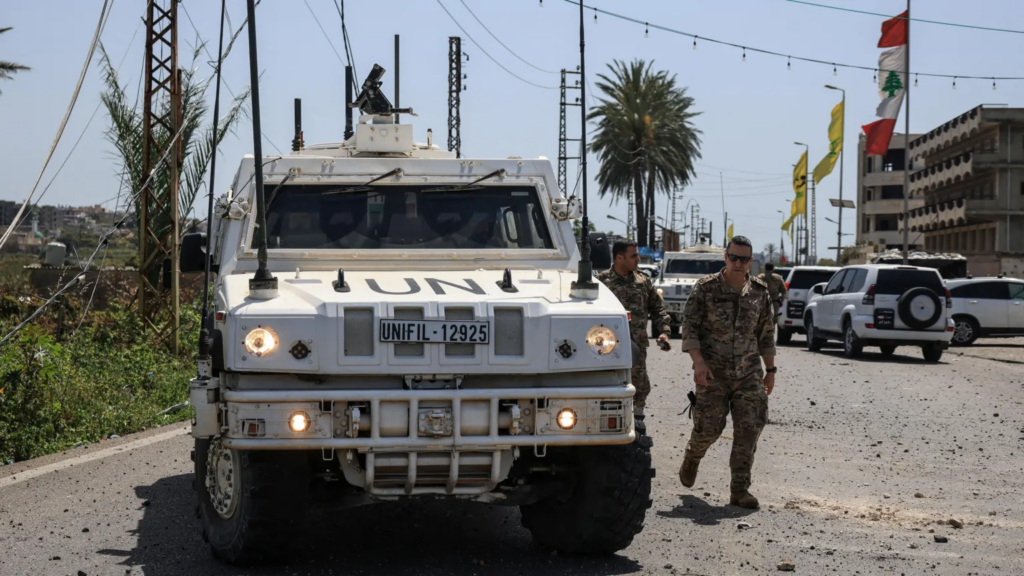
A French peacekeeper was killed in southern Lebanon during a deliberate attack on a UN patrol, according to officials familiar with the incident.[1] Three other peacekeepers were wounded in the same event, which occurred as the UN Interim Force in Lebanon (UNIFIL) conducted routine operations in the area.[1] The attack was described explicitly as deliberate, targeting the patrol directly and resulting in the loss of life among international personnel tasked with maintaining stability.[1]
UNIFIL patrols are a critical component of peacekeeping efforts in southern Lebanon, monitoring compliance with Security Council resolutions that call for the disarmament of non-state actors and the withdrawal of forces from the border zone.[1] The deliberate nature of the fire on the patrol underscores the risks faced by blue-helmet forces, who operate in a highly militarized environment amid ongoing Israel-Hezbollah tensions. The French peacekeeper's death marks a tragic escalation in threats to UN personnel, with the three wounded requiring medical attention following the assault.[1]
This incident highlights the perilous conditions for peacekeepers, who have repeatedly come under fire from various actors in the region. Officials' characterization of the attack as intentional points to a calculated effort to disrupt UN activities, potentially aimed at intimidating international observers or asserting control over contested areas.[1] The casualties serve as a stark reminder of the human cost involved in peacekeeping amid active hostilities.
Key Developments
Key developments in southern Lebanon include the Israeli strike on a ready-to-fire Hezbollah launcher, the death of a French peacekeeper, and the backdrop of a newly implemented 10-day ceasefire.[1][2][3] The sequence of events began with the ceasefire taking effect on Friday, followed by the IDF's action against the launcher despite the truce.[2][3] Separately, the UN patrol attack resulted in one French peacekeeper killed and three wounded in what was deemed a deliberate assault.[1]
Connecting these reports, the strike in Lebanon targeted Hezbollah infrastructure poised for use, as evidenced by IDF footage, while the peacekeeper incident occurred in the same volatile southern region.[1][3] Anadolu Agency noted the Israeli army's claim of the strike amid the ceasefire, emphasizing the temporal proximity to the truce's start.[2] MyJoyOnline detailed the peacekeeper casualties, framing the attack on the UN patrol as intentional amid broader instability.[1] The Jerusalem Post provided visual confirmation of the launcher strike, reinforcing Israel's narrative of neutralizing an active threat.[3]
These developments collectively illustrate a tense security environment where ceasefire observance is uneven. The Hezbollah launcher's readiness suggests preparations that may have predated the truce, prompting Israel's response.[3] Meanwhile, the peacekeeper attack adds a layer of international concern, potentially complicating UNIFIL's mandate and drawing condemnation from troop-contributing nations like France.[1] Together, these actions signal persistent challenges in de-escalating the Israel-Lebanon frontier.
Current Status
The current status in southern Lebanon involves the aftermath of the IDF strike on the Hezbollah launcher and ongoing repercussions from the peacekeeper incident, all against the 10-day ceasefire framework.[2][3] Israeli forces have publicly confirmed the destruction of the ready-to-fire launcher, with video evidence circulating to support their operational success.[3] Despite the ceasefire in place since Friday, the strike indicates continued military activity targeting perceived threats.[2]
Reports do not indicate immediate retaliatory actions from Hezbollah following the launcher strike, though the region's history suggests potential responses.[2][3] The wounded peacekeepers are receiving treatment, while investigations into the deliberate attack on the UN patrol proceed.[1] The fragile truce holds for now, but these incidents test its viability, with both sides monitoring for further violations.[2]
What to watch next
Observers will monitor adherence to the 10-day ceasefire, potential UN responses to the peacekeeper casualties, and any further Israeli actions against Hezbollah assets in southern Lebanon.[1][2][3]