
Strike in Lebanon: Israeli Army Blows Up Public School Despite Ceasefire
In a direct challenge to the ongoing ceasefire, the Israeli army destroyed a public school building in the southern Lebanese town of Khiam by rigging it with explosives, resulting in a powerful explosion that leveled the structure.[1] This strike in Lebanon highlights persistent tensions in the region, occurring despite the ceasefire agreement intended to halt hostilities. Reports from Anadolu Agency detail how Israeli forces prepared the site before detonating the explosives, underscoring the methodical nature of the operation.[1] Concurrently, another incident in the same area saw six people injured in an Israeli strike targeting Qaqqaiyat al-Jisr in the Nabatieh district, as covered by Lebanese media.[4] These events come amid broader reports of over 2,300 deaths and more than 1 million people displaced by Israeli attacks across Lebanon, according to Lebanese authorities.[2] The United Nations Security Council has also weighed in on related violence, condemning an attack on peacekeepers that killed one and injured three, emphasizing that peacekeepers must never be targeted.[3] Additionally, a separate strike claimed the life of an 80-year-old Palestinian academic in Tyre.[5] Lebanon's president has suggested that direct talks with Israel could help salvage the country, though Hezbollah has expressed dissent.[2]
Recent Ceasefire Violations
The destruction of the public school in Khiam stands as a stark example of ceasefire violations in southern Lebanon, where the Israeli army reportedly rigged the building with explosives before triggering the blast that obliterated it.[1] This action took place despite the existence of a ceasefire agreement, raising questions about adherence to the truce amid ongoing military activities in the area. Anadolu Agency's reporting captures the immediacy of the event, noting the complete demolition of the school structure, which serves as a public facility in the town.[1] Such incidents not only contravene the ceasefire terms but also impact civilian infrastructure in southern Lebanon, where communities continue to face the repercussions of escalated conflict.
Adding to this pattern, an Israeli strike hit Qaqqaiyat al-Jisr in the Nabatieh district, injuring six individuals.[4] Lebanese media outlets reported the details of this attack, which occurred under similar circumstances—defying the ceasefire and targeting locations in southern Lebanon.[4] The precision of the strike and its aftermath illustrate a continuation of military engagements that test the ceasefire's effectiveness. These two incidents, the school demolition in Khiam and the Nabatieh strike, demonstrate a series of violations concentrated in southern Lebanon, where hostilities have persisted.[1][4] The timing of these events, post-ceasefire, points to challenges in de-escalation efforts, as forces maintain operational presence and capabilities in the region. Reports emphasize that the explosives used in Khiam were placed by Israeli forces, leading to the explosion that destroyed the school, while the Nabatieh incident involved direct targeting resulting in casualties.[1][4] Together, they form a troubling sequence that undermines the ceasefire's intent to protect civilian areas and halt aggressive actions.
Further context from these reports reveals the geographical focus on southern Lebanon, a hotspot for such violations. Khiam, known for its proximity to border areas, and Nabatieh, with its Qaqqaiyat al-Jisr locality, are repeatedly mentioned in connection with these strikes.[1][4] The use of explosives in one case and airstrikes in the other highlights varied tactics employed despite the truce.[1][4] This clustering of incidents suggests a broader operational dynamic at play, where ceasefire terms are not fully observed, leading to repeated disruptions in the region.
Human Toll and Displacement
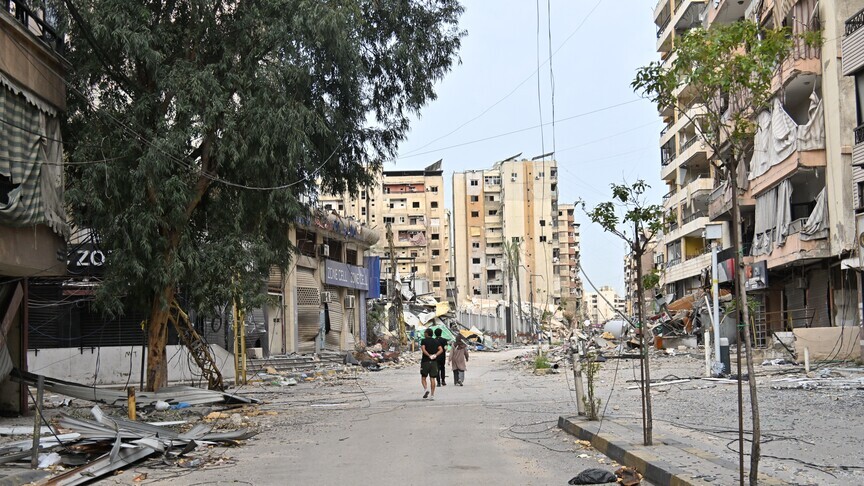
Israeli attacks in Lebanon have exacted a heavy price, with Lebanese authorities reporting more than 2,300 people killed and over 1 million displaced.[2] These figures encapsulate the widespread impact of the military operations, affecting communities across the country but particularly in the south where many strikes have occurred.[2] The scale of displacement—exceeding 1 million individuals—indicates massive population movements, likely straining resources and infrastructure in safer areas.[2] Casualties surpassing 2,300 underscore the lethality of the attacks, contributing to a humanitarian crisis amid the conflict.[2]
The reported numbers from Lebanese authorities provide a quantitative measure of the devastation, reflecting sustained Israeli military actions that have reshaped life in Lebanon.[2] Displacement on this magnitude implies families uprooted, homes abandoned, and essential services disrupted, all traced back to the attacks.[2] In the context of ceasefire violations like the Khiam school incident and Nabatieh strike, these tolls gain added significance, as continued operations exacerbate the human suffering already documented.[1][2][4] Authorities' tallies highlight not just immediate deaths but the long-term effects of such violence on Lebanon's population.[2]
This human cost is intertwined with political discourse, as leaders address the fallout. The deaths and displacements serve as a backdrop to discussions on resolution, with the high numbers pressuring stakeholders to reconsider approaches.[2] Southern Lebanon, site of many attacks, bears much of this burden, aligning with reports of specific strikes injuring civilians.[2][4] Overall, the data from Lebanese sources paints a picture of profound loss, where over 2,300 lives ended and more than 1 million faced upheaval due to Israeli attacks.[2]
{IMAGE_2}
Attacks on Peacekeepers
An attack on United Nations peacekeepers in Lebanon resulted in one killed and three injured, drawing sharp condemnation from the UN Security Council.[3] The council explicitly stated that "peacekeepers must never be the target of an attack," positioning the incident as a grave breach of international norms protecting such forces.[3] This event, reported by Anadolu Agency, occurred in the context of ongoing operations in southern Lebanon, where peacekeepers are deployed to monitor and stabilize the situation.[3]
The casualties among peacekeepers—one fatality and three injuries—highlight the risks faced by international personnel amid local hostilities.[3] The UN Security Council's response emphasizes the inviolability of these forces, whose mandate includes peacekeeping in volatile border regions.[3] This condemnation serves as an international rebuke, calling attention to the dangers posed by attacks on neutral actors.[3] In light of ceasefire violations elsewhere, such as the school in Khiam and strikes in Nabatieh, the peacekeeper incident amplifies concerns over indiscriminate or escalatory violence.[1][3][4]
Details of the attack underscore its severity, with the council's unified voice reinforcing global standards for protecting peacekeepers.[3] Their role in Lebanon involves patrolling and observing compliance with agreements, making any targeting particularly alarming.[3] The statement from the council links directly to the human impact, mirroring broader casualties reported by Lebanese authorities.[2][3]
Specific Incidents Involving Individuals
An Israeli strike in the southern Lebanese city of Tyre killed 80-year-old Palestinian academic and activist Maha Abu Khalil, who was also a former hijacker.[5] According to Middle East Eye, Abu Khalil was an early member of the leftist Popular Front for the Liberation of Palestine (PFLP) and one of the first women to participate in plane hijackings.[5] The strike targeted her in Tyre last week, ending her life and drawing attention to targeted operations against specific individuals.[5]
Abu Khalil's background as a Palestinian academic and PFLP member adds layers to the incident, with reports noting a recent picture of her in southern Lebanon shared on X.[5] Her involvement in historic actions, including being among the pioneering women in plane hijackings, positions her as a notable figure in leftist activism.[5] The strike's outcome—her death at age 80—occurs amid other violations in southern Lebanon, such as those in Khiam and Nabatieh.[1][4][5]
This event exemplifies precision strikes amid the ceasefire, focusing on an individual with a documented history in Palestinian resistance groups.[5] Coverage by Middle East Eye details her as an activist killed in Tyre, connecting to the pattern of operations in the region.[5] The loss of such a figure resonates within communities affected by the conflict, aligning with the broader human toll.[2][5]
{IMAGE_3}
Statements from Lebanese Leadership
Lebanese President has indicated that talks with Israel could "save" the country, a position voiced amid dissent from Hezbollah.[2] This statement from The Japan Times reflects a push for dialogue as a potential path forward, even as political divisions persist within Lebanon.[2] The president's remarks come against the backdrop of devastating Israeli attacks that have killed more than 2,300 and displaced over 1 million, per Lebanese authorities.[2]
The suggestion of Israel talks highlights a strategic consideration for national preservation, contrasting with Hezbollah's opposition.[2] This internal dynamic plays out as ceasefire violations continue, including the Khiam school destruction and Nabatieh injuries.[1][2][4] Leadership's focus on negotiations underscores urgency in addressing the crisis, with the human toll providing stark motivation.[2]
Hezbollah's dissent complicates the landscape, as the president's overture seeks to navigate factional differences.[2] These comments encapsulate official perspectives on resolution, tied to the reported impacts of attacks.[2] In southern Lebanon, where strikes persist, such statements signal efforts to stabilize amid ongoing challenges.[2]
International and Domestic Responses
The UN Security Council's condemnation of the peacekeeper attack, killing one and injuring three, represents a key international reaction, with the body asserting that peacekeepers must never be targeted.[3] This aligns with domestic reports on casualties and violations, forming a multifaceted response to the situation.[2][3] Lebanese authorities' documentation of over 2,300 deaths and 1 million displaced further contextualizes global concerns.[2]
These responses highlight coordinated attention to breaches, from local leadership's calls for talks to UN statements.[2][3] The interplay of dissent and diplomacy, alongside strike reports, shapes the narrative around enforcement.[1][2][4]
What to watch next: Observers should monitor adherence to the ceasefire amid reports of continued strikes like those in Khiam and Nabatieh,[1][4] potential progress in Israel-Lebanon talks proposed by the Lebanese president despite Hezbollah dissent,[2] and further international reactions following the UN Security Council's stance on peacekeeper attacks.[3]