Strike in Lebanon: Israel Destroys 428 Housing Units Despite Ceasefire
Israel has destroyed 428 housing units in southern Lebanon despite the ceasefire, as reported by Lebanon's National Council for Scientific Research.[1] This strike in Lebanon comes amid ongoing demolitions by the Israeli army in Lebanese towns and cities south of the country over the past three days, with an additional 50 housing units damaged during the same period.[1] Prior to the ceasefire last week, the destruction was far more extensive, with 17,756 housing units completely destroyed and 32,668 others damaged across Lebanon over 46 days.[1] Houses were also destroyed in specific villages near the southern border, such as Beit Lif.[2] In the 24 hours leading up to the Israel-Lebanon ceasefire, the Israel Defense Forces (IDF) reported killing hundreds of Hezbollah terrorists.[3]
Recent Destruction in Southern Lebanon
The Israeli army has persisted with demolitions in southern Lebanon even after the ceasefire took effect last week, resulting in the complete destruction of 428 housing units over the past three days.[1] This activity underscores a continuation of military operations in the region, targeting structures in towns and cities south of the country.[1] According to data from Lebanon’s National Council for Scientific Research, these demolitions have not only led to total losses but also caused additional damage to 50 housing units during the same timeframe.[1] The scale of this post-ceasefire destruction highlights the immediate challenges in implementing the truce, as residential areas continue to bear the brunt of these actions.[1]
This recent wave of destruction builds on a pattern observed in the area, where housing infrastructure has been systematically affected.[1] The 428 units represent a significant loss in a short period, potentially exacerbating displacement and reconstruction needs for local communities in southern Lebanon.[1] The involvement of the National Council for Scientific Research in tracking these figures provides a reliable metric for assessing the impact, emphasizing the precision of the reported demolitions.[1] Furthermore, reports confirm that houses in villages like Beit Lif near the southern border have been among those destroyed, adding specificity to the broader regional toll.[2] These events in the days following the ceasefire illustrate the fragile nature of the agreement, with military activities persisting in close proximity to the border.[1][2]
Pre-Ceasefire Damage Overview
Before the ceasefire came into effect last week, the destruction of housing in Lebanon had reached substantial levels, with 17,756 housing units completely destroyed over the preceding 46 days.[1] This figure alone indicates the intensity of the conflict prior to the truce, as entire residential structures were reduced to rubble across various parts of the country.[1] In addition to these total losses, 32,668 housing units sustained damage, further compounding the housing crisis in affected areas.[1]
The pre-ceasefire period, spanning 46 days, saw a cumulative impact that dwarfed the more recent post-ceasefire demolitions, setting a baseline for the overall devastation.[1] These numbers, documented by Lebanon’s National Council for Scientific Research, reflect a widespread targeting of civilian infrastructure, with implications for long-term habitability in Lebanon.[1] The distinction between completely destroyed and damaged units is crucial, as the latter category—totaling over 32,000—likely includes structures that are partially usable but require extensive repairs.[1] This overview provides context for the current situation, showing how the ceasefire arrived amid already severe losses, with southern regions particularly hard-hit.[1] The rapid accumulation of damage over those 46 days suggests a high tempo of operations leading up to the agreement.
Casualties Reported Before Ceasefire
In the final 24 hours before the Israel-Lebanon ceasefire, the Israel Defense Forces (IDF) revealed that hundreds of Hezbollah terrorists were killed.[3] This report from the IDF marks a significant escalation in the immediate pre-ceasefire phase, highlighting intense combat operations right up to the truce's implementation.[3] The casualties, described as numbering in the hundreds, represent a notable achievement claimed by Israeli forces in their efforts against Hezbollah militants.[3]
The timing of these killings—within the last day before the ceasefire—indicates that military engagements remained fierce even as diplomatic efforts culminated in the agreement.[3] The IDF's disclosure provides insight into the scale of losses inflicted on Hezbollah, potentially influencing the dynamics leading to the ceasefire.[3] This period of heightened activity underscores the volatility along the border, where such operations were concentrated.[3] Reports from the Jerusalem Post detail the IDF's assessment, framing it as a critical blow to the terrorist group in the war's closing moments.[3]
Specific Incidents in Affected Areas
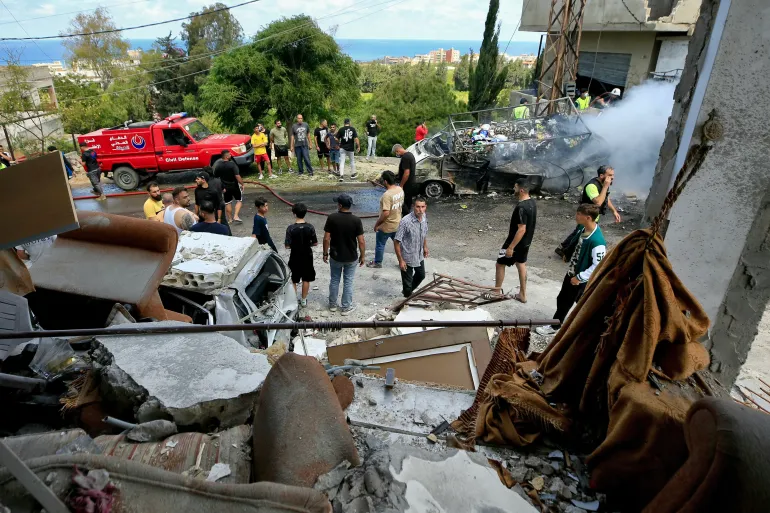
Specific incidents of destruction have been reported in villages near Lebanon's southern border, including the village of Beit Lif, where houses were destroyed.[2] This location, close to the border, has been a focal point for recent military actions, aligning with the broader pattern of demolitions in southern Lebanon.[1][2] The destruction in Beit Lif exemplifies how individual communities are experiencing the impacts of these operations post-ceasefire.[2]
Over the past three days, the Israeli army's demolitions have targeted housing units in such areas, contributing to the total of 428 completely destroyed structures.[1] The additional damage to 50 units further illustrates the precision and scope of these incidents.[1] Beit Lif's proximity to the border makes it particularly vulnerable, as operations in southern towns and cities continue despite the truce.[1][2] These specific cases provide a ground-level view of the destruction, where residential homes have been directly affected.[2] The combination of reports from multiple sources confirms the occurrence in these border villages, emphasizing their strategic significance.[1][2]
Summary of Ongoing Impacts
The overall effects of these events reveal a housing crisis in southern Lebanon that persists beyond the ceasefire, with 428 units destroyed and 50 damaged in just three days.[1] This post-ceasefire activity compounds the pre-truce devastation of 17,756 completely destroyed and 32,668 damaged units over 46 days.[1] The continued demolitions signal challenges in fully halting military operations, affecting civilian infrastructure in border regions.[1]
Additionally, the IDF's report of hundreds of Hezbollah terrorists killed in the 24 hours before the ceasefire adds a layer to the conflict's toll, reflecting high-intensity engagements right up to the agreement.[3] The combined impact—spanning casualties and housing losses—illustrates the multifaceted consequences for Lebanon.[1][3] Southern areas like Beit Lif continue to see direct hits, underscoring localized but significant destruction.[2] These developments point to enduring strains on the ceasefire's effectiveness and the region's recovery prospects.[1][3]
What to watch next: Monitoring adherence to the ceasefire will be critical, particularly regarding further demolitions in southern Lebanon as tracked by the National Council for Scientific Research, and any updates from the IDF on Hezbollah activities.[1][3]