Iran Strike: Attacks Target Three Ships in Strait of Hormuz
Iran launched a strike Iran directed at three ships in the Strait of Hormuz, seizing two of them and escorting the vessels to Iranian waters.[1][5] The US downplayed the seizure of the two European-owned vessels amid ongoing negotiations and a stalemate in the war between the parties.[1] These attacks have contributed to deepening confusion in the Strait, a vital waterway whose effective closure has exacerbated a global energy crisis by blocking oil tankers that carry a fifth of the world's oil.[2] One Greek-linked container ship involved in the incident is now heading toward the Persian Gulf,[3] while Iran's parliament speaker stated that the Islamic republic will not reopen the Strait as long as the US naval blockade remains in place.[5]
Overview of the Attacks
Iranian forces carried out attacks on three ships in the Strait of Hormuz on Wednesday, marking a significant escalation in the maritime confrontations that have defined the early months of the ongoing war.[1][5] The operations involved small attack boats that demonstrated Iran's continued ability to exert control over the waterway two months into the conflict.[1] These incidents unfolded near the Strait, a chokepoint for global energy supplies, where rival blockades by Iran and the US have created a tense standoff.[1][2] The attacks targeted container ships, highlighting vulnerabilities in commercial shipping routes that are critical for international trade.[5] As both sides maneuver for advantage, the strike Iran executed underscored the precarious balance of power in the region, with Iran's actions directly challenging the US naval presence.[1][5] The timing of the assaults coincided with stalled negotiations aimed at ending the war, further complicating diplomatic efforts.[1] Reports from the scene described the operations as precise, with Iranian vessels intercepting the targets and compelling two to divert course toward Iranian territory.[1] This event fits into a pattern of tit-for-tat maritime actions, where control of the Strait has become a central battleground, amplifying risks to global commerce.[2][5]
Details of the Seizures and Incidents
The targeted vessels included two European-owned ships that Iran seized and escorted to its waters following the attacks.[1][5] A third ship, a Greek-linked container ship, came under fire from an Iranian speedboat but continued its journey, now heading for the Persian Gulf.[3] All three were container ships navigating the Strait of Hormuz, a narrow passage that has been a flashpoint due to the mutual blockades imposed by Iran and the US.[1][5] The seizures represent a bold demonstration of Iran's operational reach, as its small boats successfully overpowered the vessels despite the heightened tensions.[1] The Greek-linked ship, after sustaining the attack, proceeded undeterred toward its destination, signaling that not all incidents result in capture but still pose severe risks to navigation.[3] These details emerge from eyewitness accounts and official reports, painting a picture of coordinated Iranian naval maneuvers that disrupted normal shipping patterns.[1][3][5] The two seized vessels, owned by European interests, were rerouted to Iranian-controlled areas, prompting immediate international concern over their crews and cargoes.[1] Such actions not only halt individual voyages but also deter broader traffic through the Strait, compounding logistical challenges for shipping companies reliant on this route.[3][5]
International Responses
The United States adopted a measured tone in response to Iran's seizure of the two European-owned vessels, downplaying the incident as both nations vied for leverage in their competing maritime blockades.[1] This restrained reaction came amid a diplomatic stalemate in talks to conclude the war, suggesting a reluctance to escalate rhetorically while military posturing continues.[1] On the Iranian side, the parliament speaker firmly declared that the Islamic republic would refuse to reopen the Strait of Hormuz until the US lifts its naval blockade, labeling it a "blatant violation of the ceasefire."[5] This statement frames Iran's actions as retaliatory, positioning the seizures and attacks as countermeasures to American restrictions.[5] European stakeholders, indirectly affected through the ownership of the seized ships, have yet to issue detailed public responses in available reports, though the incidents directly implicate their commercial interests.[1] The US approach appears calculated to avoid inflaming the situation further, prioritizing negotiation tracks even as Iran's moves challenge the status quo.[1][5] These responses highlight the layered diplomacy at play, where public statements serve strategic purposes amid the fog of ongoing hostilities.[1]
Broader Regional Context
The attacks on the three ships have intensified confusion in the Strait of Hormuz, a conduit for roughly one-fifth of global oil shipments now hampered by blockages that have triggered an energy crisis worldwide.[2] Iran's operations near this crucial waterway underscore the fragility of the route, where closure has already disrupted tanker traffic and sent ripple effects through energy markets.[2] The incidents are embedded in a wider context of the Middle East war, now two months old, featuring rival blockades that pit Iranian attack boats against US naval forces.[1][2] The Strait's role as a linchpin for trade amplifies the stakes, as sustained disruptions threaten economic stability far beyond the region.[2][5] Iran's parliament speaker's refusal to restore access ties directly to the US blockade, portraying the attacks as symmetric responses in a cycle of restrictions.[5] This dynamic has created a de facto stalemate, with neither side yielding ground, leading to prolonged uncertainty for shipping lanes essential to global supply chains.[1][2] The energy crisis, born from the tanker blockages, illustrates how localized naval actions cascade into international repercussions, straining resources and inflating costs.[2]
Related Developments
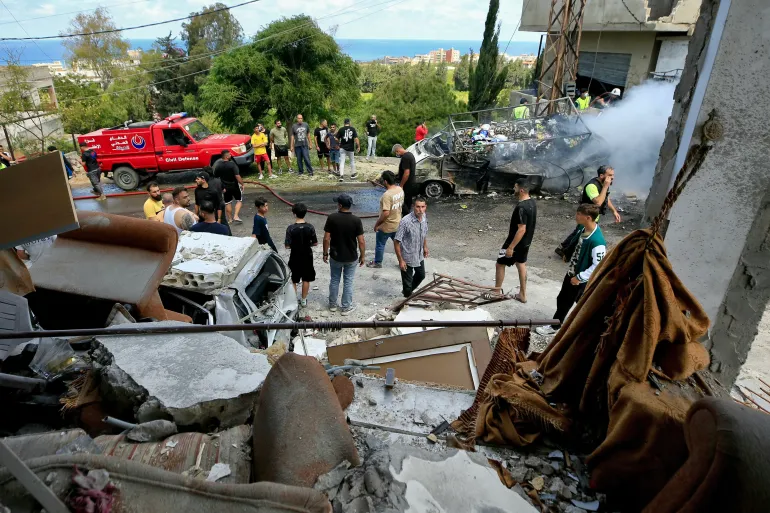
In a connected escalation tied to regional tensions, a French soldier succumbed to wounds from an attack on United Nations peacekeepers in Lebanon last week, which President Emmanuel Macron attributed to Iran-backed Hezbollah.[4] This incident, occurring amid the broader Middle East war, involved strikes on the UN Interim Force in Lebanon (UNIFIL), with a second French casualty reported on Wednesday.[4] UNIFIL spokesperson Tilak Pokharel addressed the matter, linking it to the volatile security environment influenced by Iranian proxies.[4] While not directly in the Strait, the attack on UN forces parallels the maritime incidents by showcasing Iran's extended reach through allied militias, heightening concerns over multi-front instability.[4] The death underscores the human cost of these operations, as peacekeepers face threats in their mandate areas.[4] Such developments reinforce the interconnected nature of conflicts in the region, where actions in one theater, like Hormuz, echo in others like southern Lebanon.[4]
What to watch next
Negotiations to end the war remain stalled, with the status of the Strait of Hormuz hinging on whether Iran reopens it or the US naval blockade persists, amid ongoing risks to shipping and potential further seizures.[1][5]