
Strike in Lebanon: Hezbollah Fires Rockets at Israeli Troops Violating Ceasefire
In a reported strike in Lebanon, Hezbollah fired rockets at Israeli troops positioned in southern Lebanon, an action that Israel has accused of violating a fragile ceasefire agreement, just as US-mediated talks between Israel and Lebanon are set to resume in Washington this week.[3][4] This incident underscores the precarious nature of the truce amid ongoing tensions between the two sides.
Hezbollah Rocket Firing Incident
The primary event fueling current concerns is the rocket firing by Hezbollah directed at Israeli troops in southern Lebanon. According to the Israeli military, this occurred on Tuesday, marking a direct breach of the ceasefire terms.[3][4] Israeli officials have explicitly pointed to Hezbollah, the Iran-backed militant group, as responsible for launching the rockets toward their forces operating in the region.[3][4] This strike in Lebanon represents a significant escalation in rhetoric and action, as Israel frames it as a deliberate violation timed ahead of diplomatic engagements.[3][4]
Details from multiple reports highlight the specificity of the accusation: the rockets targeted Israeli troops specifically in southern Lebanon, a hotspot for cross-border exchanges in recent months.[3][4] Hezbollah, known for its longstanding opposition to Israeli presence in the area, has maintained a position of resistance against what it describes as occupying forces.[3] However, the group issued no immediate comment in response to these latest allegations, leaving the Israeli claims unchallenged publicly at the time of reporting.[3][4] This silence comes against the backdrop of Hezbollah's broader strategic posture, which has historically involved rocket capabilities aimed at deterring Israeli advances.[3]
The incident's timing adds layers of complexity, as it unfolds precisely when de-escalation efforts are anticipated. Israel's characterization of the event as a ceasefire violation emphasizes the potential for rapid deterioration, with military statements underscoring the need for adherence to truce protocols.[3][4] Observers note that such actions test the boundaries of the agreement, particularly given Hezbollah's arsenal and operational reach in southern Lebanon.[3][4]
Context of the Ceasefire
The ceasefire between Israel and Lebanon remains notably fragile, providing critical context for the recent rocket firing. Established to halt intense cross-border hostilities, the truce has been tested repeatedly by actions from both sides, including the latest incident.[2][3][4] Israel's accusation against Hezbollah frames this strike as a direct infraction, occurring amid a period where stability is essential for broader regional dynamics.[3][4]
Reports describe the ceasefire as hanging in a delicate balance, with ongoing military posturing evident on the ground.[2] Hezbollah's Iran-backed status amplifies the stakes, as its activities are intertwined with wider proxy conflicts involving Tehran.[2][3][4] The fragile nature of the agreement is further highlighted by Israel's proactive deployments, signaling a readiness to respond even under truce conditions.[2] US-mediated talks, scheduled to continue in Washington later this week, were intended to reinforce the ceasefire's terms, yet this event risks undermining those efforts.[2][3][4]
Historical patterns of violations have characterized similar truces in the region, where accusations of rocket fire or strikes often lead to retaliatory cycles.[3][4] In this case, the ceasefire's context is tied to preventing escalation ahead of diplomatic windows, with both Israel and Lebanon navigating domestic pressures alongside international involvement.[2][3][4] The absence of Hezbollah's comment maintains ambiguity, potentially allowing for interpretations that align with their narrative of defensive rights.[3]
Israel's Military Response
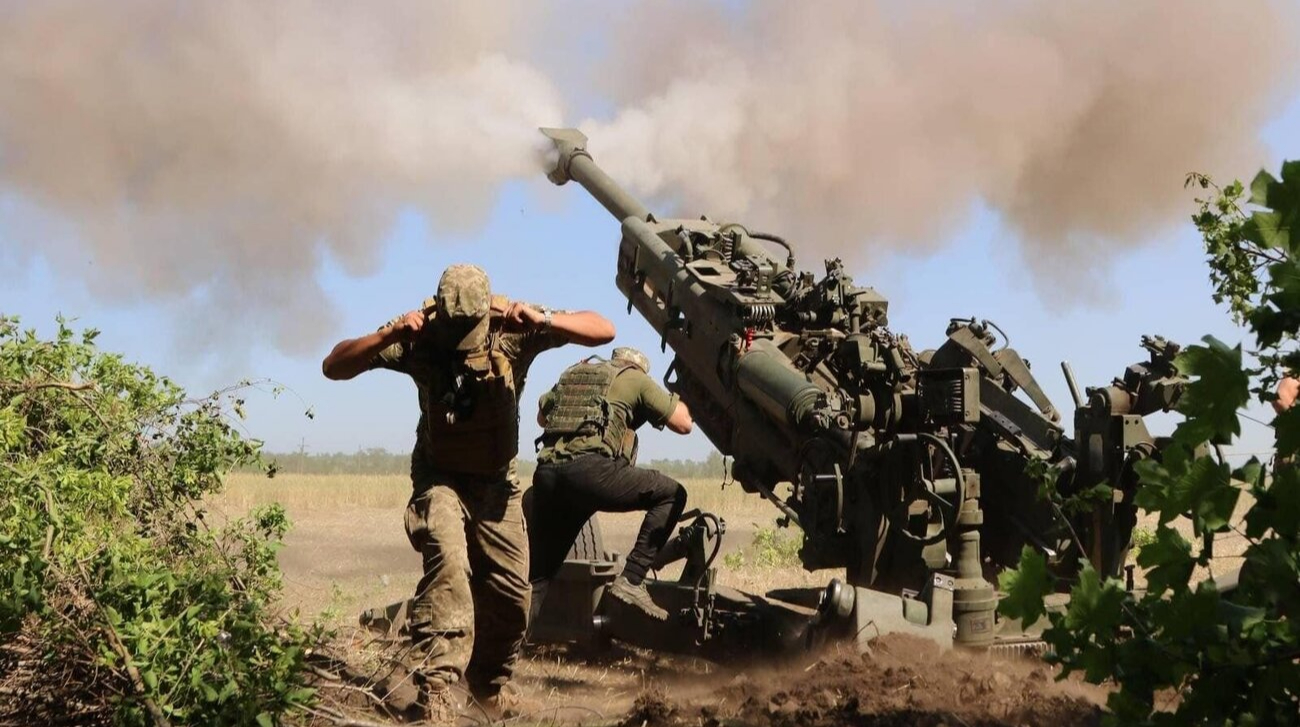
Israel has responded to the persistent threats from Hezbollah by deploying advanced artillery systems, even as the ceasefire holds tenuously.[2] Central to this is the unveiling and operational use of the new self-propelled Ro'em howitzer, described as a game-changing asset against Iran-backed Hezbollah targets.[2] This deployment targets Hezbollah positions, demonstrating Israel's commitment to maintaining defensive superiority during periods of relative calm.[2]
The Ro'em howitzer's introduction marks a technological edge, with its self-propelled design enabling rapid and precise strikes on militant infrastructure.[2] Amid the fragile ceasefire, this move signals Israel's strategy of deterrence, positioning high-caliber artillery to counter potential rocket threats like the recent incident.[2] Reports emphasize its role in addressing Hezbollah's capabilities, which include extensive rocket networks threatening northern Israel.[2]
This military posture aligns with broader efforts to neutralize threats without full-scale resumption of hostilities, though it inherently challenges the ceasefire's spirit.[2] The deployment's timing, coinciding with diplomatic talks, underscores Israel's dual approach of military readiness and negotiation.[2]
Human Impact in Lebanon
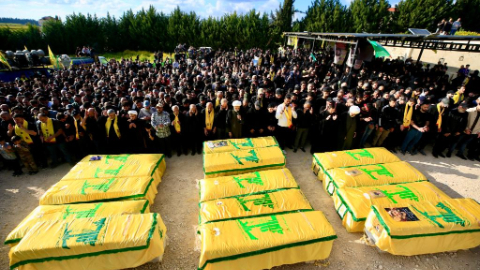
The human toll of the conflict continues to resonate in Lebanon, where people are actively attending funerals for Hezbollah members killed in Israeli strikes.[1] These proceedings serve as a stark reminder of the immediate effects on communities, with gatherings drawing mourners to honor those lost in recent military actions.[1]
Visuals and accounts from the funerals depict a somber atmosphere, reflecting grief amid ongoing hostilities.[1] The individuals commemorated were Hezbollah fighters killed during Israeli strikes, highlighting the direct casualties from aerial and artillery operations.[1] Such events in Lebanon amplify the personal dimensions of the conflict, as families and supporters process losses that fuel cycles of retaliation.[1]
These funerals occur against the backdrop of fragile ceasefires, where strikes and counterstrikes claim lives on both sides, yet the focus here remains on the Lebanese experience.[1] The repetition of attendance underscores community solidarity with Hezbollah, even as diplomatic paths are pursued.[1]
Upcoming Diplomatic Efforts
US-mediated talks between Israel and Lebanon are slated to continue in Washington later this week, offering a potential avenue to address ceasefire violations like the recent rocket firing.[2][3][4] These discussions aim to solidify the truce, with both governments engaging under American facilitation to prevent further escalations.[2][3][4]
The agenda likely encompasses enforcement mechanisms, given incidents such as Hezbollah's alleged rocket attack on Israeli troops.[3][4] Hezbollah's lack of comment adds uncertainty, while Iran's backing complicates multilateral dynamics.[2][3][4] Israel's participation reflects a willingness to pursue dialogue alongside military measures, such as the Ro'em howitzer deployment.[2]
Success in these talks could stabilize southern Lebanon, but the fragile ceasefire's history suggests challenges ahead.[2][3][4] The US role as mediator positions it to bridge gaps, focusing on mutual adherence to de-escalation.[2][3][4]
What to watch next: Monitor the outcomes of the US-mediated talks in Washington this week, as well as any further military responses or statements from Hezbollah regarding the rocket firing accusations.[2][3][4]