
Strike in Lebanon: Drone Attack Kills One Despite Ceasefire
Ceasefire violations in Lebanon have led to multiple deaths, including a UNIFIL soldier, amid ongoing military exchanges between Hezbollah and Israel. In a notable strike Lebanon development, French President Emmanuel Macron confirmed the death of a second UNIFIL soldier injured in an attack, stating, ‘Anicet Girardin has died this morning as a result of his injuries.’[1] An Israeli drone strike in eastern Lebanon killed one person as violations mounted ahead of talks.[2] The Israeli army reported killing two people in southern Lebanon for approaching a defense line.[3] A drone strike in Lebanon's Bekaa region killed one person and wounded two, despite the active ceasefire.[4] Hezbollah fired rockets and drones into northern Israel, accusing the Israeli military of breaching the ceasefire agreement.[5]
Overview of the Ceasefire Agreement
The ceasefire agreement between Lebanon and Israel, described as a 10-day arrangement, took effect on Friday, aiming to pause the hostilities that had been ongoing in the region.[4] This agreement was intended to create a period of calm, particularly in southern Lebanon where military activities have been concentrated, allowing for potential de-escalation between the involved parties.[4][5] Reports indicate that the ceasefire was meant to address immediate threats and violations along border areas, with both sides acknowledging its terms in official statements.[5] However, the rapid emergence of incidents suggests challenges in implementation from the outset. The Israeli military has referred to the ceasefire as an official agreement, emphasizing its expectation of compliance amid operations in southern Lebanon.[5] Similarly, the timing of the ceasefire's activation on Friday places it in the context of recent escalations, where armed groups like Hezbollah have been active.[4] This 10-day window was positioned as a critical testing period for both Lebanon and Israel to adhere to non-aggression principles, yet early reports highlight breaches that undermine its purpose.[4][5] The agreement's structure, as referenced in multiple accounts, focused on halting rocket fire, drone activities, and ground approaches near defense lines, but enforcement mechanisms appear limited based on the subsequent events.[5] International monitoring, such as through UNIFIL presence, was implicitly part of the backdrop, given attacks affecting peacekeepers.[1][4] The ceasefire's short duration—spanning just 10 days—underscores the tentative nature of the halt, especially as it coincided with preparations for diplomatic engagements.[4][5] Violations reported shortly after its start, including strikes and counter-fires, illustrate the agreement's fragility, with both Hezbollah and Israeli forces citing each other's actions as justifications for responses.[5] This background sets the stage for understanding why a drone strike in the Bekaa region could occur despite the ceasefire being active, pointing to localized breakdowns in observance.[4] Overall, the ceasefire represented a brief opportunity for restraint, but the sources detail how military exchanges persisted, challenging its foundational intent.[4][5]
Recent Military Incidents and Violations
Recent military incidents in Lebanon have included several reported strikes and exchanges, marking clear violations of the ceasefire agreement. One key event involved an Israeli drone strike in eastern Lebanon that killed one person, occurring as ceasefire violations mounted ahead of scheduled talks.[2] In southern Lebanon, the Israeli army reported killing two people, claiming the individuals approached a so-called ‘forward defense line.’[3] Another significant incident was a drone strike in Lebanon’s Bekaa region, which killed one person and wounded two others, directly defying the active ceasefire that had taken effect on Friday.[4] Hezbollah responded by firing rockets and drones into northern Israel on Tuesday, explicitly accusing the Israeli military of violating the ceasefire.[5] The Israeli military, in turn, stated that Iran-aligned Hezbollah had fired several rockets toward its troops operating in southern Lebanon, describing this as a "blatant violation" of the ceasefire agreement.[5] These incidents span multiple locations—eastern Lebanon, southern Lebanon, the Bekaa region, and northern Israel—indicating widespread non-compliance shortly after the ceasefire's implementation.[2][3][4][5] The sequence of events, while not fully timestamped across all reports, shows a pattern of tit-for-tat actions: Israeli strikes followed by Hezbollah responses, and vice versa.[2][5] For instance, the drone strike in eastern Lebanon preceded heightened tensions leading into talks, amplifying concerns over escalation.[2] In the Bekaa, the strike's outcome—one killed, two wounded—highlights the precision and impact of such operations despite the truce.[4] Southern Lebanon's ‘forward defense line’ incident underscores ground-level enforcement efforts by the Israeli army, where perceived threats prompted lethal responses.[3] Hezbollah's rocket and drone launches into northern Israel were framed as retaliatory, tied directly to alleged Israeli breaches.[5] It was not immediately clear if some of these overlapping reports referred to the same incidents, adding complexity to verifying the full scope.[5] These violations collectively demonstrate ongoing military activity across Lebanon and into Israel, with drones, rockets, and ground actions all playing roles.[2][3][4][5]
{IMAGE_2}
Casualties and Affected Parties
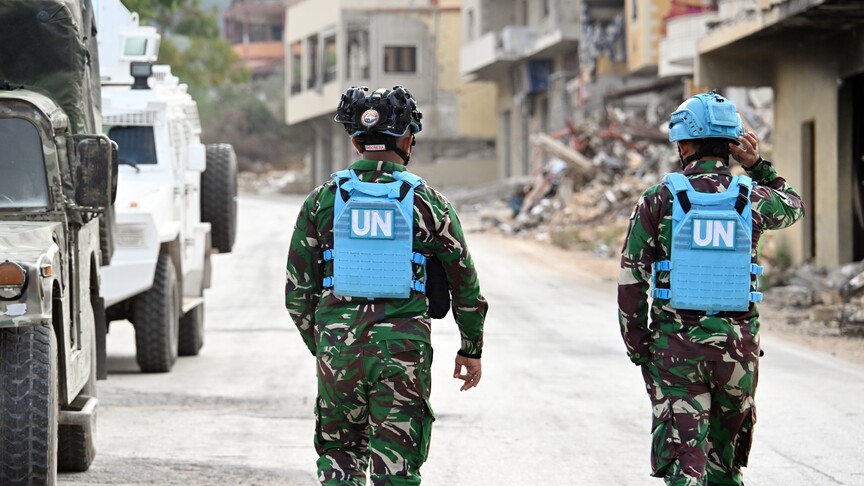
Casualties from the ceasefire violations in Lebanon have included both military personnel and civilians, affecting UNIFIL peacekeepers, local individuals, and combatants. French President Emmanuel Macron confirmed the death of a second UNIFIL soldier from injuries sustained in an attack, naming the individual as Anicet Girardin, who ‘died this morning as a result of his injuries.’[1] This marks at least two UNIFIL fatalities linked to the incident, highlighting the risks to international forces monitoring the area.[1] In eastern Lebanon, an Israeli drone strike killed one person amid mounting violations.[2] The Israeli army's action in southern Lebanon resulted in two people killed after they approached the ‘forward defense line.’[3] A drone strike in the Bekaa region claimed one life and wounded two others, despite the ceasefire.[4] These reports detail a toll of at least five deaths—one in eastern Lebanon, two in southern Lebanon, one in Bekaa, and two UNIFIL soldiers—plus two wounded in Bekaa.[1][2][3][4] Affected parties span UNIFIL (French soldier specifically), unnamed individuals in strikes (potentially civilians or militants), and those targeted by Israeli forces near defense lines.[1][2][3][4] Hezbollah's involvement in firing rockets and drones implies possible Israeli casualties or impacts in northern Israel, though specifics are not detailed beyond the military's description of attacks on troops.[5] The UNIFIL casualties draw international attention, with Macron's confirmation underscoring the peacekeeping mission's vulnerability.[1] Local casualties in Bekaa, eastern, and southern Lebanon reflect the civilian proximity to conflict zones, where drone strikes and ground responses have direct human costs.[2][3][4] The two wounded in Bekaa add to the injury tally, potentially straining local medical resources amid ongoing tensions.[4] Israeli troops operating in southern Lebanon faced rocket fire from Hezbollah, described as a violation but without specified casualties on that side.[5] Overall, these deaths and injuries involve a mix of international peacekeepers, Lebanese locals, and possibly Hezbollah affiliates, illustrating the broad impact of violations on multiple parties.[1][2][3][4]
Responses from Involved Groups
Responses from involved groups have centered on accusations of ceasefire breaches, with both Hezbollah and Israel pointing fingers at each other. Hezbollah stated it fired rockets and drones into northern Israel on Tuesday, accusing the Israeli military of violating the ceasefire agreement.[5] This action was framed as a direct response to perceived Israeli infractions.[2][5] The Israeli military countered by labeling Hezbollah's rocket fire toward its troops in southern Lebanon as a "blatant violation" of the ceasefire, identifying the group as Iran-aligned.[5] Hezbollah's response came amid reports of Israeli violations ahead of talks, positioning their strikes as retaliatory.[2] Official statements from Hezbollah emphasized Israeli breaches as the trigger for their military activity.[5] Israel's army justified killing two people in southern Lebanon by citing their approach to the ‘forward defense line,’ a measure tied to ongoing security operations.[3] These exchanges reveal a cycle of claims and counter-claims, where each side invokes the ceasefire to condemn the other.[2][5] International figures, such as French President Macron, addressed UNIFIL casualties without attributing blame in the confirmation statement, focusing on the soldier's death.[1] Hezbollah's accusations align with reports of Israeli drone strikes in eastern and Bekaa regions, which they likely viewed as provocations.[2][4] Israel's description of Hezbollah's actions as blatant underscores their stance on enforcement.[5] The lack of clarity on whether incidents overlapped further fuels the rhetorical battle.[5] These responses highlight entrenched positions, with Hezbollah responding to what they see as Israeli aggression and Israel defending operational lines against advances.[2][3][5]
{IMAGE_3}
Context of Upcoming Talks
The ceasefire violations occur against the backdrop of upcoming US-mediated talks between the Israeli and Lebanese governments scheduled for this week.[5] Reports note these as rare Lebanon-Israel talks set to take place in Washington, adding diplomatic urgency to the military incidents.[2] Hezbollah's rocket and drone fires were explicitly linked to Israeli breaches ahead of these discussions.[5] Violations, including the Israeli drone strike in eastern Lebanon, mounted precisely as preparations for the talks intensified.[2] The timing—post-Friday ceasefire activation—positions the talks as a potential forum to address non-compliance.[4][5] US mediation suggests international involvement in stabilizing the agreement, with both governments expected to engage directly.[5] Hezbollah's actions, citing violations, could complicate Lebanon's position in Washington.[2][5] Israel's reports of Hezbollah violations similarly frame their narrative for the diplomatic table.[5] The 10-day ceasefire's early breaches raise questions about feasibility ahead of these rare direct talks.[2][4][5] This context underscores how military exchanges threaten to overshadow or influence the outcomes of the US-brokered discussions.[2][5]
What to watch next includes monitoring the US-mediated talks in Washington between Lebanon and Israel, as well as any further ceasefire violations or responses from Hezbollah and the Israeli military, given the pattern of accusations and strikes reported.[2][5]