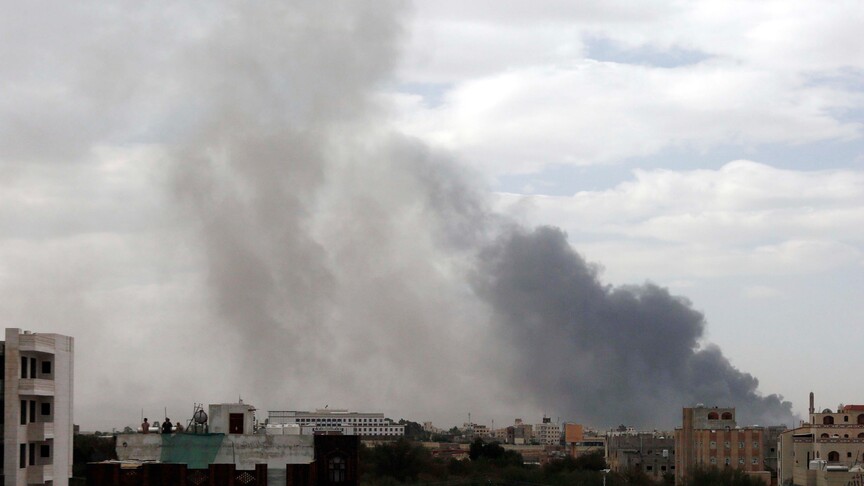
Strike in Lebanon: At Least 13 Killed in Israeli Attacks Despite Ceasefire
Israeli strikes on southern Lebanon have killed at least 13 people despite a ceasefire agreement, with reports highlighting deaths including women and children in targeted areas.[3][5] In this strike Lebanon escalation, Israel has continued military actions, issuing evacuation orders that have displaced scores of residents even as a US-brokered truce remains in effect.[1] Lebanon's Health Ministry has confirmed the casualties, underscoring the fragility of the agreement amid ongoing tensions with Hezbollah.[3]
Overview of Recent Strikes
Israeli military operations in southern Lebanon have persisted despite the ceasefire, involving a series of strikes on villages and regions that have resulted in multiple fatalities and widespread disruption.[1][2] According to reports, these actions include fresh attacks documented by Lebanon's state news agency, which detailed specific incidents in key areas of the south.[2] The strikes represent a continuation of Israel's approach to targeting perceived threats, even as the truce—brokered by the United States—aims to halt hostilities between Israel and Iran-backed Hezbollah.[1]
This pattern of operations builds on prior engagements, where Israel has maintained pressure through aerial and ground-based actions. The recent strikes, occurring in the post-ceasefire period, illustrate the challenges in enforcing the agreement, as military activities have not fully abated.[1][2] For instance, attacks have been reported in districts prone to Hezbollah activity, reflecting Israel's strategic focus on neutralizing potential launch points or militant infrastructure.[2] Lebanon's state media has played a crucial role in logging these events, providing real-time updates on the scope and immediacy of the strikes.[2]
The frequency of these operations suggests a deliberate policy of preemptive measures, with Israel issuing warnings prior to actions to minimize civilian exposure, though the outcomes have still led to significant harm.[1] This overview aligns with broader reporting on the region's volatility, where southern Lebanon remains a flashpoint due to its proximity to the Israeli border and historical Hezbollah strongholds.[1][2] The strikes' continuation raises questions about the ceasefire's durability, as both sides appear to interpret the truce through their security lenses, leading to tit-for-tat escalations.[1]
Reported Casualties and Locations

Israeli strikes in southern Lebanon kill at least 13 people despite ceasefire. — Source: anadolu
Detailed accounts from Lebanon's Health Ministry and state news agency reveal at least 13 deaths from Israeli strikes in southern Lebanon, with specific locations pinpointed across multiple sites.[2][3][5] In the Tyre district, one individual was killed in a strike, while three more fatalities occurred in the Iqlim al-Tuffah region, and two others died on the Kfardjal-Nabatieh road.[2] These incidents contribute to the overall toll, which the Health Ministry has officially tallied at 13, including four women and a child among the victims.[3]
Further breakdowns highlight the strikes' concentration: in Habboush, eight people perished, comprising a child and two women, shortly after Israeli evacuation orders were issued.[5] Additional attacks in Zrariyeh and Ain Baal claimed five more lives, bringing the Friday total to 13 as per ministry reports.[5] These locations—spanning rural and semi-urban areas in southern Lebanon—are strategically significant due to their association with Hezbollah operations, though the strikes have impacted civilian populations.[2][5]
The casualty figures underscore the human cost, with women and children explicitly noted in official tallies, pointing to the strikes' occurrence in populated zones despite prior warnings.[3][5] Lebanon's state news agency has corroborated the geographic specifics, emphasizing how the attacks unfolded in quick succession across these districts.[2] This level of detail from multiple sources paints a picture of coordinated military efforts, where precise targeting aims to address threats but results in collateral damage.[2][3][5]
Health Ministry statements serve as the primary authoritative record, consistently reporting the 13 deaths and victim demographics, which align with on-the-ground observations from affected communities.[3][5] The locations' proximity to main roads and villages amplifies the strikes' reach, affecting not just militants but also passersby and residents.[2] Overall, these reports provide a granular view of the strike lebanon incidents, enabling a clearer understanding of their spatial and lethal impact.[2][3][5]
Impact on Civilians
The civilian toll from these strikes has been profound, with Israel's evacuation orders displacing scores of people in southern Lebanon villages amid ongoing military actions.[1][5] Reports indicate that residents in areas like Habboush faced immediate peril following such orders, with eight deaths—including a child and two women—occurring shortly thereafter.[5] This displacement has compounded the humanitarian strain, as families flee strikes that continue despite the truce.[1]
Evacuation directives from Israel have prompted mass movements, leaving communities uprooted and vulnerable to further violence.[1][5] In Habboush and nearby locales, the orders preceded deadly attacks, trapping some civilians in the crossfire.[5] The broader effect includes not only deaths but also the psychological and logistical burdens of relocation, as scores are forced from their homes in a region already scarred by conflict.[1]
Lebanon's Health Ministry documentation of civilian casualties, particularly women and children, highlights the strikes' penetration into everyday life.[5] These impacts extend beyond immediate fatalities, disrupting access to services and heightening fears in southern villages.[1] The persistence of such orders and strikes signals a civilian population caught between warring parties, with displacement becoming a recurring reality.[1][5]
Hezbollah's Drone Threats
Hezbollah's deployment of fibre-optic drones has introduced a significant technological challenge for Israeli forces in southern Lebanon, even after the ceasefire took effect.[4] These devices, described as small, cheap, and readily available, have proven lethal, with the Israeli military confirming the deaths of two soldiers and one civilian contractor in explosive drone attacks within under a week.[4] Several others were wounded in these incidents, forcing adaptations in Israeli tactics against this evolving threat.[4]
The fibre-optic technology allows the drones to operate with reduced detectability, posing dilemmas for one of the world's most advanced militaries.[4] Despite the ceasefire in place since mid-April, these attacks underscore Hezbollah's capability to sustain pressure through asymmetric warfare.[4] The drones' affordability enables frequent use, turning them into a persistent hazard in the border areas.[4]
Israeli acknowledgments of the casualties highlight the drones' effectiveness, as troops adjust strategies to counter this "increasingly lethal threat."[4] This development complicates ground operations in southern Lebanon, where Hezbollah maintains influence.[4] The fibre-optic drones represent a shift in the conflict's dynamics, blending low-cost innovation with high-impact results.[4]
Context of the Ceasefire
The strikes occur against the backdrop of a US-brokered ceasefire intended to end fighting between Israel and Hezbollah, yet military actions from both sides persist.[1][3] Israel's continued operations, including evacuation orders and village strikes, displace and kill despite the truce, while Hezbollah's drones claim Israeli lives post-agreement.[1][4] Lebanon's Health Ministry notes the 13 deaths, including four women and a child, as tensions endure.[3]
This ceasefire, in place since mid-April, has failed to fully halt hostilities, with fresh Israeli strikes killing at least six in one wave alone.[2][3] The agreement's fragility is evident in the mutual violations: Israel's aerial campaigns and Hezbollah's drone incursions.[1][3][4] Fighting continues despite the truce, rooted in longstanding Israel-Hezbollah rivalries backed by Iran.[3]
The US-brokered nature of the deal aimed for de-escalation, but reports of casualties on both sides indicate selective adherence.[1][3] Southern Lebanon's status as a contested zone amplifies these breaches, with strikes and drones testing the agreement's limits.[1][3]
What to watch next: Monitor for further Israeli evacuation orders and strikes in southern Lebanon villages, alongside Hezbollah's fibre-optic drone activity, as both persist despite the ceasefire and could escalate tensions.[1][4]