
Strike in Ukraine: Russia Carried Out 1,600 Drone Attacks Over the Past Week
Over the past week, Russia carried out 1,600 drone attacks, 1,100 aerial bomb strikes, and three missile strikes against Ukraine, according to Ukrainian President Volodymyr Zelenskyy.[2] These figures highlight the intensified pace of the strike in Ukraine, with a particular focus on drone operations that have targeted critical infrastructure, energy facilities, and residential areas.
Overview of Recent Russian Attacks
Ukrainian officials, led by President Zelenskyy, have provided a comprehensive summary of the scale of Russian military actions over the past week, emphasizing the relentless nature of the campaign.[2] In a video statement, Zelenskyy detailed that Russia executed 1,600 drone attacks, alongside 1,100 aerial bomb strikes and three missile strikes directed at various targets across Ukraine.[2] This aggregation of data underscores the breadth and frequency of these operations, which have been sustained over a seven-day period, reflecting a strategic emphasis on aerial bombardment to pressure Ukrainian defenses and civilian life.
The breakdown offered by Zelenskyy paints a picture of a multi-faceted assault, where drones form the backbone of the offensive, comprising the largest share of the attacks at 1,600 instances.[2] Aerial bombs, numbering 1,100, suggest a heavy reliance on unguided munitions dropped from aircraft, likely aimed at saturating larger areas or fortified positions.[2] The three missile strikes, though fewer in number, represent precision or high-impact efforts that could target specific high-value assets.[2] This combination indicates a layered approach, blending volume with selective strikes to maximize disruption.
From a tactical perspective, the high volume of drone attacks points to Russia's growing capability in unmanned aerial vehicles, which allow for cost-effective, persistent harassment of Ukrainian airspace and ground targets.[2] Zelenskyy's report serves not only as an accounting of hostilities but also as a call to attention for international partners, framing these strikes as part of a broader pattern of aggression.[2] The past week's totals eclipse previous reporting periods in intensity, signaling an escalation that tests Ukraine's air defense systems and resource allocation. Analysts reviewing such summaries note that the sustained tempo could strain interceptor supplies and civilian resilience, though Ukrainian forces have intercepted significant portions of incoming threats in prior waves.[2]
This overview aligns with ongoing patterns in the conflict, where Russia has prioritized aerial dominance to support ground operations and degrade infrastructure.[2] Zelenskyy's disclosure provides verifiable metrics that enable observers to track the conflict's aerial dimension, offering a factual baseline for assessing military dynamics.
{IMAGE_2}
Intensified Drone and Bomb Strikes on Ukraine
The strike in Ukraine reached a peak of intensity on 1 May, when more than 400 drones targeted critical infrastructure, energy facilities, and residential buildings within a compressed 12-hour window.[5][2] This barrage exemplifies the escalated drone warfare reported by Zelenskyy, contributing to the week's total of 1,600 such attacks.[2][5] Ukrainian sources describe these drones as striking a diverse array of targets, from power grids essential for national functioning to homes housing civilians, amplifying the humanitarian impact.[5]
Details from Ukrainian Pravda highlight the sheer volume: over 400 drones in just 12 hours, a rate that equates to roughly one every 108 seconds.[5] Energy infrastructure, vital for heating, lighting, and industrial operations, bore much of the brunt, consistent with Russia's strategy to impose blackouts and economic hardship during warmer months when vulnerabilities differ from winter.[2][5] Critical infrastructure, which could encompass transportation hubs, communication networks, and military logistics, faced parallel assaults, disrupting supply lines and response capabilities.[5] Residential buildings entering the crosshairs raise concerns over indiscriminate targeting, as civilian areas intermingle with strategic sites in densely populated regions.[5]
Complementing these drone swarms were the 1,100 aerial bomb strikes logged over the week, which likely involved Su-34 bombers or similar platforms releasing glide bombs from standoff distances to evade defenses.[2] These munitions, often FAB-series bombs fitted with wings, extend Russia's reach while minimizing pilot risk, allowing strikes on fortified or rear-area targets.[2] The three missile strikes, potentially involving Iskander or Kalibr systems, add a long-range dimension, capable of evading some air defenses through low-altitude flight paths or saturation tactics.[2]
This intensification reflects Russia's adaptation to Ukrainian counter-air measures, shifting toward massed, low-cost drones to overwhelm systems like Patriot or NASAMS.[2][5] The 1 May event stands out for its concentration, suggesting coordinated waves designed to probe weaknesses and exhaust munitions stocks.[5] Ukrainian air defenses downed many, but the volume ensures some penetrations, leading to damage assessments that include power outages and structural harm.[2][5] Zelenskyy's weekly tally contextualizes these as part of a deliberate campaign, where daily drone launches have become routine, pressuring Ukraine's multi-layered defense architecture.[2]
Ukrainian Strikes on Russian Targets
In response to Russian offensives, Ukrainian drones have penetrated deep into Russian territory to strike oil facilities, with the explicit goal of curtailing Moscow's oil exports.[4] These operations, reported by Newsmax, involve drones traveling significant distances to hit refineries and storage sites, producing visible plumes of smoke detectable from space and even causing toxic rain in Black Sea tourist areas.[4]
The strategic intent is clear: diminish Russia's primary revenue stream from oil sales, which funds its war machine.[4] Ukrainian strikes have scorched facilities far from the front lines, demonstrating advanced drone range and navigation capabilities that bypass Russian air defenses.[4] Satellite imagery capturing the resulting fires validates the impact, while environmental fallout like acidic precipitation affects civilian zones, underscoring the cross-border repercussions.[4]
These attacks represent a tit-for-tat escalation, mirroring Russian infrastructure targeting while leveraging Ukraine's asymmetric strengths in unmanned systems.[4] By focusing on oil processing and export nodes, Kyiv aims to impose economic pressure, potentially reducing barrels shipped via pipelines or tankers.[4] Though soaring global fuel prices may offset some fiscal pain for Russia, the cumulative effect of repeated hits could degrade output capacity over time.[4] Ukrainian drone operators have honed tactics for deep strikes, often at night or in swarms, to exploit gaps in radar coverage.[4]
Incidents Involving Neighboring Regions
A Russian drone briefly violated Romanian airspace during attacks on Ukraine on the night of 1-2 May, as reported by Ukrainian Pravda.[3] This incursion occurred amid ongoing drone barrages, highlighting the spillover risks of the strike in Ukraine into NATO territory.[3]
Romania, a Black Sea neighbor and EU/NATO member, detected the drone entering its airspace for a short duration before it exited or was neutralized.[3] The event took place against the backdrop of intensified Russian drone operations, including the mass attack earlier on 1 May.[3][5] Such violations raise alarms about escalation, as NATO monitors closely to avoid direct confrontation while supporting Ukraine.[3]
The brief nature suggests possible navigation error, wind drift, or deliberate probing, but it prompted standard protocols like alerts and potential intercepts.[3] This incident fits a pattern of Russian munitions occasionally crossing borders, previously into Poland and Moldova, testing alliance resolve.[3] Romanian authorities likely scrambled fighters or activated defenses, though specifics remain limited.[3]
Developments in Occupied Ukrainian Territories
Occupied regions of Ukraine continue to see related military and administrative actions, including more strikes on Crimea and evictions in Mariupol, alongside reports of stolen grain, per the Kyiv Independent.[1] These events compound the pressures in areas under Russian control, such as the Crimean peninsula, where additional strikes have targeted positions or infrastructure.[1]
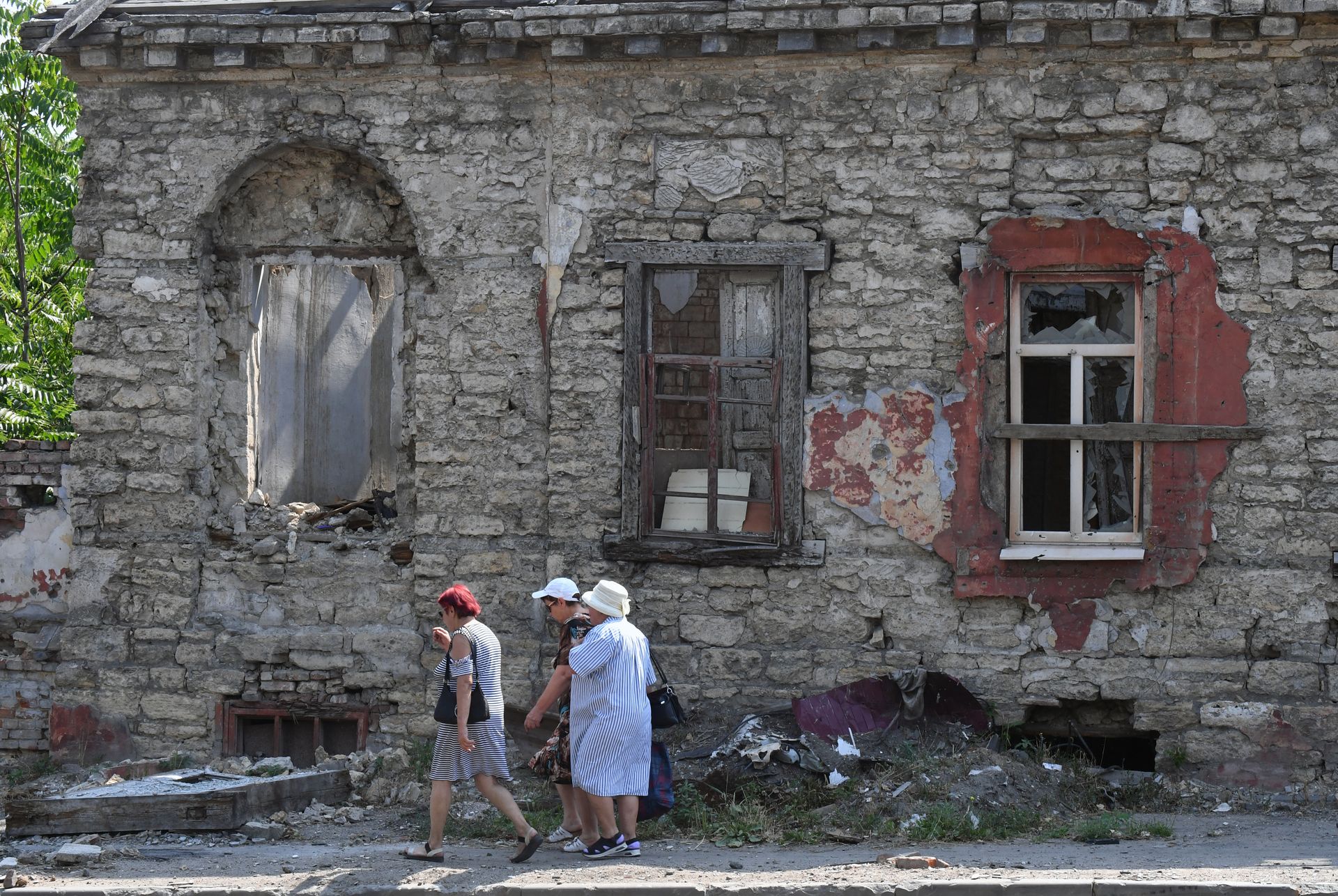
In Mariupol, a devastated city since its 2022 siege, evictions are underway, displacing residents amid reconstruction efforts that favor Russian settlers.[1] Stolen grain reports indicate looting of agricultural assets, depriving locals and Ukraine of resources.[1] Crimea, annexed in 2014, faces ongoing strikes, likely Ukrainian in origin, aimed at degrading Russian logistics like the Kerch Bridge.[1]
These developments illustrate Russia's consolidation tactics in occupied zones, blending military enforcement with economic exploitation.[1] Evictions clear space for loyalists, while grain theft sustains occupation finances.[1] Strikes on Crimea disrupt supply lines to southern fronts.[1]
What to watch next: Monitor Zelenskyy's updates on Russian strike volumes, Ukrainian oil facility hits' economic effects, and NATO responses to airspace incidents, as these could signal further escalation or diplomatic shifts.[2][3][4]