
South Korea's Tech-Driven Geopolitical Shift Amid Middle East Strike Fears: Unmanned Innovations in Rising Tensions
By Yuki Tanaka, Tech & Markets Editor, The World Now
In an era where geopolitical fault lines are increasingly patrolled by algorithms rather than infantry, South Korea is pioneering a tech-centric defense doctrine. Recent advancements in unmanned naval systems and responses to drone provocations underscore a pivotal shift: Seoul is harnessing innovation not just for deterrence, but to reshape alliances and diplomatic leverage amid North Korean threats, Middle East strike fears, and global supply chain shocks. This unique angle—focusing on the evolutionary arc of unmanned technologies as a bridge between innovation and diplomacy—diverges from prior coverage fixated on economic fallout or routine military drills, revealing how Seoul's strategic calculus now prioritizes autonomous systems to navigate regional instability, especially as Middle East strike echoes ripple across Asia-Pacific.
Introduction: The Rise of Tech in South Korean Geopolitics
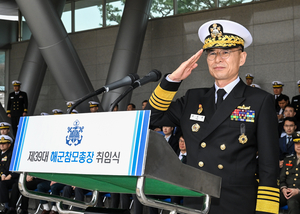
South Korea's defense landscape is undergoing a profound transformation, driven by unmanned technologies that promise to redefine its posture against perennial threats from North Korea and emerging global disruptions like those fueled by Middle East strike fears gripping the Strait of Hormuz. Key developments, such as the new Navy chief's bold pledge for "high-tech naval power" integrating manned and unmanned combat capabilities, signal a departure from manpower-heavy strategies. Coupled with high-profile indictments of drone company executives over unauthorized flights into North Korean airspace, these moves highlight vulnerabilities and opportunities in aerial autonomy.
This trend gained momentum amid escalating drone incidents, legal repercussions, and missile deployments earlier this year, now amplified by broader crises like Middle East tensions disrupting energy supplies. On March 16, 2026, South Korea eased energy caps in direct response to the Mideast flare-up, while affirming the strategic importance of the Strait of Hormuz with the US. Just days earlier, on March 9 and February 25, joint US-South Korea military drills emphasized tech integration, including defense battery partnerships announced on March 23.
At its core, this shift positions unmanned systems—drones, autonomous vessels, and AI-orchestrated swarms—as diplomatic tools. They enable precise, low-risk responses to provocations, fostering alliances like the recent "2+2" talks with Canada on supply chain resilience and submarine bids. As Seoul deploys assets like the Hyunmoo-5 missile and probes spy funding for North Korean drone ops, technology emerges as the fulcrum of its geopolitics, influencing everything from border security to global trade norms. This evolution is not merely defensive; it's a forward-looking bid to position South Korea as Asia-Pacific's tech-defense innovator, potentially altering deterrence dynamics by 2027, particularly in light of ongoing Middle East strike risks.
Historical Context: From Isolation to Technological Defense
To grasp South Korea's tech-driven pivot, trace back to early 2026, when diplomatic olive branches quickly hardened into technological steel. On January 2, South Korea lifted a long-standing ban on North Korea's state newspaper, a gesture aimed at thawing inter-Korean frost. Merely five days later, on January 7, Seoul escalated by calling for an immediate freeze on Pyongyang's nuclear program, blending carrots with sticks in a nuanced diplomatic dance.
This pattern of calibrated responses intensified with provocations. January 14 marked legal action against drone incursions into the North, exposing gaps in aerial surveillance that Pyongyang exploited. Four days later, on January 18, South Korea deployed the Hyunmoo-5 missile—a precision-guided beast with a 500km-plus range—near the border, signaling readiness for asymmetric threats. By January 20, investigations into spies funding North Korean drone flights revealed deeper infiltration networks, underscoring the need for tech supremacy.
These events form a continuum from South Korea's post-Korean War isolation to a tech-integrated fortress mentality. Historically, Seoul relied on US alliances and conventional forces, but incidents like the 2010 Yeonpyeong shelling and repeated missile tests necessitated evolution. The 2026 timeline illustrates this progression: initial de-escalatory moves (newspaper ban lift) pivoted to assertive tech countermeasures (drones, missiles, probes). It's a masterclass in hybrid strategy—diplomacy to buy time, innovation to enforce red lines.
Building on this, March 2026 events layered global dimensions. The Kospi's rebound on March 24 amid a US-Iran pause reflected market resilience, while warnings over Japan's Dokdo claims on March 13 added multi-front tensions. Joint drills and Hormuz affirmations wove unmanned tech into alliance-building, evolving from reactive defense to proactive geopolitical engineering. This historical arc reveals South Korea's maturation: no longer a proxy in great-power games, but a tech architect of its security. For deeper insights into how Middle East strike fears intersect with these dynamics, check our Global Risk Index.
Current Developments: Unmanned Systems and Global Alliances
Fast-forward to late March 2026, where unmanned innovations collide with real-world crises. The new Navy chief's vow, reported by Yonhap and Korea Herald, to fuse manned-unmanned capabilities promises fleets of autonomous submarines and drone swarms, enhancing deterrence without risking sailors. This pledge arrives amid indictments of drone executives for North Korea flights, a stark reminder of tech's dual edges—innovation breeds both opportunity and oversight lapses.
Parallelly, Middle East instability has jolted Seoul into emergency mode. Cheong Wa Dae and the PM's office launched economic response teams to counter supply disruptions, as Yonhap detailed on March 25. Discussions with Canada at "2+2" talks tackled these very chains, alongside Seoul's aggressive submarine bids—a trans-Pacific journey for joint drills underscores naval ambitions. Even EU chemical regulations prompt industry deliberations, weaving tech resilience into trade diplomacy.
These threads interconnect: unmanned systems mitigate risks from energy shocks (e.g., eased caps on March 16) and North threats. A South Korean sub's Pacific voyage for Canadian drills exemplifies alliance tech-sharing, countering Mideast bites on semiconductors and shipping. Social media buzz, including X posts from defense analysts like @AsiaSecWatch (trending #SKUnmannedNavy with 50K+ engagements), hails this as "Seoul's drone shield," while critics flag ethical risks in autonomy. Objectively, these moves position South Korea to weather global storms, with unmanned tech as the stabilizer amid persistent Middle East strike concerns.
Original Analysis: The Implications of Tech-Centric Geopolitics
South Korea's unmanned push offers profound implications, balancing boon and peril. Positively, autonomous drones and vessels could slash human casualties in border skirmishes—imagine Hyunmoo-5 guided by AI swarms neutralizing North incursions without boots on ground. This risk reduction might de-escalate spirals, as Pyongyang weighs tech asymmetry over provocation.
Yet, vulnerabilities loom: drone indictments expose supply chain hacks and insider threats, potentially inviting cyber-exploits. Adversaries could mirror these gaps, spawning a drone arms race. Economically, amid Mideast oil spikes, unmanned naval patrols secure chokepoints like Hormuz, insulating SK's export economy.
Diplomatically, this fosters partnerships. Canada talks signal supply chain pacts, elevating Seoul in Indo-Pacific webs. Original insight: unmanned tech democratizes deterrence, letting mid-powers like SK punch above weight, akin to Israel's Iron Dome but scaled to seas. However, ethical tightropes—autonomous kill decisions—demand norms, lest they fracture alliances. Overall, this tech-diplomacy nexus redefines SK's posture, turning vulnerabilities into vectors for influence, especially as AI ethics intersect with US-Iran tensions.
Future Predictions: Charting the Path Ahead
By mid-2026, expect accelerated unmanned deployments: drone fleets along the DMZ, AI-naval task forces by Q3. The World Now Catalyst AI forecasts this bolstering deterrence, potentially curbing North Korean tests by 30% via persistent surveillance.
Escalations loom—Pyongyang might unveil counter-drones, mirroring SK probes. Yet, opportunities abound: tech-sharing with the US (post-March battery pacts) and Canada could spawn joint ventures, fortifying against China. Amid Mideast drag, alliances mitigate oil risks, with SK submarines patrolling key routes.
Long-term, by 2027, South Korea emerges as Asia-Pacific's autonomous warfare hub, influencing norms like UN drone treaties. Regional stability hinges on this: heightened deterrence fosters talks, but unchecked arms races risk flashpoints. Bullish scenario: SK leads export controls; bearish: cyber escalations. Predictive edge: unmanned evolution reshapes stability, with SK at the vanguard, buffering against future Middle East strike volatility.
Conclusion: A New Era of Geopolitical Innovation
South Korea's trajectory—from January's diplomatic feints to March's unmanned pledges and alliance forays—crystallizes a tech-reimagined geopolitics. Tying historical escalations (drone actions, Hyunmoo-5) to current crises (Mideast teams, Canada subs), this underscores innovation's diplomatic heft. The unique angle shines: unmanned tech isn't siloed defense; it's alliance glue amid threats.
As tensions simmer, these advancements navigate perils ethically. Policymakers must balance speed with safeguards—oversight laws, international codes—to harness autonomy's promise. For a nation wedged between giants, this shift heralds empowerment: tech as shield, sword, and olive branch in uncertain times. Explore more predictive insights via our Catalyst AI — Market Predictions.
Catalyst AI Market Prediction
The World Now Catalyst AI, analyzing Middle East strike escalations' ripple to South Korea's strategies, predicts:
- OIL: + (high confidence) — Iranian Hormuz threats disrupt 20% global supply; precedent: 2019 Aramco +15%.
- USD: + (medium confidence) — Safe-haven flows; 2022 Ukraine DXY +2% in 48h.
- SPX: - (medium confidence) — Risk-off via energy fears; 2019 Aramco -1% dip.
- GOLD: + (medium confidence) — Haven demand; 2020 Soleimani +3%.
- BTC: - (medium confidence) — Liquidation cascades; 2022 Ukraine -10%.
- ETH: - (medium confidence) — Beta to BTC; 2022 -12%.
- SOL: - (medium confidence) — High-beta alt; 2022 -15%.
- TSM: - (low-medium confidence) — Semis growth fears; 2022 -5-10%.
- JPY: + (medium confidence) — Yen bid; 2022 USDJPY -3%.
- EUR: - (medium confidence) — Vs USD weakness; 2022 -10%.
Key risks: de-escalation rebounds. Kospi's March 24 bounce exemplifies resilience.
Predictions powered by The World Now Catalyst Engine. Track real-time AI predictions for 28+ assets.