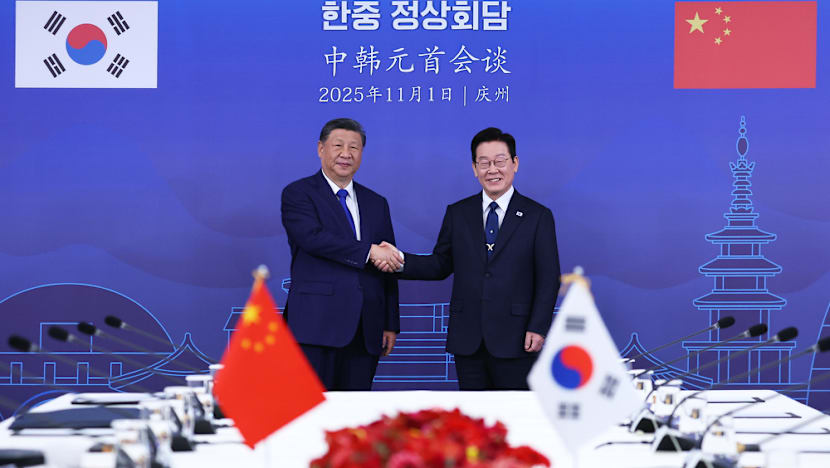

South Korean President Lee Jae Myung Meets Xi Jinping in Beijing Amid Regional Tensions
South Korean President Lee Jae Myung is set to begin a pivotal four-day visit to Beijing, marking his second summit with Chinese President Xi Jinping. This visit comes at a time of heightened geopolitical tensions in the region, particularly concerning Taiwan, where China recently conducted extensive military drills. As the first South Korean leader to visit China in six years, Lee's trip is seen as a crucial step in bolstering diplomatic relations between the two nations while navigating the complex landscape of regional security.
President Lee's visit to Beijing is significant for several reasons. It highlights a concerted effort to enhance cooperation between South Korea and China, particularly in economic and security matters. The timing of the summit is particularly notable, as it follows China's recent military exercises around Taiwan, which have raised concerns in Seoul and beyond. Analysts suggest that Lee aims to sidestep direct discussions regarding Taiwan tensions during his meetings with Xi, focusing instead on trade and mutual interests.
During his summit with Xi, Lee is expected to address key topics including economic collaboration, technological exchange, and regional stability. South Korea has increasingly sought to balance its economic ties with China against its security alliances with the United States, particularly in light of the ongoing tensions over North Korea's nuclear program. Lee's administration has emphasized the importance of maintaining constructive dialogue with China while ensuring the protection of South Korean interests.
In a recent statement before his departure, Lee expressed hope that the summit would pave the way for a "new chapter" in South Korea-China relations. He acknowledged the challenges posed by regional security dynamics but emphasized the potential for cooperation in addressing mutual concerns, including climate change and economic recovery post-pandemic.
Background on the geopolitical context reveals that Lee's visit follows a period of strained relations between South Korea and China, exacerbated by issues such as the deployment of the U.S. THAAD missile defense system in South Korea and historical grievances. However, the two nations share significant economic ties, with China being South Korea's largest trading partner. This economic interdependence underscores the necessity of maintaining open lines of communication, despite political tensions.
The summit is also taking place against the backdrop of the ongoing Russian-Ukraine War and the shifting alliances in Asia, including the United States' strategic pivot towards countering China's influence in the region. Lee's diplomatic efforts are seen as part of a broader strategy to navigate these complexities while ensuring that South Korea's interests are safeguarded.
As President Lee embarks on this crucial summit, the international community will be closely watching the outcomes of his discussions with Xi. The results could have significant implications not only for South Korea-China relations but also for the broader geopolitical landscape in East Asia.
In conclusion, Lee Jae Myung's visit to Beijing symbolizes a pivotal moment for South Korea as it seeks to foster stronger ties with China amidst a backdrop of regional tensions. The outcomes of this summit could potentially shape the future of diplomatic relations and regional stability in East Asia.






