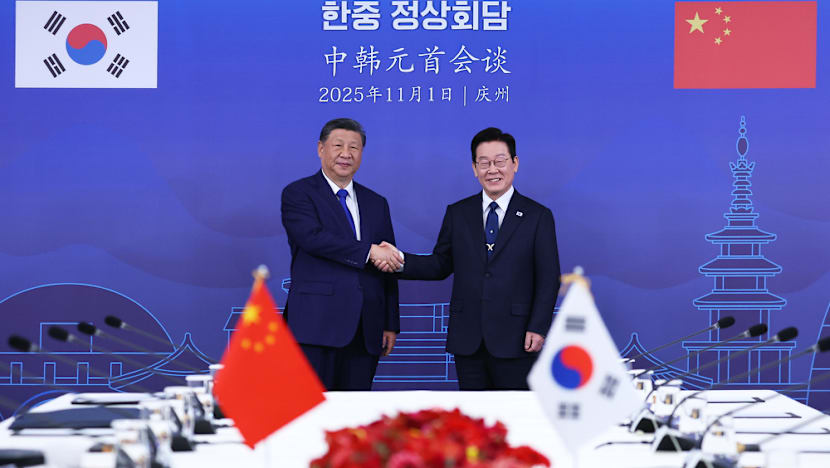
South Korean President Lee Jae Myung Arrives in Beijing for Key Summit with Xi Jinping Amid Regional Tensions

Latest from X
South Korean President Lee Jae Myung Arrives in Beijing for Key Summit with Xi Jinping Amid Regional Tensions
BEIJING, January 4, 2026 — South Korean President Lee Jae Myung arrived in Beijing on Sunday for a significant second summit with Chinese President Xi Jinping, marking the first visit by a South Korean leader to the Chinese capital in six years. The four-day state visit, which began amidst heightened regional tensions, underscores both nations' commitment to strengthening bilateral ties while navigating complex geopolitical challenges, including recent Chinese military drills near Taiwan and North Korea's missile activities.
Lee’s arrival, as reported by Yonhap News Agency, coincided with reports of North Korea firing missiles, adding a layer of urgency to the discussions expected during the summit. The South Korean president is eager to bolster economic cooperation with China, Seoul’s largest trading partner, while carefully sidestepping contentious issues such as Taiwan, which China claims as part of its territory. According to Channel News Asia, this visit comes less than a week after China conducted large-scale military exercises around the self-ruled island, a move that has intensified regional anxieties.
Summit Agenda: Economic Ties and Regional Stability
The primary focus of the summit is expected to be on deepening economic collaboration and addressing shared regional concerns. South Korea and China have maintained a crucial trade relationship, with China being a key market for South Korean goods. Analysts suggest that Lee aims to secure assurances on trade stability and explore new avenues for cooperation in technology and infrastructure, areas of mutual interest for both nations.
Beyond economics, the leaders are likely to discuss North Korea’s escalating provocations. North Korea’s missile launches on the day of Lee’s arrival in Beijing serve as a stark reminder of the persistent security challenges on the Korean Peninsula. South Korea has previously sought China’s assistance in reining in Pyongyang’s nuclear ambitions, given Beijing’s historical influence over the regime. While specific outcomes remain uncertain, the summit offers a platform for dialogue on diplomatic strategies to manage North Korean aggression.
Navigating Taiwan Tensions
One of the more delicate aspects of Lee’s visit is the need to avoid entanglement in the Taiwan issue. China’s recent military drills around Taiwan have drawn international concern, with many viewing them as a signal of Beijing’s readiness to assert its territorial claims. South Korea, which maintains a delicate balance in its foreign policy between major powers like the United States and China, is keen to keep the focus of this summit on bilateral matters rather than broader regional disputes. As noted by Channel News Asia, Lee’s administration is prioritizing economic and diplomatic gains over engaging in potentially divisive geopolitical debates.
Background: A History of Evolving Relations
South Korea-China relations have seen fluctuations over the past decade, influenced by issues such as the deployment of the U.S. Terminal High Altitude Area Defense (THAAD) system in South Korea, which China opposed, and differing approaches to North Korea. However, recent years have witnessed a renewed push for dialogue, with both nations recognizing the importance of cooperation amid shifting global alliances. Lee’s first summit with Xi in 2025 laid the groundwork for improved ties, and this second meeting in Beijing signals a continuation of that momentum. The exchange of high-level visits within months, as reported in prior coverage by outlets like Reuters, highlights a mutual commitment to dialogue.
Regional Context and Broader Implications
The timing of Lee’s visit is notable given the broader geopolitical landscape. Tensions between China and Japan over Taiwan, as well as ongoing U.S.-China rivalry, create a complex backdrop for South Korea’s diplomatic maneuvers. Beijing’s intent to strengthen ties with Seoul, as suggested by analysts cited in Al Jazeera, may also be a strategic move to counterbalance other regional dynamics. For South Korea, maintaining a constructive relationship with China while honoring its alliance with the United States remains a delicate balancing act.
Outlook: A Step Toward Stability?
As the summit unfolds over the next few days, observers will be watching closely for any joint statements or agreements that emerge from the talks between Lee and Xi. While immediate breakthroughs on contentious issues like North Korea or Taiwan are unlikely, incremental progress in economic and diplomatic cooperation could pave the way for greater stability in the region. The visit, though overshadowed by external tensions, represents a critical opportunity for both leaders to reinforce their commitment to dialogue in an increasingly uncertain world.
For now, President Lee’s presence in Beijing is a testament to the enduring importance of South Korea-China relations, even as both nations navigate the choppy waters of regional geopolitics. Further updates on the outcomes of the summit are expected as discussions progress through January 7, 2026.
Track this story live
Live World Map
Monitor global events in real time with a live activity map and hotspot summaries.
Markets
Connect live events to Catalyst market signals across crypto, commodities, indices, and forex.
Geopolitical Risk
Live geopolitical risk index tracking conflict zones, sanctions, and global threat levels.
Original Sources
- •South Korean president lands in China, hoping to sidestep Taiwan tensions— Channel News Asia
- •
Editorial process: This article was synthesized from the original sources cited above using The World Now's AI editorial system, with byline accountability from our editorial team. We grade every story for source grounding, factual coherence, and on-topic match before publication. Read more about our editorial standards and contributors. Spot something inaccurate? Let us know.
Last updated: January 31, 2026






