
South Korea Reaffirms 'One-China' Policy and Lifts Ban on North's Newspaper
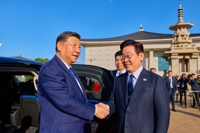
In a significant diplomatic move, South Korea's President Lee Jae Myung has reaffirmed the country's commitment to the 'one-China' policy concerning Taiwan. Concurrently, the South Korean government has lifted a long-standing ban on access to North Korea's state newspaper, indicating a potential thaw in inter-Korean relations amid ongoing regional tensions.
On January 2, 2026, President Lee stated that South Korea would continue to respect the 'one-China' principle, which recognizes the People's Republic of China as the sole legal government of China, thereby asserting that Taiwan is part of Chinese territory. This reaffirmation comes at a time when the geopolitical landscape in East Asia is marked by heightened tensions, particularly between China and Taiwan, and amidst ongoing military maneuvers in the Taiwan Strait.
"The Republic of Korea will maintain its position based on the 'one-China' policy, which is crucial for stability in the region," President Lee emphasized during a press briefing. His remarks reflect South Korea's delicate balancing act in its foreign relations, especially as it navigates pressures from both the United States and China, two of its most significant trading partners.
Lifting the Ban on North's Newspaper
In a parallel development, the South Korean government has lifted its ban on accessing the North Korean state-run newspaper, the Rodong Sinmun. This decision, effective immediately, suggests a willingness to engage more openly with North Korea, although public opinion within South Korea remains divided on the issue.
The ban had been in place for several years as a measure against North Korea's provocative actions, including missile tests and hostile rhetoric. The lifting of the ban indicates a potential shift towards a more conciliatory approach by the South Korean government in its dealings with the North, particularly in light of the ongoing efforts to reduce tensions on the Korean Peninsula.
"We believe that allowing access to North Korean media can provide insights into the North's perspective and facilitate dialogue," a government official noted, acknowledging the mixed reactions from the South Korean populace.
Background
The 'one-China' policy has long been a cornerstone of China's foreign relations, and South Korea's adherence to it is seen as crucial in maintaining diplomatic ties with Beijing. The policy's significance has grown in recent years, especially as Taiwan has sought greater international recognition, prompting China to assert its claims more aggressively.
Meanwhile, relations between North and South Korea have been fraught with challenges, particularly after the collapse of denuclearization talks and rising military tensions. The lifting of the ban on North Korean media could be a step towards re-establishing communication channels that have been largely absent in recent years.
Conclusion
As South Korea navigates these complex geopolitical dynamics, the reaffirmation of the 'one-China' policy and the lifting of the ban on North Korea's newspaper reflect a dual approach aimed at stabilizing relations with both China and North Korea. The developments highlight the challenges faced by South Korea in balancing its national interests while responding to regional pressures. Moving forward, the effectiveness of these diplomatic gestures in achieving tangible results will be closely monitored by international observers.






