
South Korea Bolsters Philippine Navy with Combat Systems Deal Amid South China Sea Tensions
Manila, Philippines – South Korea has secured a key contract to supply advanced combat management systems for the Philippine Navy's new warships, marking a significant step in Manila's efforts to modernize its fleet as territorial disputes in the South China Sea intensify. The agreement, announced on January 2, 2026, underscores Seoul's growing role as a primary arms supplier to the Philippines, enhancing naval capabilities against regional security challenges.
The deal focuses on equipping upcoming Philippine warships with state-of-the-art combat management systems, which integrate sensors, weapons, and command systems for improved operational efficiency. This development comes as the Philippine Navy expands its fleet through multi-billion-dollar acquisitions, including frigates and offshore patrol vessels primarily sourced from South Korean shipbuilders. Such systems are critical for real-time threat detection, coordination, and response in contested waters, where the Philippines faces frequent confrontations with China's People's Liberation Army Navy (PLAN).
Philippine Navy officials have projected confidence in their ability to address these challenges. In a recent statement, the navy emphasized its readiness, declaring, “We are up to the challenge [posed by] … the People’s Liberation Army Navy, Chinese Coast Guard, and Chinese maritime militia.” This assurance aligns with ongoing efforts to boost interoperability across sea and air domains through fleet expansion, joint exercises with foreign partners, and the integration of unmanned systems.
Navy Modernization Drive
The arms contract is part of a broader Philippine military modernization program under the Horizon 2 and Horizon 3 frameworks, approved by Congress to counterbalance China's assertive maritime claims. South Korea has emerged as a cornerstone partner in this initiative. Since 2019, Manila has procured two Jose Rizal-class guided-missile frigates from South Korea's Hyundai Heavy Industries, with deliveries completed in 2020 and 2021. Additional contracts include multi-role corvettes and offshore patrol vessels, valued at over $2 billion collectively.
The latest combat management systems deal builds on this foundation, enhancing the technological edge of these vessels. Analysts note that such upgrades will improve the navy's situational awareness and firepower projection, vital in the West Philippine Sea – Manila's term for its exclusive economic zone overlapping with China's "nine-dash line" claims. The Philippines, a claimant to features like the Spratly Islands and Scarborough Shoal, relies on aging vessels like World War II-era frigates, making foreign acquisitions essential.
Joint activities with allies further amplify these capabilities. The Philippines conducts regular maritime drills with the United States under the Mutual Defense Treaty, as well as multilateral exercises like Balikatan and the recently expanded trilateral framework with Japan and Australia. South Korea's involvement extends beyond hardware; technical training and maintenance support from Seoul ensure sustained operational readiness.
Context of South China Sea Disputes
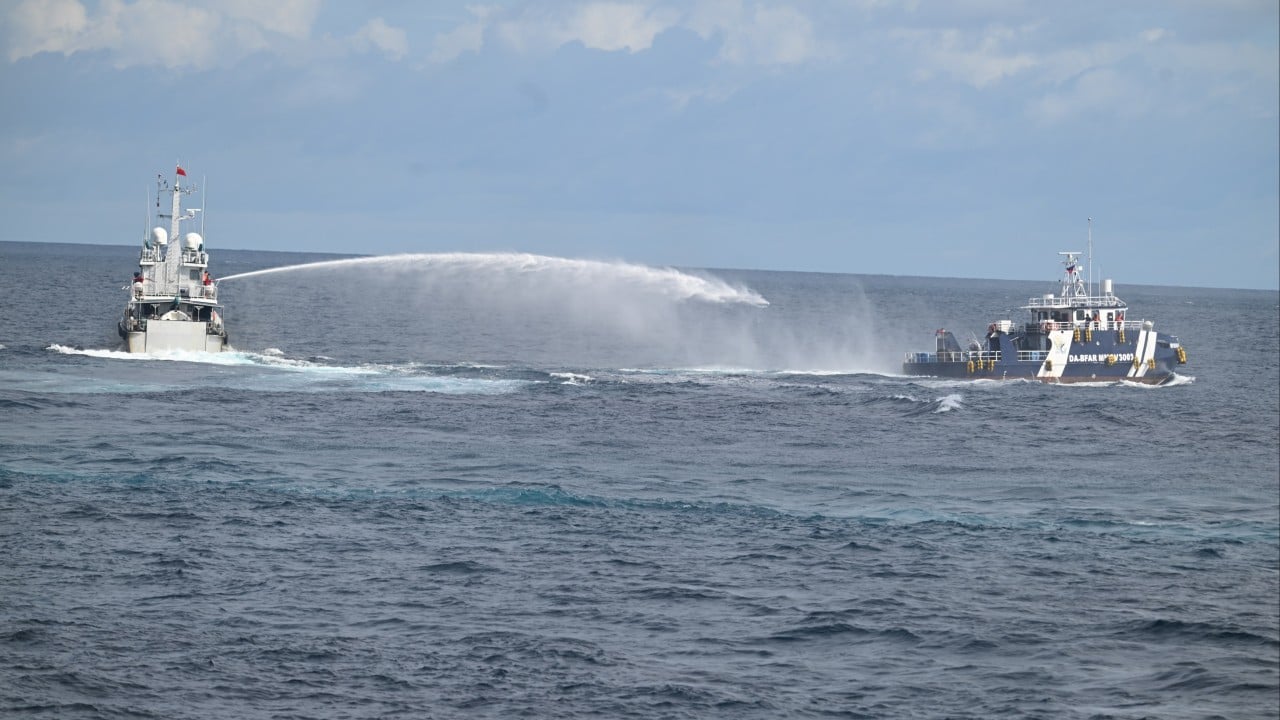
The South China Sea remains a flashpoint in regional geopolitics, with overlapping claims by China, the Philippines, Vietnam, Malaysia, Brunei, and Taiwan. Beijing's construction of artificial islands and deployment of militia vessels have escalated tensions, including incidents of ramming and water cannon use against Philippine resupply missions to the BRP Sierra Madre at Second Thomas Shoal.
A 2016 Permanent Court of Arbitration ruling invalidated China's expansive claims, favoring the Philippines, but Beijing has rejected the decision. In response, Manila has invoked the treaty with Washington, which obligates U.S. defense in case of an armed attack. Recent U.S. commitments, including $500 million in foreign military financing, complement deals like the South Korean contract.
Philippine defense officials highlight unmanned systems and allied partnerships as force multipliers. The navy's push for drones and autonomous underwater vehicles aims to monitor China's gray-zone tactics – coercive actions short of war – without risking personnel.
Strategic Implications
This arms deal signals deepening defense ties between Seoul and Manila, driven by shared concerns over North Korean threats and Chinese expansionism. South Korea, the world's fourth-largest arms exporter, has diversified its markets amid global demand, with the Philippines ranking among its top Southeast Asian clients.
As the Philippine Navy integrates these systems, experts anticipate improved deterrence in disputed areas. The service's expansion to 26 multi-role vessels by 2028 will represent a tripling of its blue-water capable fleet. However, budget constraints and delivery timelines pose challenges, with full operationalization expected over the next several years.
Philippine leaders, including President Ferdinand Marcos Jr., continue to emphasize diplomacy alongside deterrence, engaging in ASEAN-led talks while bolstering hard power. The navy's confident stance reflects this dual-track approach: "We are up to the challenge," as articulated by officials, amid a volatile maritime environment.
In the broader Indo-Pacific, the deal reinforces a web of alliances countering unilateral actions, with implications for freedom of navigation lanes carrying trillions in annual trade. As tensions persist, the Philippines' naval upgrades, powered by partners like South Korea, position it to more assertively defend its sovereign rights.
(Word count: 682)






