
Shanghai Announces $10 Billion Tech Investment Push Amid Intensifying US-China Rivalry
Shanghai, China – In a bold move to bolster its position in the global technology race, the Chinese financial hub of Shanghai has unveiled plans for over 70 billion yuan (approximately US$10 billion) in investments across 50 major high-tech projects. The announcement, centered in the Pudong district, targets critical sectors such as microchips, artificial intelligence (AI), biopharmaceuticals, and aviation, underscoring China's drive for technological self-reliance amid escalating tensions with the United States.
The initiative was revealed on January 6, 2026, by Pudong authorities, marking Shanghai as the latest major Chinese city to ramp up funding for innovation. Most of the capital will flow into strategic industries vital to national priorities, reflecting Beijing's long-term strategy to counter Western technological restrictions. This development comes as the US-China tech competition intensifies, with both superpowers vying for dominance in semiconductors, AI, and advanced manufacturing.
Details of the Investment Plan
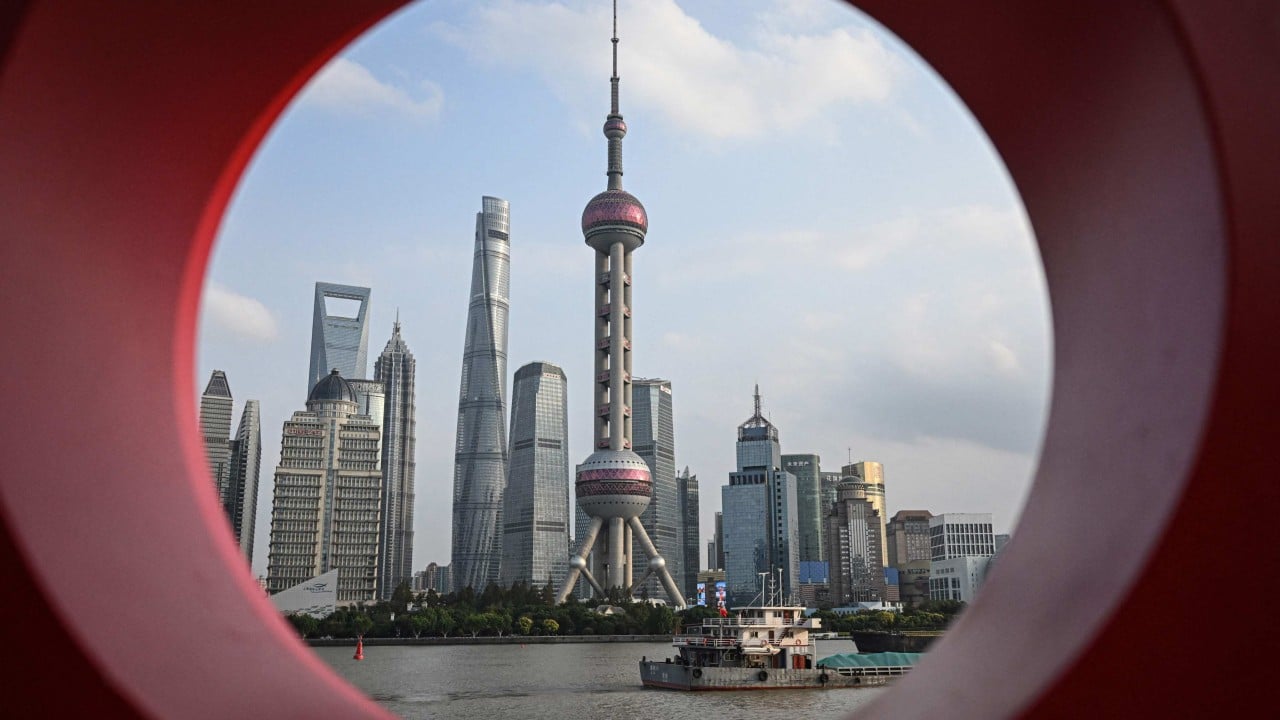
Pudong, Shanghai's premier economic zone and home to the Shanghai Stock Exchange and Lujiazui Financial City, spearheaded the projects announcement. The 50 initiatives span a range of cutting-edge fields, with a heavy emphasis on semiconductors and AI—areas where China faces significant external pressures. Biopharmaceuticals and aviation also feature prominently, aiming to enhance domestic capabilities in drug development and aerospace technology.
Local officials highlighted the projects' potential to drive economic growth and innovation. While specific company names or project breakdowns were not detailed in the initial disclosure, the scale signals a coordinated effort involving government funding, state-backed enterprises, and private sector partnerships. Shanghai's move aligns with national guidelines under China's 14th Five-Year Plan (2021-2025) and its extension into the upcoming 15th plan, which prioritize "new quality productive forces" in science and technology.
Broader Context of US-China Tech Competition
This investment spree occurs against the backdrop of a deepening US-China technological decoupling. Since 2018, the United States has imposed export controls on advanced semiconductors and equipment, targeting firms like Huawei Technologies and Semiconductor Manufacturing International Corporation (SMIC). The Biden administration, continued under subsequent policies, has restricted sales of high-end chips and AI-related technologies to China, citing national security concerns. In response, China has accelerated its "Made in China 2025" initiative, investing trillions of yuan to achieve self-sufficiency in core technologies.
Shanghai's Pudong district has long been a testing ground for such ambitions. Designated a free-trade zone in 2013, it hosts over 100,000 foreign-invested enterprises and has attracted giants like Tesla's Shanghai Gigafactory. Recent years have seen Pudong prioritize integrated circuits and AI, with output in these sectors growing rapidly. For instance, China's domestic chip production capacity has expanded significantly, though it still lags in the most advanced nodes (below 7nm), where US firms like Nvidia and TSMC dominate.
Globally, the tech race has geopolitical ramifications. The US CHIPS and Science Act of 2022 allocated US$52 billion to onshore semiconductor manufacturing, while allies like the Netherlands (ASML) and Japan have joined export curbs. China, meanwhile, has retaliated with rare earth export restrictions and boosted R&D spending, which reached 3.3 trillion yuan (US$460 billion) in 2024, surpassing the US in total volume.
Experts note that Shanghai's announcement fits into a pattern of provincial-level commitments. Cities like Shenzhen and Beijing have similarly unveiled multi-billion-yuan plans, creating a mosaic of regional tech hubs. In 2025 alone, China approved over 100 "national team" projects for chip design and manufacturing, per state media reports.
Background on Shanghai's Tech Ecosystem
Shanghai has evolved from a trading port into Asia's premier tech and finance center. Pudong's transformation since the 1990s—fueled by tax incentives and infrastructure—has made it a magnet for R&D. The district contributes about 40% of Shanghai's GDP and hosts key institutions like the Zhangjiang Hi-Tech Park, a hub for biotech and AI startups.
China's tech push is also responding to domestic challenges, including an economic slowdown post-COVID and youth unemployment. High-tech industries are seen as engines for high-quality growth, with AI alone projected to add 26 trillion yuan to the economy by 2030, according to official estimates.
Outlook and Implications
As the US prepares for potential new restrictions under ongoing policy reviews, Shanghai's investments could accelerate China's progress toward tech independence. However, challenges persist: talent shortages, reliance on imported equipment, and intellectual property hurdles. Success will depend on execution, international collaborations within allowed bounds, and breakthroughs in foundational research.
This development reinforces the geopolitical stakes in the tech domain, where innovation is increasingly a proxy for great-power competition. Stakeholders worldwide will watch closely as Shanghai deploys its US$10 billion arsenal in the race for technological supremacy.
(Word count: 682)






