
Russia Proposes U.S. 'Free Hand' in Venezuela Amid Maduro's Capture and Exile Uncertainty
Miami/Caracas – In a surprising geopolitical twist following the capture of Venezuelan President Nicolás Maduro, a former adviser to U.S. President Donald Trump claimed that Russia offered Washington a "free hand" in Venezuela in exchange for concessions on Ukraine. The development, reported on January 6, 2026, comes as Venezuelan exiles worldwide express cautious relief mixed with deep skepticism about the country's future, one week after Maduro's dramatic removal from power.
The claim highlights shifting alliances in Latin America, where Russia has long been a key backer of Maduro's regime. According to the former Trump adviser, Moscow proposed allowing the United States greater influence over Venezuela's political transition—potentially including military or diplomatic interventions—in return for eased U.S. pressure on Russia's war in Ukraine. Neither the Kremlin nor the White House has confirmed the overture, but it underscores the high stakes in Venezuela, a nation rich in oil reserves and plagued by economic collapse, mass migration, and authoritarian rule.
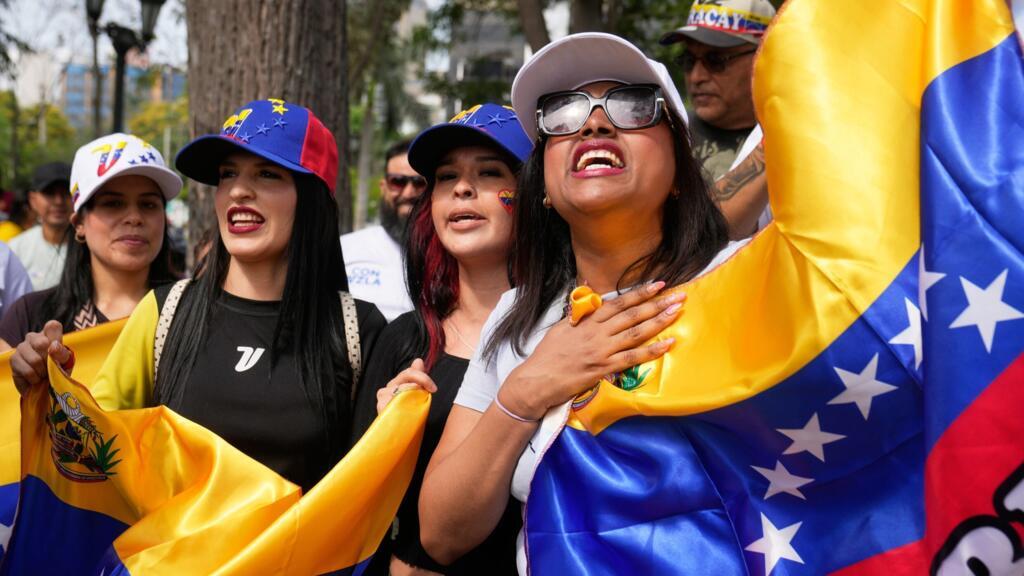
Venezuelan exiles contacted by France 24 across Europe, the United States, and Latin America voiced a spectrum of emotions in the wake of Maduro's capture around January 3, 2026. "We are not free yet," one exile in Spain told reporters, capturing the prevailing mood of guarded optimism. Many celebrated the end of Maduro's 11-year tenure, marked by hyperinflation, food shortages, and brutal crackdowns on dissent. Over 7.7 million Venezuelans have fled the country since 2014, according to United Nations estimates, forming one of the world's largest displacement crises.
However, joy was tempered by fears of power vacuums and reprisals. "Maduro's removal is a step, but the crisis is structural," said Maria Corina Machado, a prominent opposition figure, echoing sentiments from exiles in Miami and Paris. Few believe the capture—details of which remain murky, with unconfirmed reports pointing to opposition forces backed by regional actors—signals the end of Venezuela's turmoil. Chavismo, the socialist movement founded by Hugo Chávez and continued by Maduro, retains loyalists in the military and institutions, raising risks of civil unrest or factional infighting.
Geopolitical Context: Russia's Longstanding Stake
Russia's alleged offer must be viewed against its deep ties to Venezuela. Since 2005, Moscow has provided billions in loans, arms deals, and diplomatic cover, viewing Caracas as a bulwark against U.S. hegemony in the Western Hemisphere. Venezuelan oil has been crucial for Russia, especially under Western sanctions post its 2022 invasion of Ukraine. In return, Maduro supplied discounted crude and hosted Russian military assets, including Wagner Group mercenaries until their 2023 mutiny.
The U.S., under both Biden and incoming Trump administrations, has imposed sanctions on Maduro's regime since 2017, recognizing opposition leader Juan Guaidó as interim president in 2019 before shifting to diplomatic pressure. Venezuela holds the world's largest proven oil reserves—over 300 billion barrels—making it a strategic prize. A "free hand" could enable Washington to support a transitional government, secure energy supplies, and curb migration flows straining U.S. borders.
The timing aligns with Maduro's capture, which followed disputed July 2024 elections where opposition candidate Edmundo González claimed victory amid fraud allegations. International observers, including the Carter Center, decried irregularities, prompting Brazil, Colombia, and the U.S. to withhold recognition of Maduro's reelection. Escalating protests and military defections reportedly culminated in his ouster.
Exile Reactions and Transitional Challenges
France 24's reporting captures the diaspora’s ambivalence. In London, exile Javier Torres said, "Relief, yes—but who fills the void? The military? Corrupt elites?" Similar doubts echoed in Bogotá and New York, where over 500,000 Venezuelans reside. Exiles worry about revenge killings, economic plunder, and interference from allies like Cuba, Iran, and China, which also propped up Maduro.
Interim leadership remains unclear. Opposition figures like González and Machado have called for elections under international supervision, while the U.S. State Department urged "peaceful transition" without endorsing specifics. The Organization of American States (OAS) scheduled an emergency session for January 12, 2026, to address the crisis.
Outlook: High Stakes for Global Powers
As Russia eyes a potential U.S. bargain, the Venezuela endgame tests post-Trump foreign policy. Trump's "America First" approach previously flirted with regime change rhetoric, imposing secondary sanctions on PDVSA, the state oil company. Concessions on Ukraine could involve reduced aid to Kyiv or sanctions relief on Russian energy exports—moves controversial amid Europe's energy crunch.
Analysts note risks: A botched transition could spawn chaos akin to Libya post-Gaddafi, boosting fentanyl trafficking routes and refugee surges. Yet stabilization might unlock $100 billion in frozen assets and revive oil production, now at 1970s lows.
Venezuelans at home and abroad await clarity. "Joy today, uncertainty tomorrow," one Berlin exile summarized. With Maduro's capture reshaping alliances, the world watches whether Russia's gambit paves a path to resolution or prolongs the agony.
(Word count: 712)






